
Key Sourcing Takeaways
- Silicone gaskets typically run -60 °C to 230 °C in dry air. EPDM typically runs -50 °C to 150 °C, which covers most plumbing, HVAC and outdoor sealing.
- Neither rubber suits gasoline, diesel or mineral oil. If petroleum reaches the gasket, look at FKM or nitrile instead.
- Platinum-cured silicone is the common compound for FDA 21 CFR 177.2600 and LFGB food-contact gaskets. EPDM is the common compound for drinking-water fittings.
- EPDM compound costs less than silicone and has higher tear strength at room temperature. The same compression mold design works for both.
Where Silicone and EPDM Gaskets Each Belong
- About -50 °C to 150 °C in dry air
- Ambient water, HVAC and outdoor seals
- Resists glycol brake fluid; common in drinking-water fittings
- Lower compound cost and higher room-temperature tear strength
- About -60 °C to 230 °C in dry air
- Keeps elasticity through repeated steam and thermal cycles
- Platinum-cured grades are routinely tested for food contact
- Lower compression set at elevated temperature
Takeaway: Neither suits fuel or mineral oil. Choose silicone above about 130 °C or for food contact, and EPDM for cost-driven ambient water service.
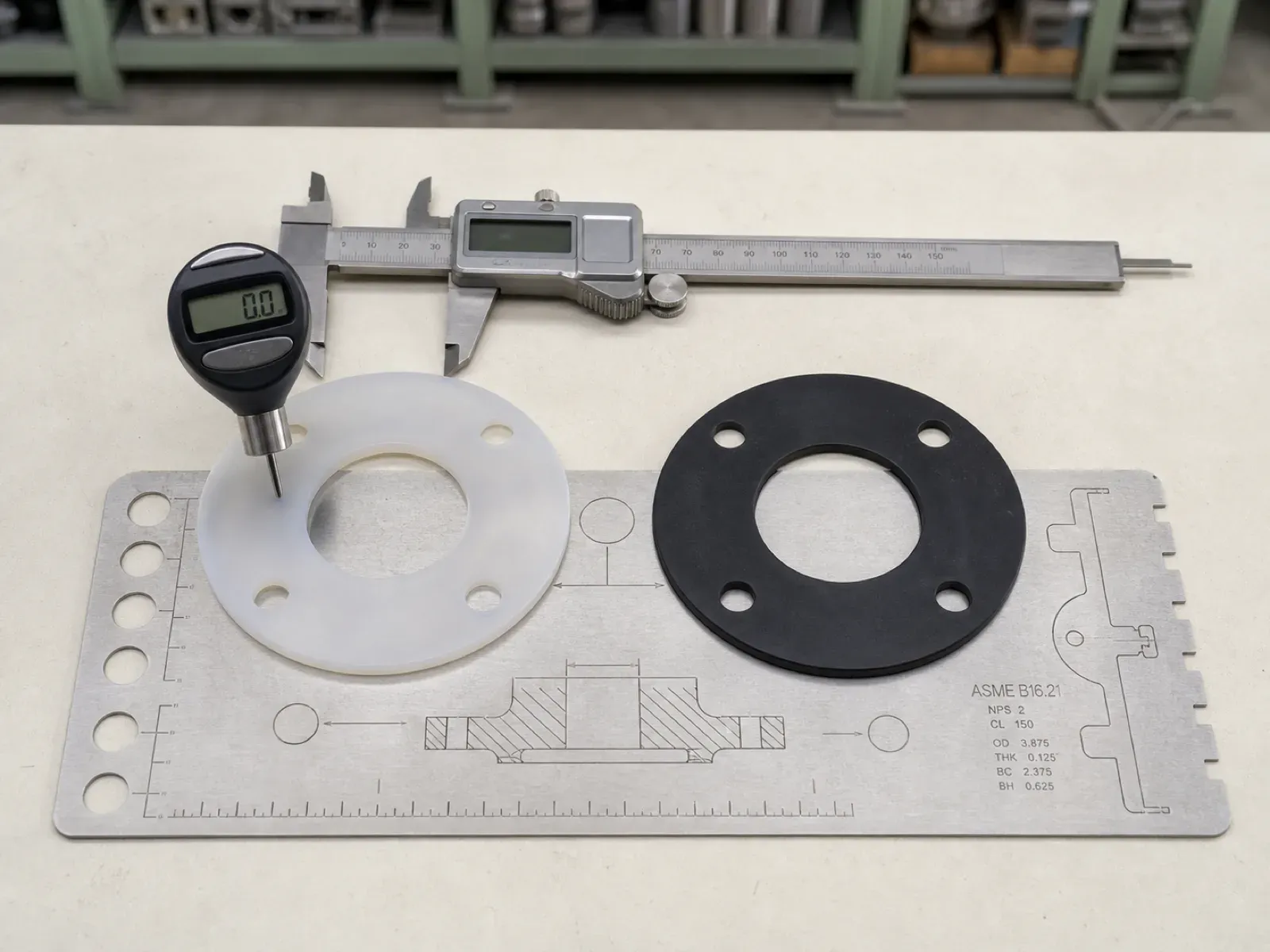
Silicone and EPDM overlap more than most rubber pairs. Both seal water, both shrug off ozone and sunlight, and both mold in the same type of compression tool. The choice usually comes down to three things: how hot the joint gets, what compliance the drawing calls for, and how much the gasket may cost.
Youbang compression-molds silicone gaskets on 15 vacuum presses (200T–350T, platens from 400×400 to 650×650 mm) in Dongguan, and also molds EPDM, nitrile and FKM rubber parts. The ranges below are typical published values for general-purpose grades. Confirm the exact compound against its datasheet and your own test.
When should you choose silicone, and when EPDM?
Choose silicone when continuous temperature exceeds about 130 °C, when the gasket goes through repeated steam or sanitising cycles, or when food-contact testing is required. Choose EPDM for ambient water and HVAC lines, glycol brake fluid, and outdoor seals where cost matters and temperature stays below about 120 °C.
| Factor | Silicone (VMQ) | EPDM |
|---|---|---|
| Continuous service in dry air | about -60 °C to 230 °C | about -50 °C to 150 °C |
| Short peak temperature | up to about 300 °C | up to about 175 °C |
| Hot water and low-pressure steam | Good; preferred for repeated cycles | Good up to about 150 °C |
| Ozone, UV and weather | Excellent | Excellent |
| Gasoline, diesel, mineral oil | Not suitable | Not suitable |
| Glycol brake fluid | Not suitable | Suitable |
| Dilute acids and alkalis | Fair to good | Good |
| Tear strength at room temperature | Lower | Higher |
| Food-contact testing | Routine for platinum-cured grades | Available in specific grades |
| Drinking-water fittings | Available | The common choice |
| Compound cost | Higher | Lower |
Temperature and steam
EPDM covers the range most building, plumbing and automotive weather seals ever see. Above roughly 150 °C it hardens and takes a permanent set, which shows as a flattened gasket that no longer springs back. Silicone keeps its elasticity up to about 230 °C in dry air and after many heating and cooling cycles, which is why oven doors, hot-air ducts, lighting and sterilised equipment use it.
At the cold end the two are close. Silicone stays flexible a little further down, which matters for freezer equipment more than for ordinary outdoor use.
Chemical compatibility
The two materials fail in the same place: petroleum. Neither should seal fuel or mineral oil.
| Medium | Silicone (VMQ) | EPDM |
|---|---|---|
| Water and glycol coolant | Suitable | Suitable |
| Hot water and steam | Suitable | Suitable up to about 150 °C |
| Gasoline, diesel, mineral oil | Not suitable | Not suitable |
| Glycol brake fluid | Not suitable | Suitable |
| Dilute acids | Limited | Suitable |
| Dilute alkalis and detergents | Suitable | Suitable |
| Ketones such as MEK and acetone | Not suitable | Fair |
| Ozone, UV and weather | Suitable | Suitable |
For cleaning chemicals and process fluids that are not on a standard chart, immerse T1 samples for seven days at service temperature and compare volume, hardness and compression set before releasing production.
Compression set and mechanical strength
A gasket seals because it pushes back against the flange. Compression set measures how much of that push is lost. At room temperature EPDM and silicone are both good. As temperature rises, well-cured silicone loses less. Silicone gaskets are post-cured, at Youbang in circulating ovens at about 200 °C for 4–6 hours with the cycle adjusted to thickness, to lower volatiles and stabilise set.
EPDM has higher tear and abrasion resistance at room temperature, so it tolerates rough handling and repeated assembly better. Thin silicone lips need radiused groove edges and burr-free flanges.
Cost and tooling
EPDM compound is cheaper per kilogram, and for a simple flat gasket the material is most of the part cost. Tooling is where they are equal. The same compression mold concept works for both rubbers, although shrinkage differs, so a mold cut for one compound should not be assumed to hold tolerance with the other.
When heat or compliance forces silicone, hardness and wall thickness are the main cost levers. A compression set review at the design stage often allows a thinner section.
What to put on the RFQ
- Flange or groove drawing with tolerances. Precision molded parts typically hold ±0.05 mm and general parts ±0.1–0.2 mm, confirmed per drawing.
- Rubber class (VMQ or EPDM), hardness in Shore A, and colour.
- Medium, continuous and peak temperature, and cleaning or sterilising method.
- Required reports, for example FDA 21 CFR 177.2600, LFGB, RoHS or REACH. Third-party testing through SGS, Intertek or TÜV usually takes about 10 days.
- Trial quantity and annual volume. Trial orders start from 100 pcs.
See custom silicone gaskets and seals for molding options, or check how hot your application really runs in the silicone temperature range guide.
Continue with Custom molding in EPDM, nitrile and FKM.
References & Engineering Sources
- ASTM D1418 — Standard Practice for Rubber and Rubber Latices—Nomenclature
- ASTM D471 — Standard Test Method for Rubber Property—Effect of Liquids
- ASTM D395 — Standard Test Methods for Rubber Property—Compression Set
- ASTM D2000 — Standard Classification System for Rubber Products in Automotive Applications
- 21 CFR 177.2600 — Rubber articles intended for repeated use