
Youbang · B2B Custom Silicone Manufacturing · Dongguan

Custom Silicone Baby & Infant Products

Partner directly with our ISO 9001 & ISO 13485 Dongguan factory to develop coordinated baby feeding sets, bibs, training cups, LSR teethers and nursery care SKUs—molded in platinum-cured silicone with ~200 °C × 4 h ventilated post-curing, mold-in EDM matte finishes and custom Pantone swatch matching.

Serving, scooping and catching food

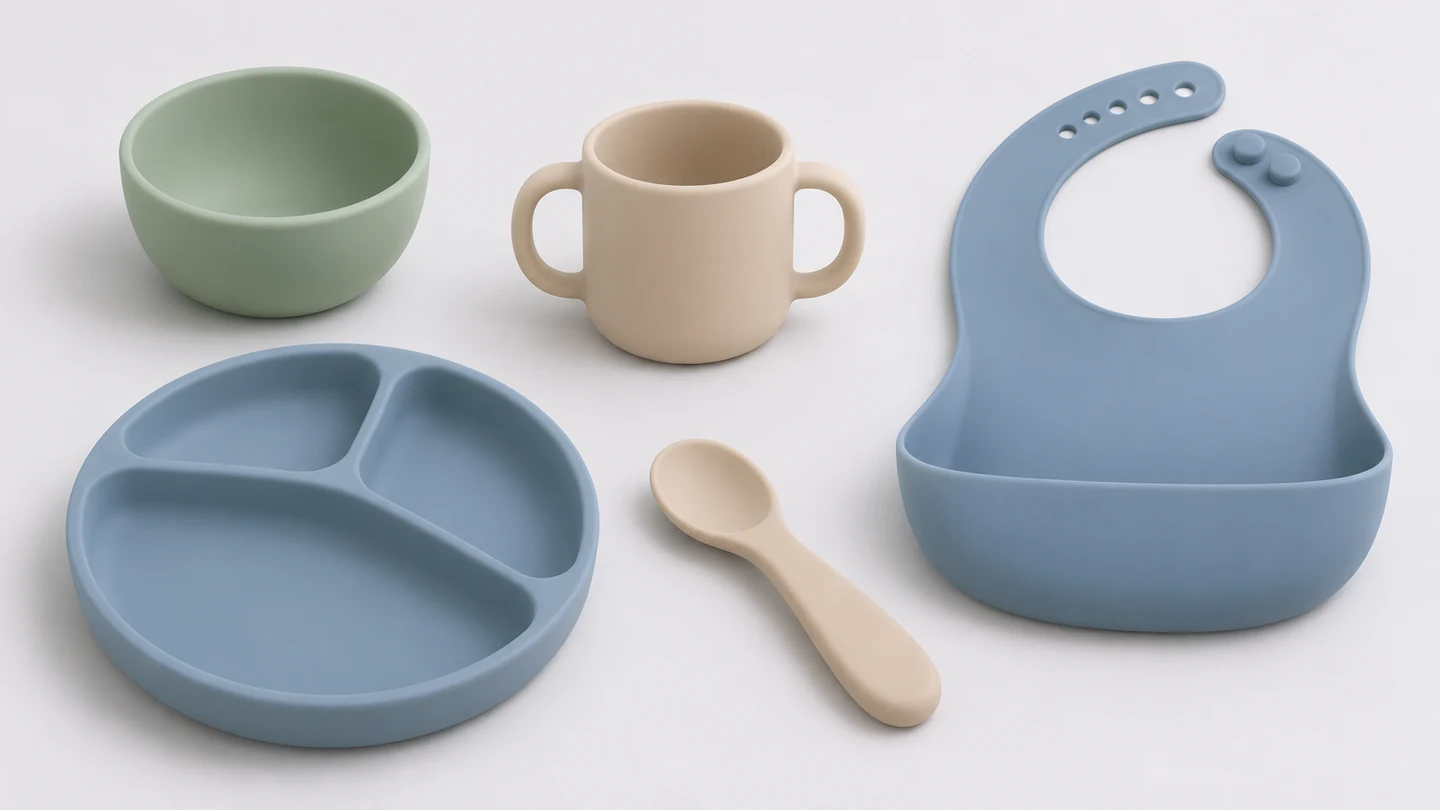
Bowls and open or divided plates hold food; spoons and forks bring a different set of contact and handling questions. A placemat covers the surrounding eating area. Choose the objects first, then consider a fixed base, lid or matching set as additional design dimensions.

The tableware page compares these forms, the usable high-chair tray area and the way a caregiver lifts or removes each piece.

Compare feeding tableware designs →
Bibs and mealtime surroundings

A bib catches food closer to the wearer, while a table or floor mat collects it in a different place. Neck fastening, pocket opening and the space needed to wash and dry the part deserve their own review.

Provide the intended wearing arrangement and cleaning method. Matching a bib to a plate by color does not make their geometry, material choice or checks identical.

Drinking and food storage

An open cup, a cup with separate drinking parts, portioning trays and lidded food containers serve different actions. Open cups raise rim and grip questions; portioning trays organize separate servings and removal; lids introduce a container-rim interface. List the components before defining the silicone parts.

For lids or mixed-material assemblies, identify the mating container, removal action and who supplies each component. Define carrying and cleaning conditions alongside the appearance.

Teethers and feeding aids

A teether, a fresh-food feeder and a pacifier perform different tasks. Contact location, intended use, component retention and the applicable product requirements need a separate brief for each.

Each direction needs its own contact, component-retention and cleaning brief. The related topic below compares handheld teether forms and food-pouch feeder components in more detail.

Compare teether and food-feeder designs →

Bath and everyday care

Brushes and rinse cups do different work: a brush brings contact-head shape and grip questions, while a cup involves containment, pouring direction and handling. A bath mat adds placement, attachment and release, washing and drying tasks.

Use contact locations, hand movements and mating objects as references. Select flexible contact pieces, water-holding objects and surface mats separately before organizing their material and sample checks.

Play and nursery objects

Stacking cups use nesting relationships for play and storage; blocks or connecting pieces bring grasping, joining and separating actions. Texture objects focus more on surface and overall form. A shared color does not make these structures equivalent.

Provide the intended actions, combinations and cleaning method so sample observations cover the actual contact and component relationships. Applicable product requirements follow the selected use.

Nursing and milk collection or storage parts

Milk-collection parts, storage pieces and connectors have different contact paths. Separate the fitting interface, contained volume and detachable connections before deciding which parts are silicone and which depend on other components.

Show the component arrangement and use sequence, including contact, removal and cleaning. Materials and finished-product checks follow the selected use; appearance alone does not establish collection efficiency or a medical application.

Travel and household protection accessories

A stroller cup holder or organizer involves mounting and access space. Parts covering a corner or positioned near a door involve fixing, coverage and clearance for moving objects. Their soft appearance is not a sufficient basis for choosing the design.

Provide the installation object, affected moving parts and removal action. Compare fit, handling and cleaning access in the actual mating arrangement.

Keep Multi-SKU Baby Collections Consistent From Swatch to Box

One list, distinct responsibilities

Map every SKU, CAD revision and component supplier upfront—separating molded silicone bodies, rigid utensil cores or feeder handles, and retail boxes. Where designs require overmolding, customer-supplied stainless steel, PC, PP or PA inserts are bonded using silane primer after joint DFM review.

Agree color on actual samples

Our two in-house open-mill compounders match physical Pantone swatches across thick suction bases, thin bib pockets and LSR oral components under agreed D65/store lighting—avoiding the shade drift common with outsourced masterbatch mixing.

Plan packaging around the real set

Verify how bowls, bibs, cups and spoons nest inside custom gift boxes, frosted pouches or blister packs without creasing soft rims, coordinated via vetted Dongguan packaging partners alongside your care and compliance labeling.

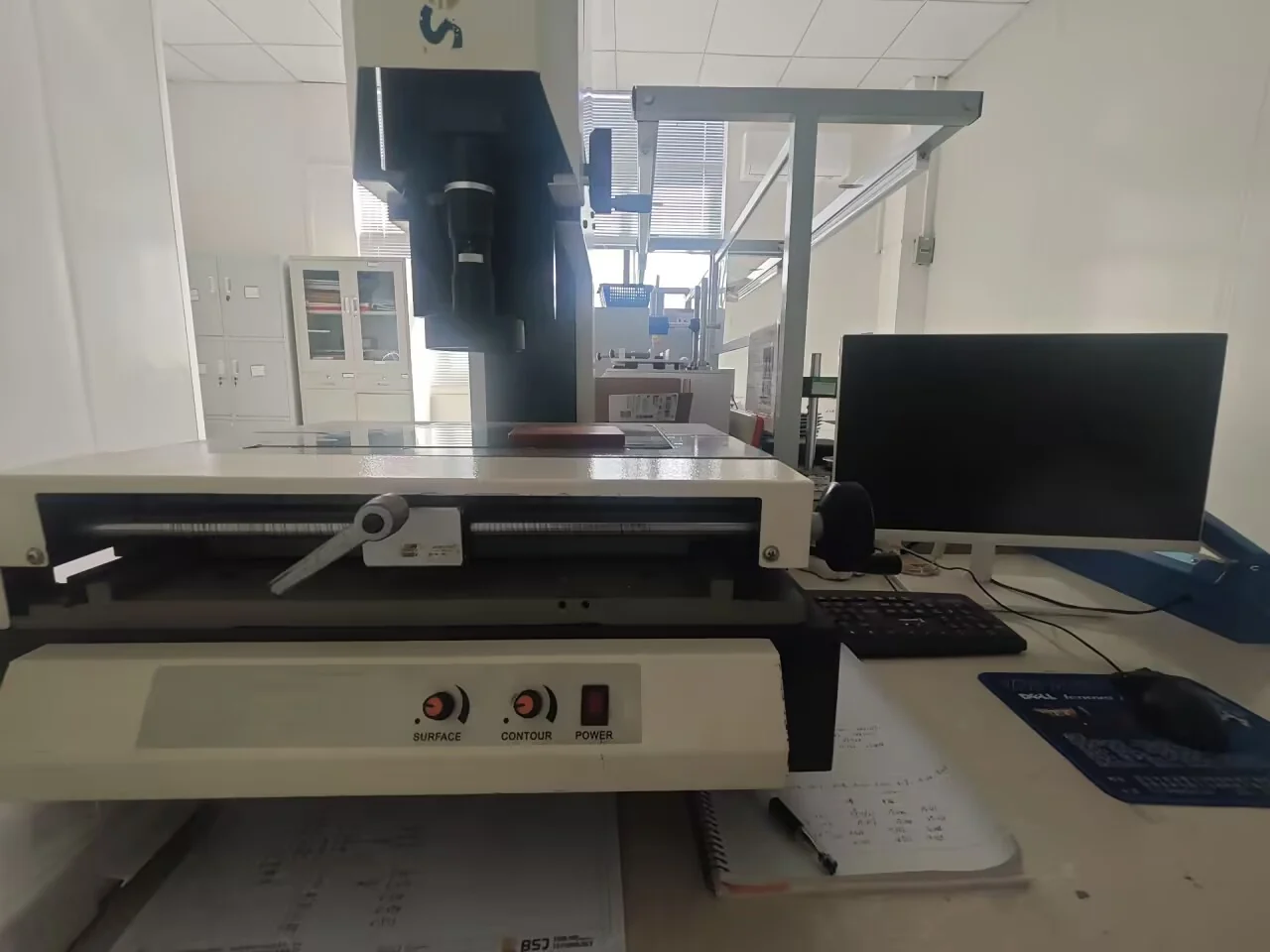
Dimensional measurement equipment

Clear Prototyping Gates From CAD to T1 Silicone Samples

Share your SKU breakdown, 2D/3D CAD or physical benchmark samples, target age-use scenario and destination markets so our in-house mold design team can flag parting lines, wall thickness and flash control within 24 hours.

Eligible projects with a clear brief, confirmed quote and complete CAD can receive 1–3 free 3D-printed geometry prototypes (buyer covers shipping) to verify tray footprint and rigid-handle assembly, followed by 7–15 day T1 molded silicone samples to approve real Shore A softness, suction hold and mold-in matte texture.

Every production run follows IQC-to-OQC batch traceability supported by optical 2D vision measurement and Shore A durometers, paired with project-specific lab testing coordinated through SGS, Intertek or TÜV (~10 days).

Sourcing & Tooling FAQ

Key Answers Before Tooling

Covering CAD readiness, custom MOQ evaluation, free 3D fit checks vs. T1 silicone samples, NDA protection and mold ownership.

Have a part-specific question?

Send your drawing or sample photo directly to Zhou Li’s engineering desk for a 24h DFM reply.

Can we launch a color-matched baby feeding set (suction bowl, divided plate, bib, cup & spoon)?

Yes. We compound custom Pantone silicone in-house so every piece in your gift set shares a cohesive colorway, while engineering separate HCR or LSR molds, Shore A durometers (such as firmer spoon necks and softer bib neckbands) and mold-in EDM matte textures (no sprayed coatings on food/oral surfaces).

How are MOQ and colorway splits calculated for custom baby collections?

Rather than enforcing a rigid catalog minimum, we evaluate MOQ per SKU around part weight, mold cavity count, custom Pantone batch size and retail box minimums—allowing practical pilot runs across 2–4 signature brand colors.

Which compliance tests and material documents can you support for US, EU and UK baby brands?

We formulate with platinum-cured elastomers from Wacker, Shin-Etsu, Momentive, Dow, Elkem and vetted domestic suppliers, post-cure at ~200 °C × 4 h (targeting ≤0.5% volatiles for LFGB), supply raw-material batch CoA/SDS, and coordinate finished-product FDA 21 CFR 177.2600, LFGB, EN14350, EN71 or CPSIA testing via SGS, Intertek or TÜV.

Do we have to order a 3D print before cutting custom silicone molds?

No—mature 3D CAD can move straight into 7–15 day T1 mold tooling. Free 1–3 pc 3D prints are optional for checking high-chair tray fit or multi-part feeder snaps first, and are never used for child mouthing, suction testing or safety sign-off.

B2B Factory Direct · 24h Engineering & Tooling Review

Build Your Custom Silicone Baby Collection

Send your SKU list, 2D/3D CAD or benchmark photos, target markets (US/EU/UK/JP) and estimated volumes—receive engineering feedback within 24 hours.

✓ NDA available before CAD exchange✓ Eligible for 1–3 free 3D fit prototypes✓ Paid molds 100% owned by customer

Helpful RFQ Inputs

  • Component list and intended use
  • Drawings, references and mating parts
  • Target markets and required documents
  • Quantities, colors and packaging