
Youbang · B2B Custom Silicone Manufacturing · Dongguan

Custom Silicone Baking & Craft Casting Molds

Manufacture custom multi-cavity baking pans, confectionery depositor trays, soap loaf liners and 3D sculptural candle molds directly with our Dongguan tooling team—separating odorless platinum-cured food-contact formulations (~200 °C × 4 h post-cured) from tear-resistant craft casting elastomers across platens up to 650×650 mm.

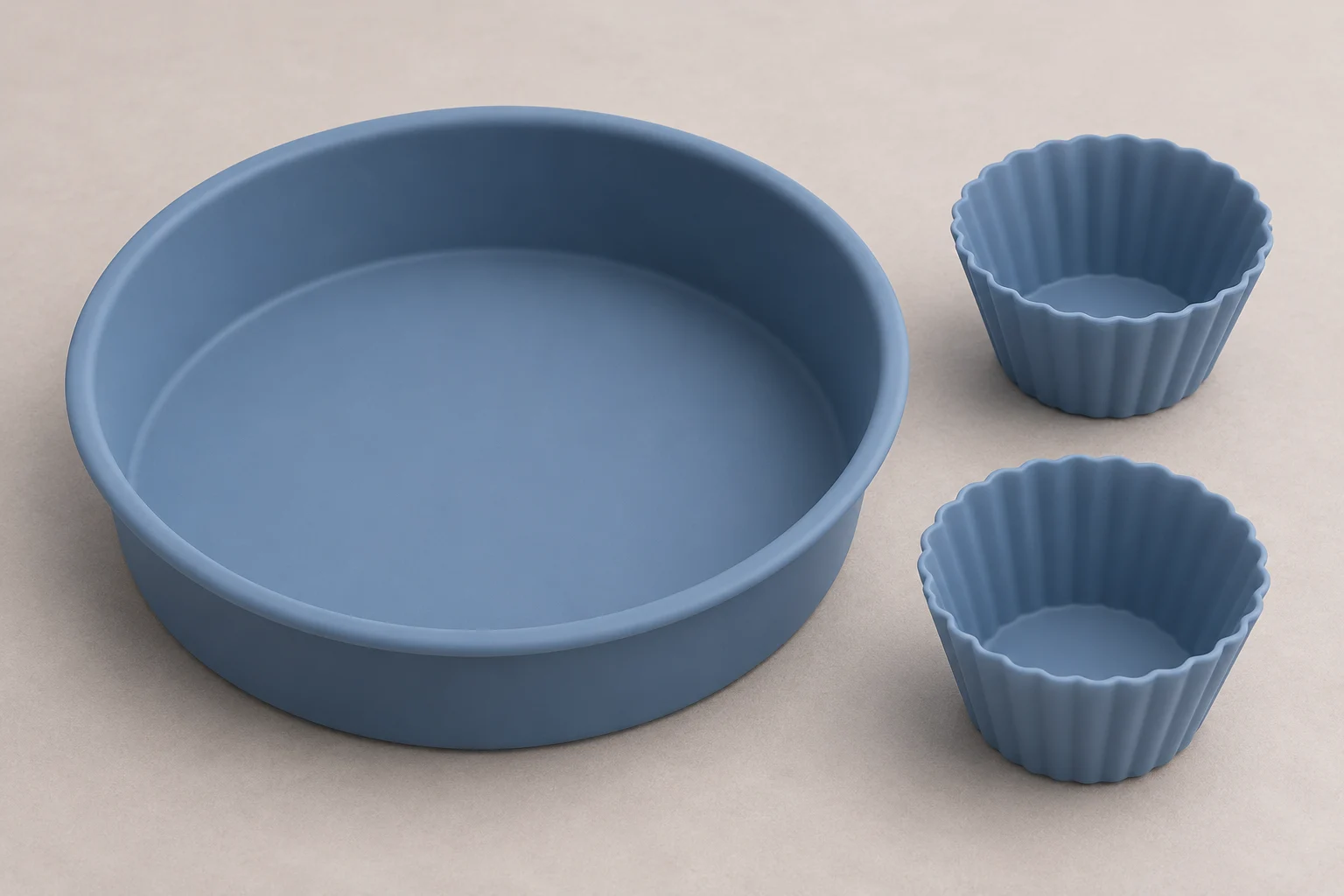
Cake mold and muffin cups

Food & Confectionery Molds: Oven Bakeware, Praline Trays & Cold-Set Cavities

Engineer cavity draft, tray support and mirror or matte finishes around your batter, tempered chocolate, pectin gummy syrup or frozen mousse workflow.

Cake and pan molds

A round, rectangular or elongated basin holds a single portion; a connected layout divides it among cavities. Depth, wall shape and the supporting surface affect filling, carrying and release.

Separate the intended cake shape from the way the filled mold is supported. A detailed surface adds release and cleaning questions.

Provide the desired result, cavity outline and depth, intended mixture, process conditions and support tray.

Compare cake and pan designs →

Baking cups and liners

An individual cup can be placed separately; a liner follows a separate container. Corrugated walls, a continuous rim and the mating tray change handling and cleaning.

Decide whether the silicone part must stand alone or follow an existing support. The same exterior size does not establish the same fit.

Show the supporting pan or container, the filled arrangement, removal action and washing access.

Chocolate and candy molds

Chocolate bars, praline cavities, gummy shapes and relief details organize material in different ways. Cavity spacing affects filling access; fine details need a release route and reachable cleaning surfaces.

Specify the mixture and setting method before choosing cavity finish or detail. A surface appearance alone does not establish the finished result.

Provide a positive model of the desired piece and the proposed cavity layout, fill method and release sequence.

Compare chocolate & candy molds →

Frozen dessert molds

An open cavity, a divided layout and a form with a separate stick or lid introduce different component relationships. Filling and removing the result are separate design tasks.

Distinguish the mold body from any cover or insert. Include the state of the contents when parts are assembled and removed.

Show the intended result, mating components, filling position and storage or release conditions.

Fondant and decorating molds

Shallow relief shapes a surface detail, while a deeper cavity creates more of the result in three dimensions. Lettering and fine junctions affect how the material is pressed in and lifted out.

Choose the visual detail together with its accessible release and cleaning route, rather than treating every illustrated shape as equally moldable.

Provide the original artwork or positive model, intended material and the working and removal actions.

Artisan & Commercial Craft Molds: Soap, Wax, Gypsum & Resin Casting

Formulate mold wall stiffness, undercut split lines and elastomer chemistry specifically around saponifying alkali, fragrance oils, hot wax or exothermic casting resins—never cross-applying generic kitchenware specs.

Soap molds

A tray of individual bars, a large liner and a relief face have different support and removal arrangements. A liner intended for a box must match that box’s internal shape.

A rigid support may help define the working shape but also changes how the mold is removed and washed.

Provide the casting material, box or support drawing, result shape and removal method.

Compare soap molds →

Candle and wax forms

A shallow wax shape and a deep sculpted form differ in access to the finished piece. Any wick passage, split or separate support adds an interface that needs a defined drawing.

Resolve how the formed object leaves the cavity before committing to deep undercuts or fine projecting details.

Show the positive shape, intended casting sequence, passages and any support or parting arrangement.

Compare candle molds →

Resin and other craft casting

Coasters, small decorative parts and larger cast objects differ in cavity depth, working mass and surface requirements. The actual casting medium determines what material compatibility needs to be assessed.

Do not transfer a food-mold or another casting project’s conditions to the new medium. Define mixture, processing and cleanup requirements together.

Provide the casting medium specification, process conditions, desired surface and removal or cleaning method.

Bring the mold and the intended result together

A drawing of the desired object describes the result; a mold drawing must also explain the surrounding cavity, opening and removal route. Mark which details appear raised or recessed on the result, and which surfaces are simply part of the mold body.

List separate frames, boxes, sticks or covers with their suppliers. Youbang designs molds internally and coordinates mold machining externally. Where an approved design uses overmolding, plastic or metal inserts are customer supplied and require primer; a separate supporting tray is a different arrangement.

State food-contact use or the craft medium at the start. Material documents and any finished-product checks must match the selected grade and project scope. Factory management-system certificates do not approve every mold or its contents.

Sourcing & Tooling FAQ

Key Answers Before Tooling

Covering CAD readiness, custom MOQ evaluation, free 3D fit checks vs. T1 silicone samples, NDA protection and mold ownership.

Have a part-specific question?

Send your drawing or sample photo directly to Zhou Li’s engineering desk for a 24h DFM reply.

Why should food-contact baking molds and craft casting molds use separate compound briefs?

Oven bakeware and gummy/chocolate trays require platinum-cured food-contact silicone post-cured at ~200 °C × 4 h (targeting ≤0.5% LFGB volatiles) with FDA 21 CFR 177.2600 or LFGB documentation. Cold-process soap, scented wax and epoxy/gypsum casting expose cavities to alkali, essential oils or exothermic cure heat—requiring tailored tear strength and release evaluation rather than food-grade assumptions.

Should we send a 3D CAD file of the finished cake/candle or a negative mold drawing?

Either works—most brands send the positive 3D model (STEP/IGES/STL) of the finished bar, pastry or candle plus target tray dimensions. Our in-house mold design team builds the negative cavity shell, reverse-mirrors embossed logos, optimizes wall thickness for clean peel-back demolding, and replies within 24 hours.

Can you incorporate steel perimeter stiffening rings or match existing wood/metal support boxes?

Yes. For rigid-rim silicone cake or muffin pans, customer-supplied stainless steel, PC, PP or PA frames are bonded inside the rim using silane primer. For drop-in soap loaf liners or commercial depositor trays, send your outer box or carrier CAD so we verify fit on 1–3 free 3D prints and 7–15 day T1 silicone samples.

How are MOQ, custom Pantone colors and lab test reports handled?

MOQ is evaluated per mold platen footprint (up to 650×650 mm on our 200–250T HCR presses), part weight and colorway count compounded on our two in-house open mills. Paid custom molds belong 100% to your company, and order-specific SGS/Intertek/TÜV food-contact testing (~10 days) is arranged on request.

B2B Factory Direct · 24h Engineering & Tooling Review

Custom-Tool Your Baking or Craft Mold Line

Send your positive 3D model or sketch, target food or casting medium, tray layout and estimated volume—receive engineering DFM feedback within 24 hours.

✓ NDA available before CAD exchange✓ Eligible for 1–3 free 3D fit prototypes✓ Paid molds 100% owned by customer

Helpful RFQ Inputs

  • Desired result and mold or positive-model drawings
  • Food or casting medium and process conditions
  • Support and supplied-component relationships
  • Quantity, color, markings and document requirements