
Youbang · B2B Custom Silicone Manufacturing · Dongguan

Custom Silicone Pet Feeding & Care Products

Partner directly with our Dongguan factory to develop private-label pet bowls, slow-feeder inserts, suction lick mats, raised-lip floor mats, can covers and collapsible travel bowls—molded on 200–250T HCR presses up to 650×650 mm in odorless platinum-cured silicone with in-house Pantone compounding.

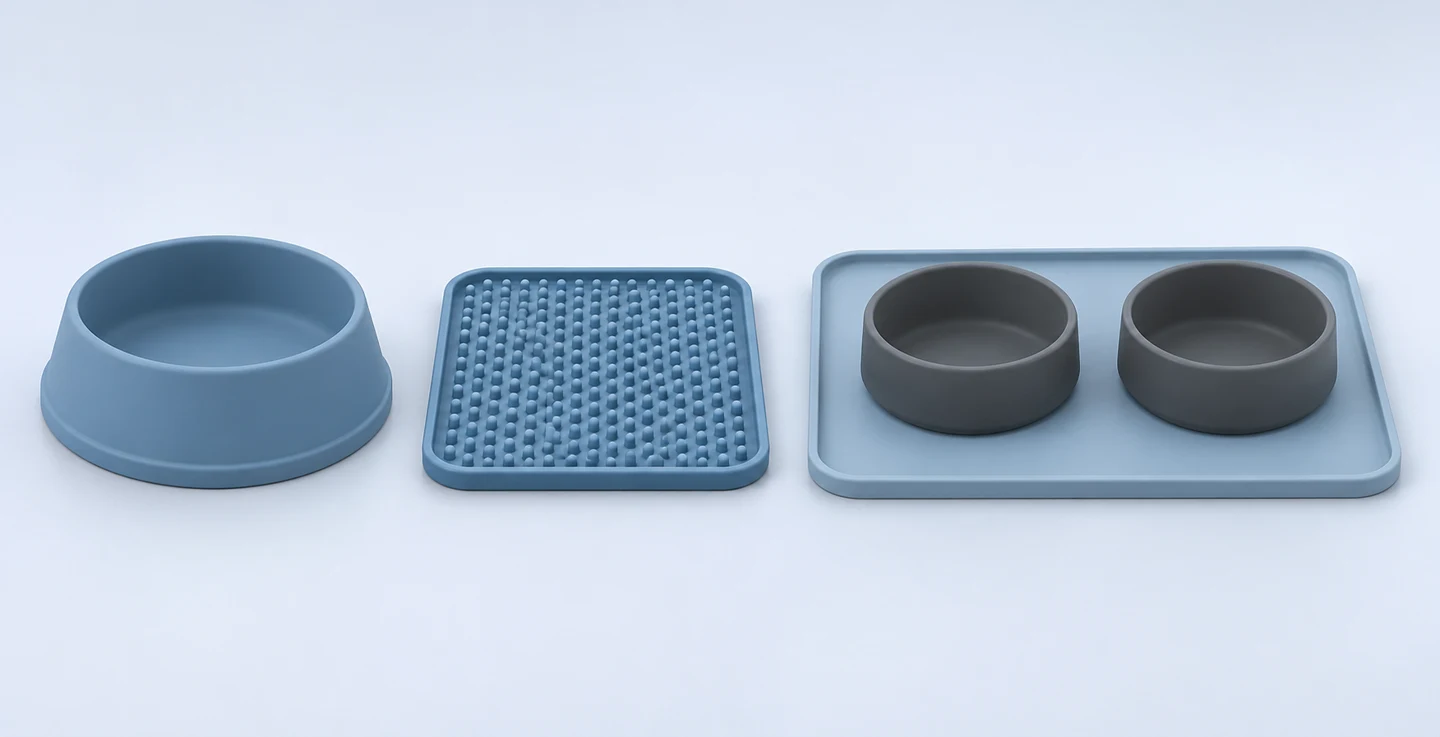
Bowls and feeding inserts

A complete bowl defines the container as well as its food-contact surface. An insert works with a separate bowl, so its outline, depth and method of removal must suit that container. A plain basin and a layout with raised divisions offer different spaces for food and access during feeding and cleaning.

Specify the intended food or water, the target container or stand, and how the item will be lifted and washed. The bowl page explores these relationships in more detail. An existing container drawing is particularly useful for an insert project.

Compare bowls and slow-feeding layouts →
Lick mats and textured food surfaces

A lick mat spreads suitable food across shallow pockets, ribs or other surface features. The useful comparison is between the food being presented, access to the pattern and cleaning after use—not simply the number of texture zones.

Its reverse side may be designed for flat placement or a defined attachment surface. Any holding or release requirement should be assessed with the actual molded sample and intended surface. This direction is separate from a mat placed under a bowl.

Explore lick-mat design choices →

Feeding mats and storage covers

Bowl-underlay mats and can covers are feeding accessories with different jobs: one addresses the surrounding area, the other the container rim.

Underlay mats: drips and loose food

A feeding mat protects the area beneath bowls and catches drips or loose food. The bowl footprint, rim layout, available floor space and how collected water is emptied determine the design. A raised rim changes how the mat is picked up and cleaned.

Can covers: the container-rim fit

A pet-food can cover is a different accessory: its fit depends on the container rim and the way it is fitted and removed. Provide the container dimensions or a reference rather than assuming one cover fits every can. Feeding mats and covers remain related development directions; they are not alternative lick-mat patterns.

Travel and other daily accessories

For travel containers, consider the open shape separately from the storage shape. A folding wall can reduce storage height, while wall transitions and any separate rim affect unfolding, carrying and cleaning. This storage choice can be considered alongside different feeding layouts; it is not a separate claim about feeding performance.

Compare open and stored states →

Other pet product directions

Choose grooming, interaction or holding accessories around the actual action; each brings different contact surfaces, components and cleaning tasks.

Grooming and washing-contact parts

The working face contacts the coat or washing area, while the grip supports the operator. Compare working-surface form, handle support and draining or drying space; provide the contact object and intended cleaning method.

Play and food-dispensing forms

Holding, rolling and loading food create different opening and component relationships. Describe the intended action, any separate parts and cleaning route before arranging sample observations; appearance does not establish chew resistance or a health effect.

Holding and identification accessories

A holder needs the intended attachment and removal relationship; identification needs a readable marking area. Provide the mating object, connection and removal actions, and the marking content and location.

Coordinate a collection without making every piece identical

A collection can share a color reference, visual language and packaging direction while different pieces retain their own functional geometry. Confirm which parts must look coordinated, which surfaces have working contact and which components come from another supplier.

Use physical color samples and agreed observation conditions for approval. Select markings and finishes for the material, surface and contact location involved. Screen printing is performed in-house, while laser marking and certain finishes are coordinated externally. Packaging such as color boxes, blister packs and drawstring bags is supplied through external partners, with quantities agreed for the selected format.

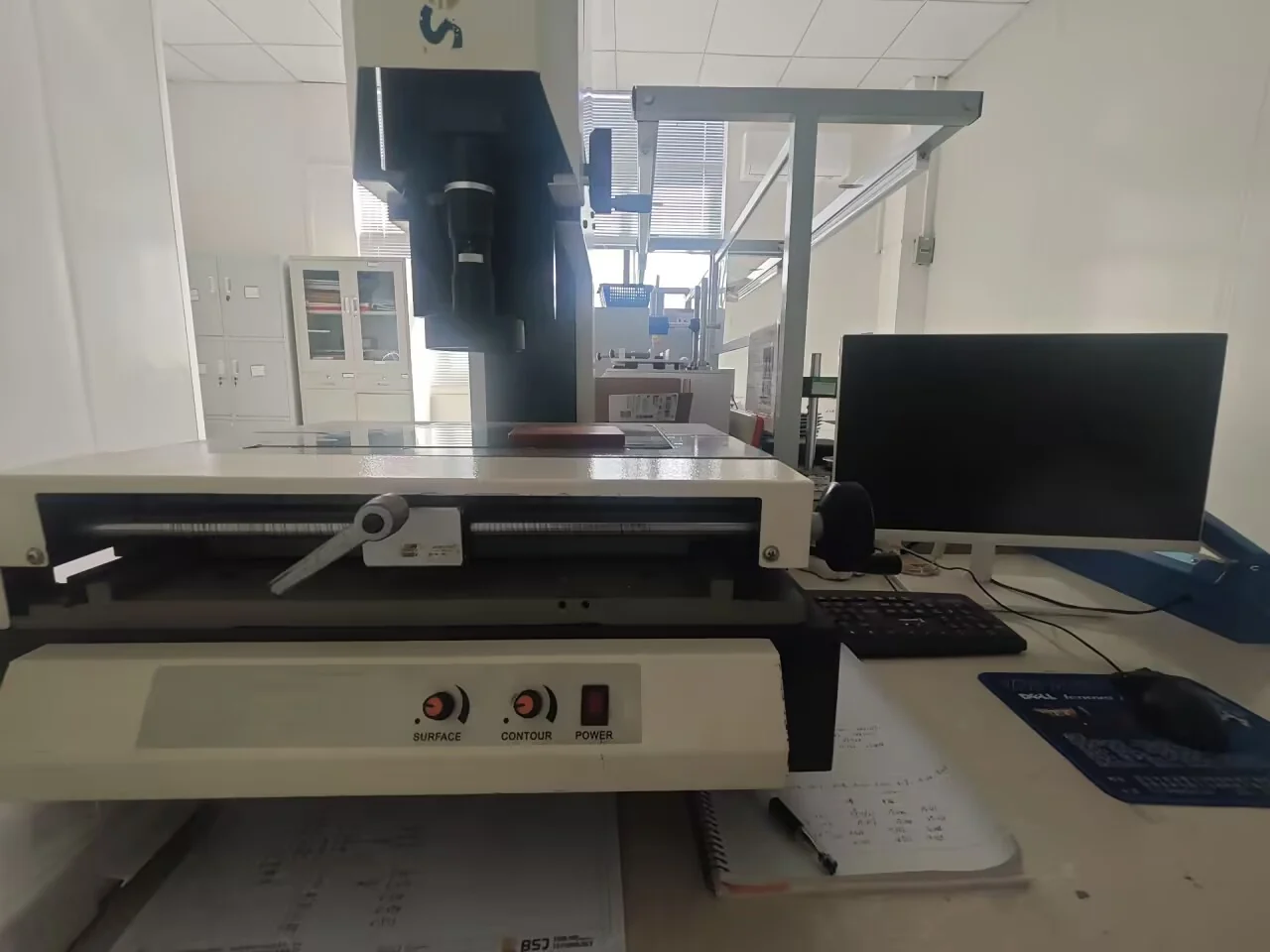
Dimensional measurement equipment

Decide what the sample must answer

Drawings and, where useful, a 3D geometry sample can help check an outline or a container interface. A 3D print is not a silicone performance sample. Flexibility, surface feel, color, attachment behavior and cleaning observations need the relevant molded silicone sample and intended use conditions.

Choose the material grade and the project’s document or testing requirements together. Raw-material documents and finished-product results apply to their stated material and scope; they should be matched to the product being developed.

Sourcing & Tooling FAQ

Key Answers Before Tooling

Covering CAD readiness, custom MOQ evaluation, free 3D fit checks vs. T1 silicone samples, NDA protection and mold ownership.

Have a part-specific question?

Send your drawing or sample photo directly to Zhou Li’s engineering desk for a 24h DFM reply.

Can we launch a coordinated pet feeding bundle (slow-feeder bowl, lick mat & floor mat)?

Yes. Our two in-house open-mill compounders match custom Pantone swatches across thick slow-feeder walls, thin suction lick mats and wide floor mats, while engineering each SKU’s Shore A durometer, mold platen layout and retail box or belly-band packaging individually.

Can we start custom development from a competitor sample or existing stainless-steel bowl?

Yes. Ship or photograph your benchmark sample or stainless-steel outer bowl and highlight the functional changes you want. Our in-house mold design team responds within 24 hours; eligible projects can check fit on 1–3 free 3D geometry prints (buyer pays shipping) before 7–15 day T1 silicone tooling.

How do you ensure pet food-contact safety and zero rubber odor?

Scent-sensitive dogs and cats reject pungent peroxide-cured rubber. We formulate feeding SKUs with platinum-cured elastomers post-cured in ventilated ovens at ~200 °C × 4 hours (targeting ≤0.5% volatile weight loss), supply batch CoA traceability, and coordinate FDA 21 CFR 177.2600 or LFGB lab testing via SGS, Intertek or TÜV (~10 days).

How do you set MOQ and colorway splits across a custom pet range?

Rather than forcing a rigid catalog minimum, we calculate MOQ per SKU around part weight, mold cavity count, custom Pantone mill batching and packaging minimums—making multi-color retail launches practical for DTC, Amazon and wholesale pet brands.

B2B Factory Direct · 24h Engineering & Tooling Review

Build Your Custom Silicone Pet Collection

Receive an engineering DFM and quotation reply within 24 hours, with custom T1 silicone tooling typically delivered in 7–15 days.

✓ NDA available before CAD exchange✓ Eligible for 1–3 free 3D fit prototypes✓ Paid molds 100% owned by customer

Start with these project details

  • The product’s job: containing, presenting food, catching drips, storing or another defined use.
  • Drawings, a reference sample or photographs showing the important interfaces.
  • Intended food/contact conditions, cleaning method and any supplied components.
  • Color, marking, packaging, estimated quantity and required project documents.