
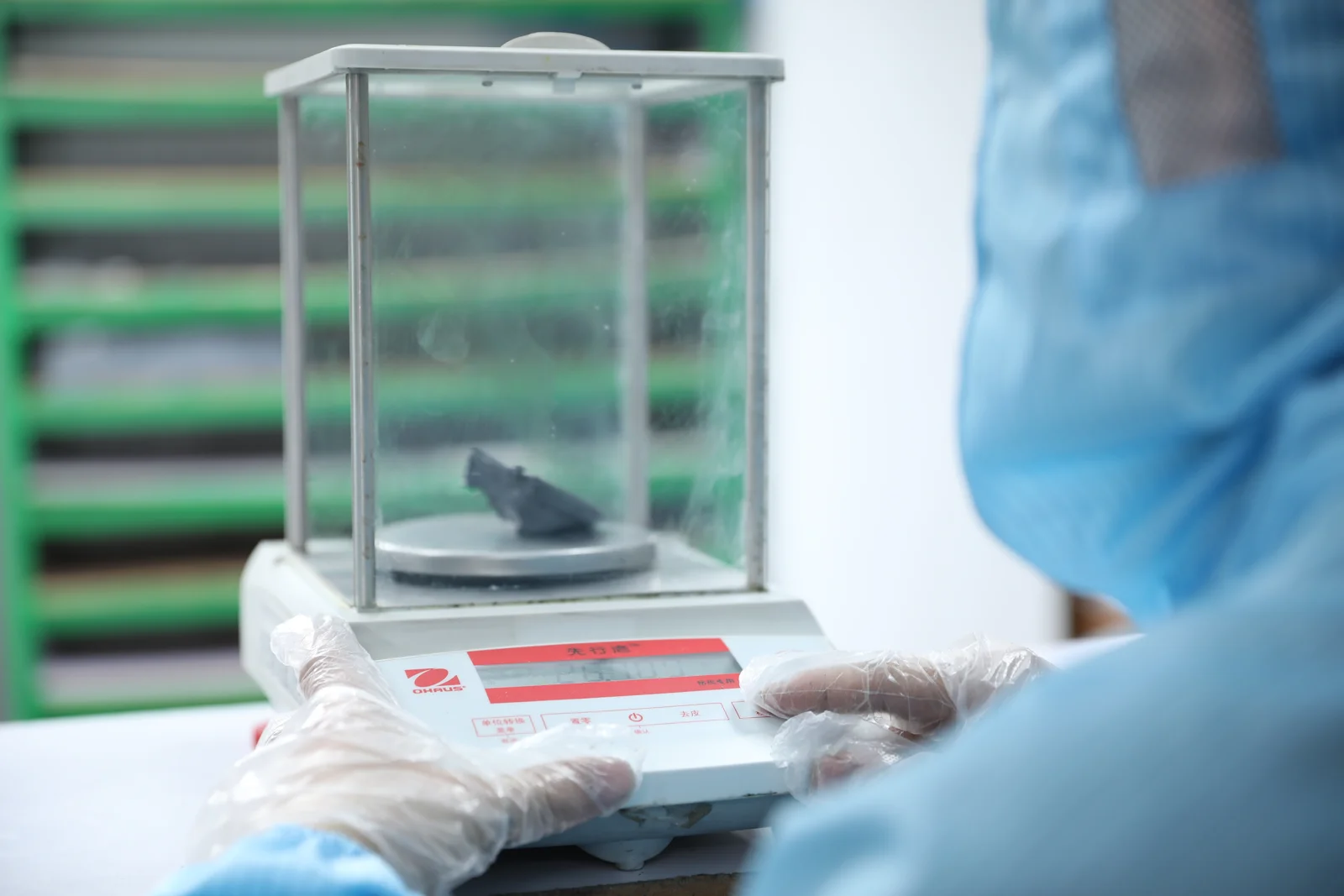
Mill & weigh preform charges
Solid gum is compounded with curing agent and Pantone pigment on 2 open mills, then cut and weighed to match cavity volume.
Youbang · B2B Custom Silicone Manufacturing · Dongguan
Ten 200–250T hydraulic compression presses with 400×400 mm to 650×650 mm heated platens in Dongguan—ideal for custom Pantone consumer lines, large-footprint kitchen and pet mats, industrial gaskets, and economical bridge-to-production tooling.
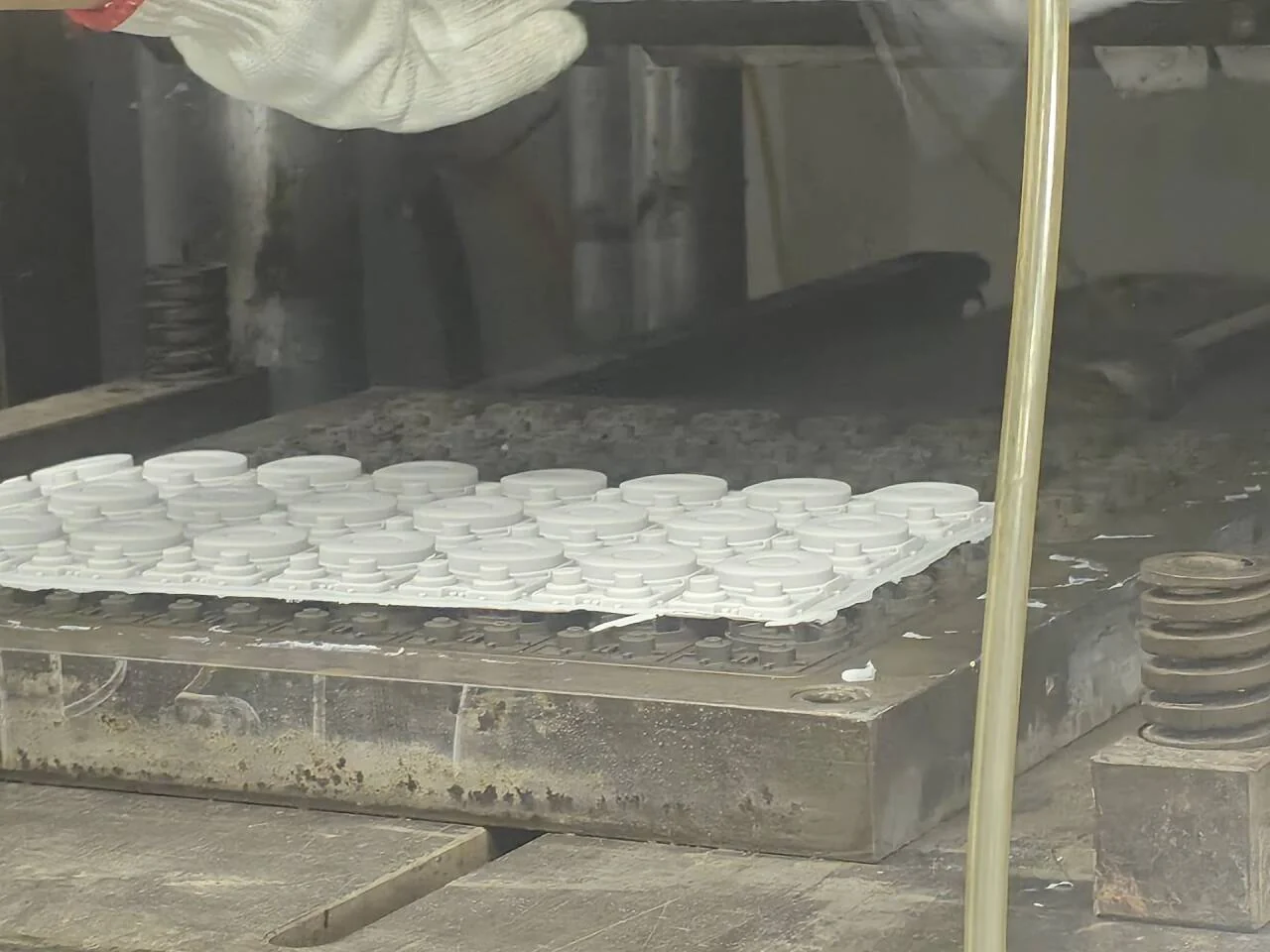
Equipment: 10 solid HCR presses (200–250T; 400×400 to 650×650 mm platens)
Wall thickness: 0.40 mm min / 0.50 mm stable mass production (per part)
Dimensional tolerance: typically ±0.05 mm precision / ±0.1–0.2 mm standard
Sampling & lead time: existing mold 3–5 days; new mold T1 7–15 days; mass 15–30 days
Actual shop-floor photography showing preform weighing, open-cavity loading, and manual demolding prior to flash trimming and secondary post-curing.
Solid gum is compounded with curing agent and Pantone pigment on 2 open mills, then cut and weighed to match cavity volume.
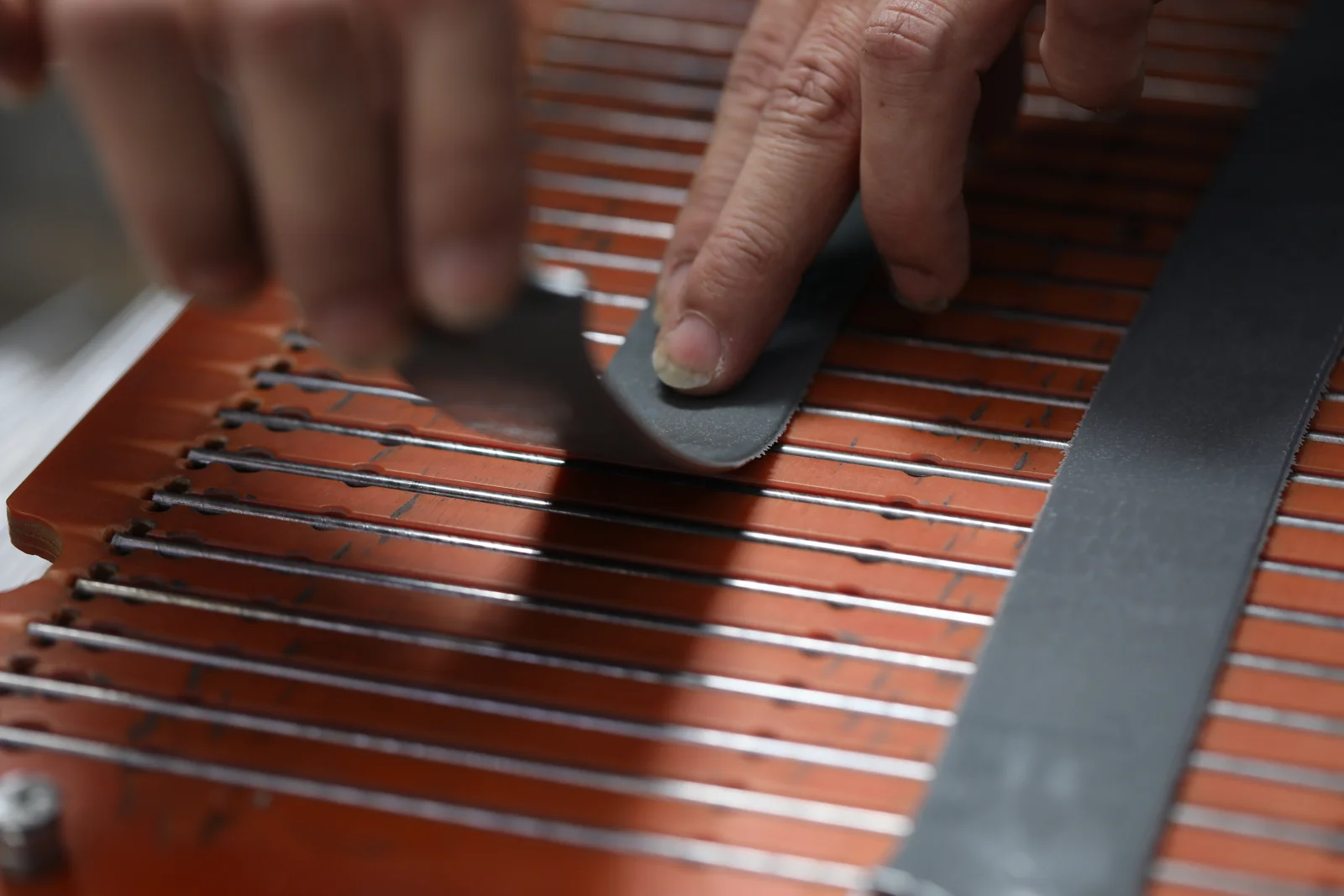
Operators place pre-weighed silicone charges into open heated platens before closing under 200–250T clamp pressure.
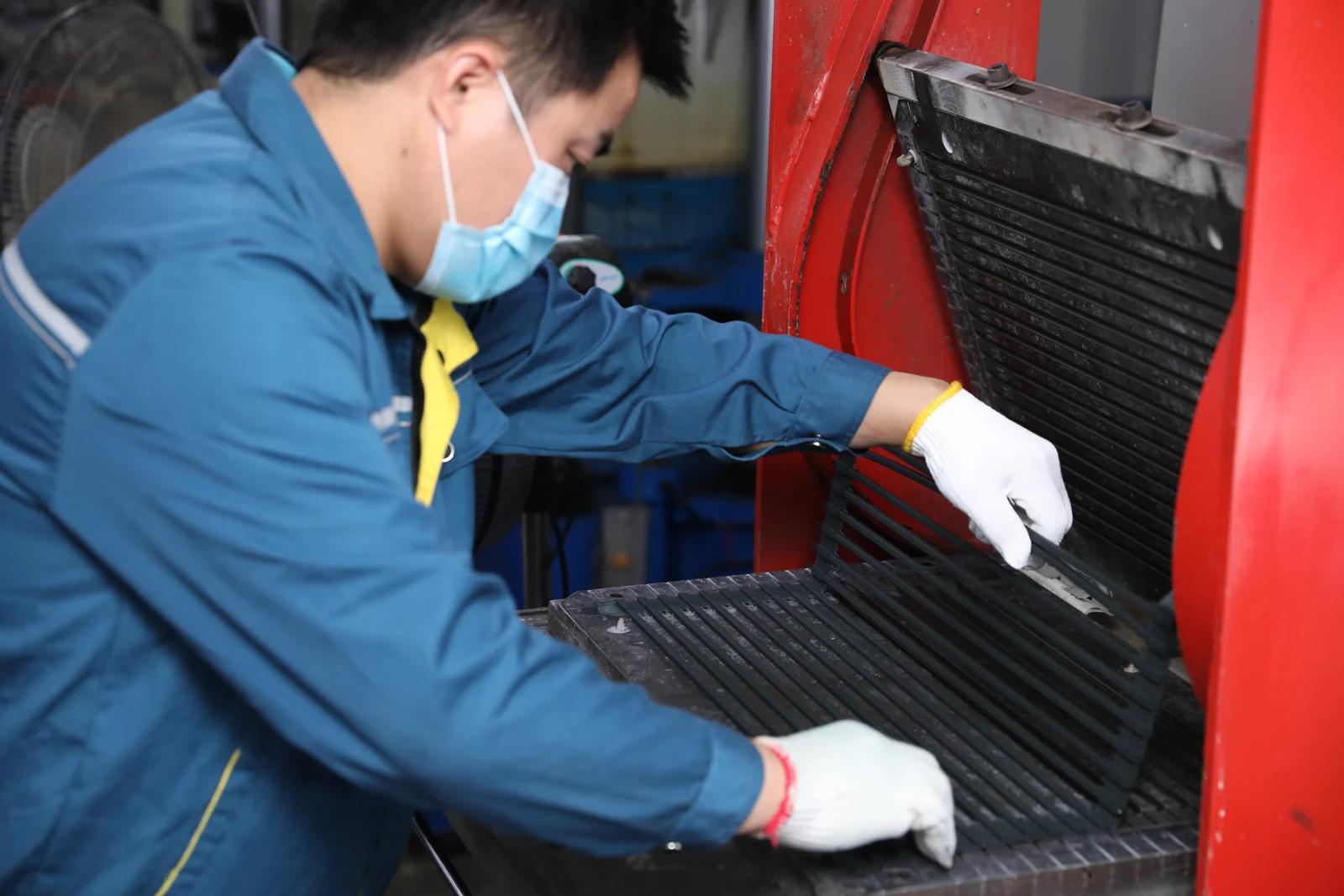
Cured parts are lifted manually from the mold (no robotic pick-and-place or cryogenic deflashing claimed) for hand deflashing and visual inspection.
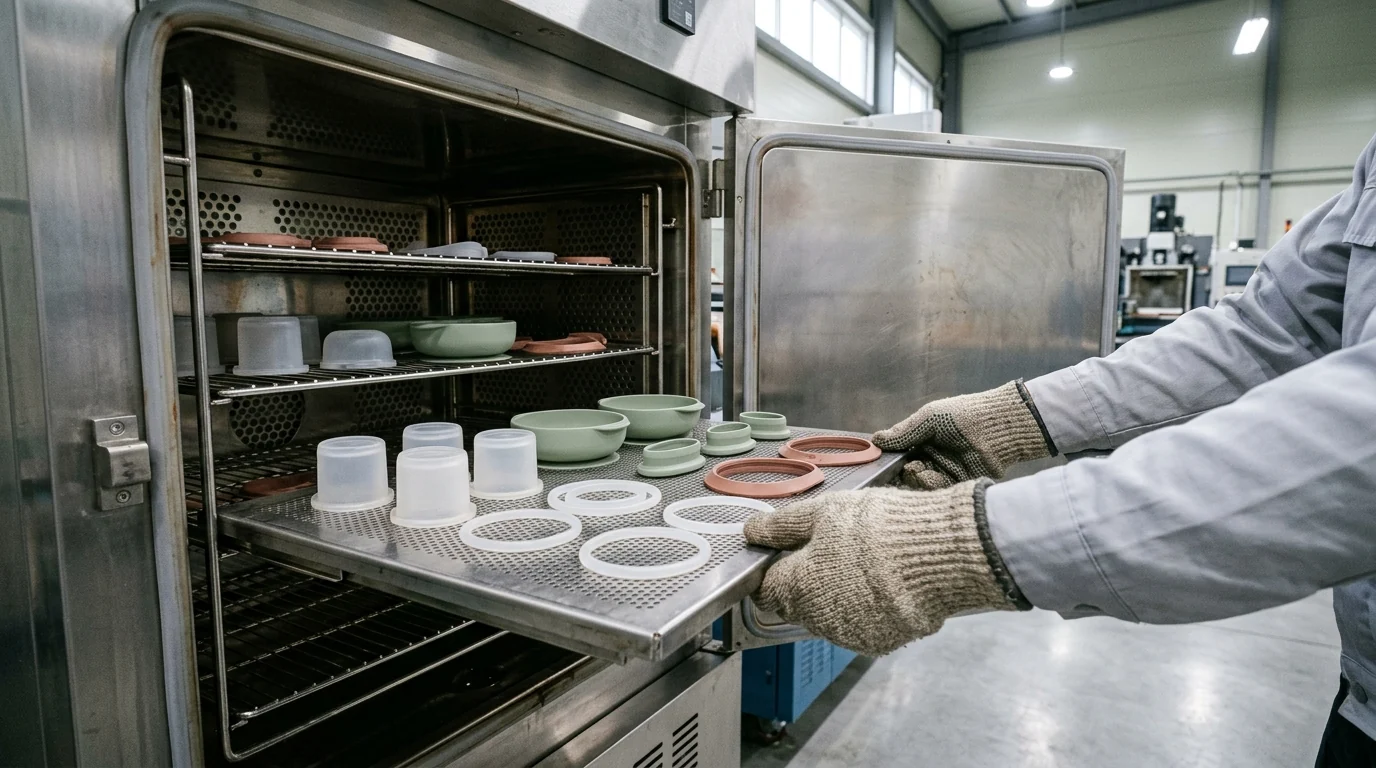
Secondary oven post-curing (typically 200 °C × 4 h), screen printing, or soft-touch coating are scheduled per material grade and destination compliance standard.
Because HCR compression molding relies on overflow grooves and manual deflashing, aligning parting geometry early prevents cosmetic surprises.
In-house DFM and mold design paired with partnered CNC toolmaking; customer-funded molds remain customer property.
T1 silicone samples establish a physical Golden Sample for trimming boundary, durometer feel, Pantone shade, and post-cure odor/volatile performance.
Evaluate 85T/120T LSR liquid injection molding when manual flash trimming cannot meet tight mucosal, optical, or micro-valve tolerances.
Compare LSR injection molding →Review primer-bonded compression overmolding for utensils, roll-up dish drying racks, and rigid-core industrial handles.
Review insert overmolding →Sourcing & Tooling FAQ
Covering CAD readiness, custom MOQ evaluation, free 3D fit checks vs. T1 silicone samples, NDA protection and mold ownership.
Send your drawing or sample photo directly to Zhou Li’s engineering desk for a 24h DFM reply.
HCR molds do not require chilled cold-runner manifolds, pneumatic shut-off nozzles, or micrometer-lapped liquid flash seals. A prototype or production HCR tool typically costs a fraction of an LSR mold (often 1.0×–3.5× vs. 4.0×–8.0×+ relative baseline), making HCR ideal for small-to-medium volume consumer and industrial runs (order quantities assessed per project).
Our 10 hydraulic compression presses feature heated platens ranging from 400×400 mm up to 650×650 mm. Actual maximum part footprint depends on mold frame wall allowances, tear-edge overflow channels, and projected clamping area—send your 2D/3D envelope for an exact platen fit check.
We compound platinum-cured food-contact elastomers (from Wacker, Shin-Etsu, Momentive, Dow, Elkem, Dongjue, Zheng'an) and run ventilated oven secondary post-curing—typically ~4 hours at 200 °C—to drive off low-molecular-weight volatile siloxanes below the 0.5% LFGB limit.
No—we do not claim in-house cryogenic deflashing or robotic demolding. Our HCR parts use precision tear-edge mold grooves combined with skilled manual trimming and visual inspection, keeping expectations transparent during quotation.
B2B Factory Direct · 24h Engineering & Tooling Review
Send your part drawing, target Shore A hardness, Pantone color split, and compliance market for a 24-hour HCR compression DFM and quote.