Youbang · B2B Custom Silicone Manufacturing · Dongguan

Custom Silicone
Kitchenware Manufacturing

Develop private-label and OEM silicone kitchenware—from steel-core cooking utensils and multi-cavity bakeware to collapsible containers and large countertop sink mats—backed by in-house Pantone compounding, 650×650 mm HCR & LSR molding, and platinum-cured food-contact compliance.

Youbang Silicone

Build a single hero SKU or a color-matched retail kitchen collection. Because utensils, hollow containers, reinforced mats and sink accessories rely on different tooling and insert structures, our engineering team reviews each item’s fit, Shore A hardness and molding route individually while keeping Pantone shades uniform across your line.

Cooking & food preparation

Start with the working action, the ingredient path and the surface that supports the tool.

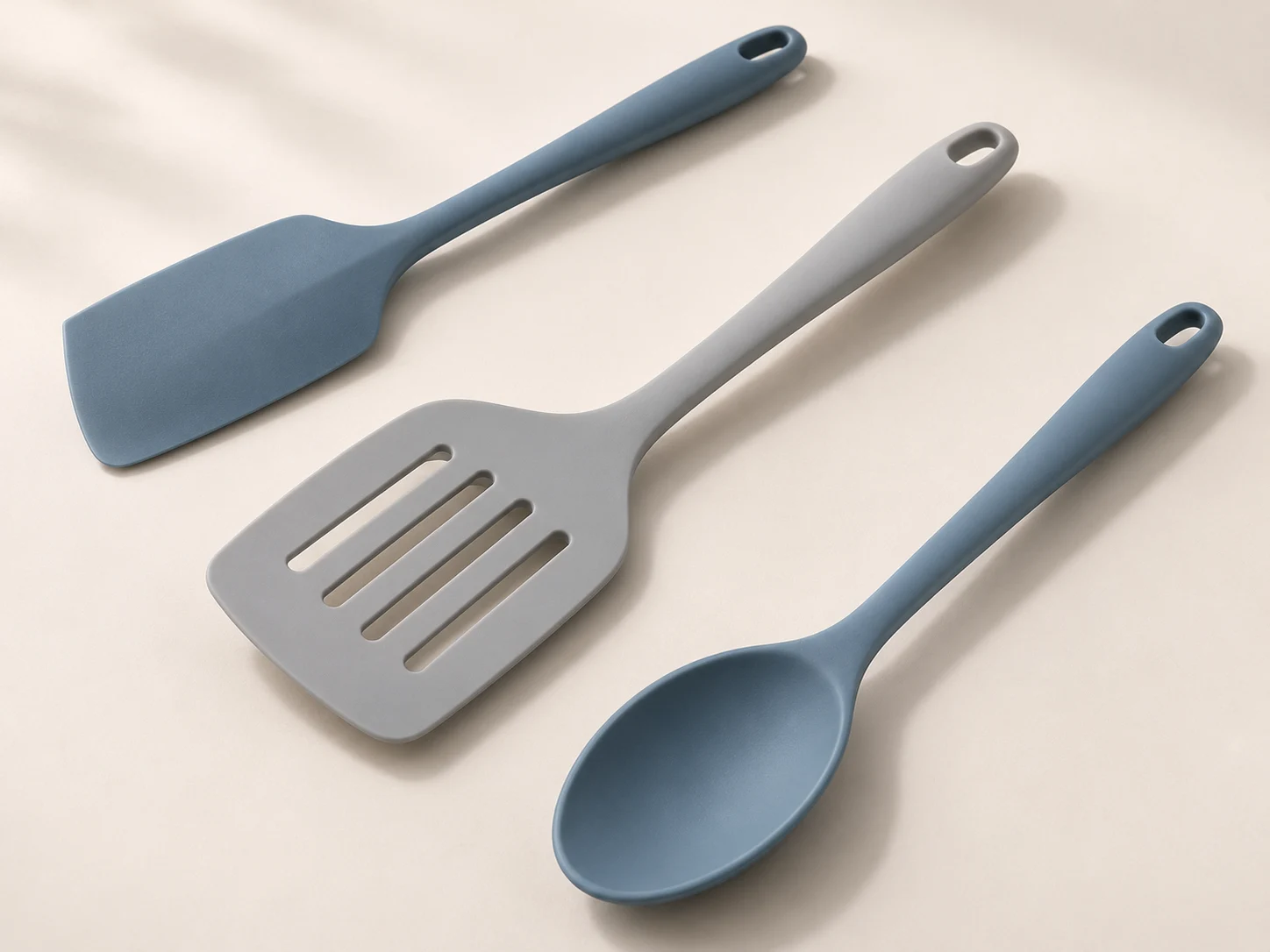
Silicone cooking utensils

Silicone cooking utensils

Cooking utensils bring a working head and a grip together. The head geometry should suit scraping, turning, stirring or serving, while the handle supports the way the user applies force.

Spatulas & scrapers
A flexible edge follows a bowl or pan; the head needs support behind that edge.
Turners
A broad lifting face and its edge affect access beneath food and drainage through slots.
Spoons & ladles
Bowl shape, depth and handle angle define scooping, stirring and pouring.
Basting brushes
The working fingers need the right reach and separation for spreading and rinsing.
Gripping components
Handle sleeves or gripping surfaces are developed around the mating handle and removal method.
  • Match the working edge to the vessel and the cooking or serving action.
  • Keep joints, hanging points and cleaning access in the same design review.
Choices & tradeoffs
A continuous silicone form and a silicone head combined with a rigid handle have different support and assembly needs. Define any customer-supplied insert and the joining process before tooling.
Bring to the review
Send the working-head outline, handle or insert interface, contact temperature and duration, food contact and cleaning method.
Explore cooking utensils →
Silicone bakeware & baking tools
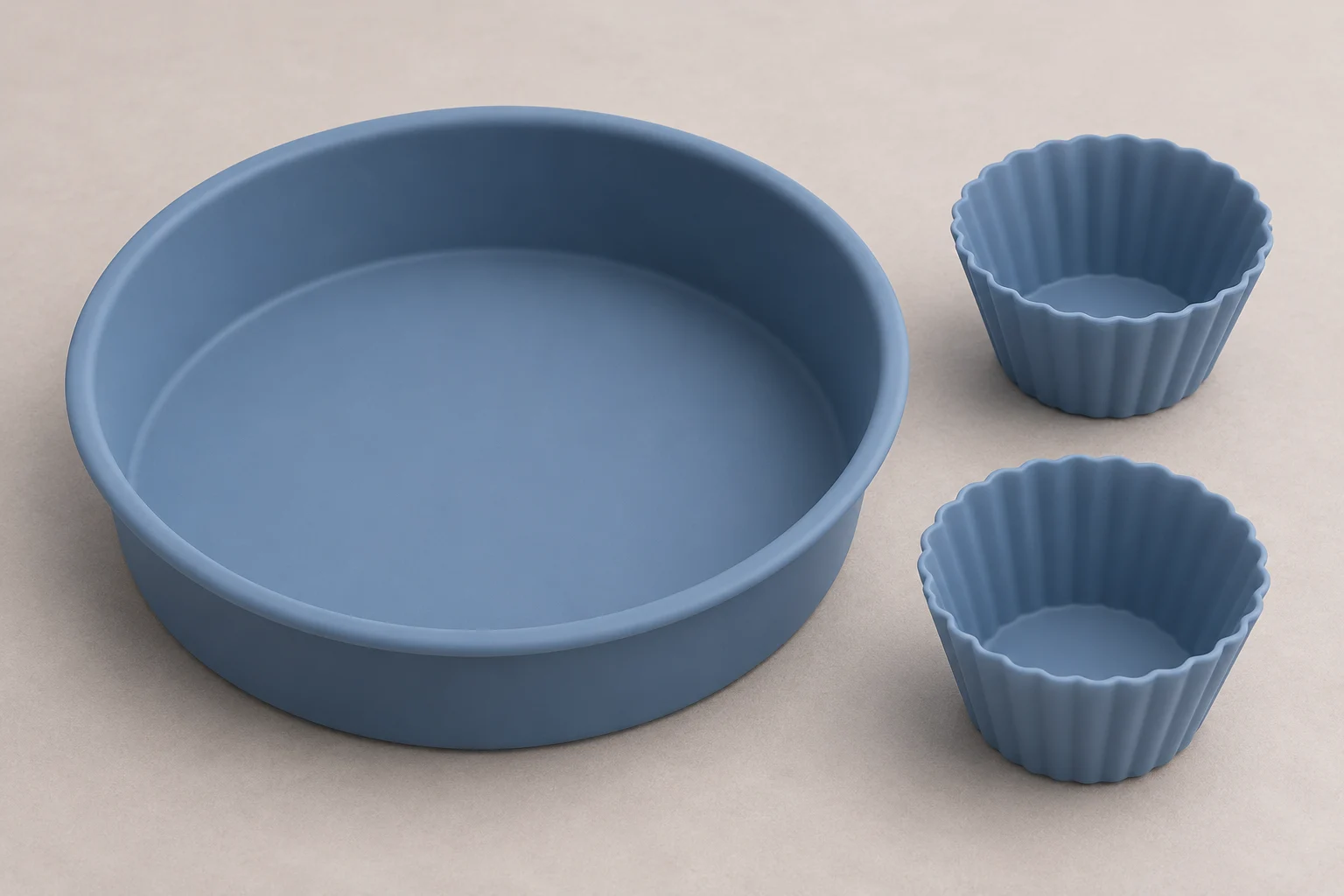
Cake mold and muffin cups

Silicone bakeware & baking tools

Bakeware shapes a mixture or provides a preparation surface. Cavity products, flat mats and decorating parts have different support, release and cleaning requirements.

Cake molds
The cavity, rim and base define the form; a flexible wall also needs a stable carrying arrangement.
Muffin cups
Individual cups and connected multi-cavity layouts change filling, placement and release.
Baking mats
A flat working surface must match the tray; silicone-only and reinforced composite constructions require separate process review.
Pastry & rolling mats
Usable area, edge handling and storage matter for rolling, cutting and lifting the mat.
Decorating parts
Openings, mating parts and dismantling define how material is applied and cleaned away.
  • Separate oven-contact requirements from cool preparation or decorating tasks.
  • Review release and handling with the intended mixture and supporting tray.
Choices & tradeoffs
Softer walls can help release but change carrying stability. A flat mat and a fiber-reinforced mat are different constructions; agree the material stack and manufacturing route for the project.
Bring to the review
Provide the cavity or tray layout, intended mixture, heating conditions if applicable, support method and cleaning requirements.
Explore baking and craft molds →
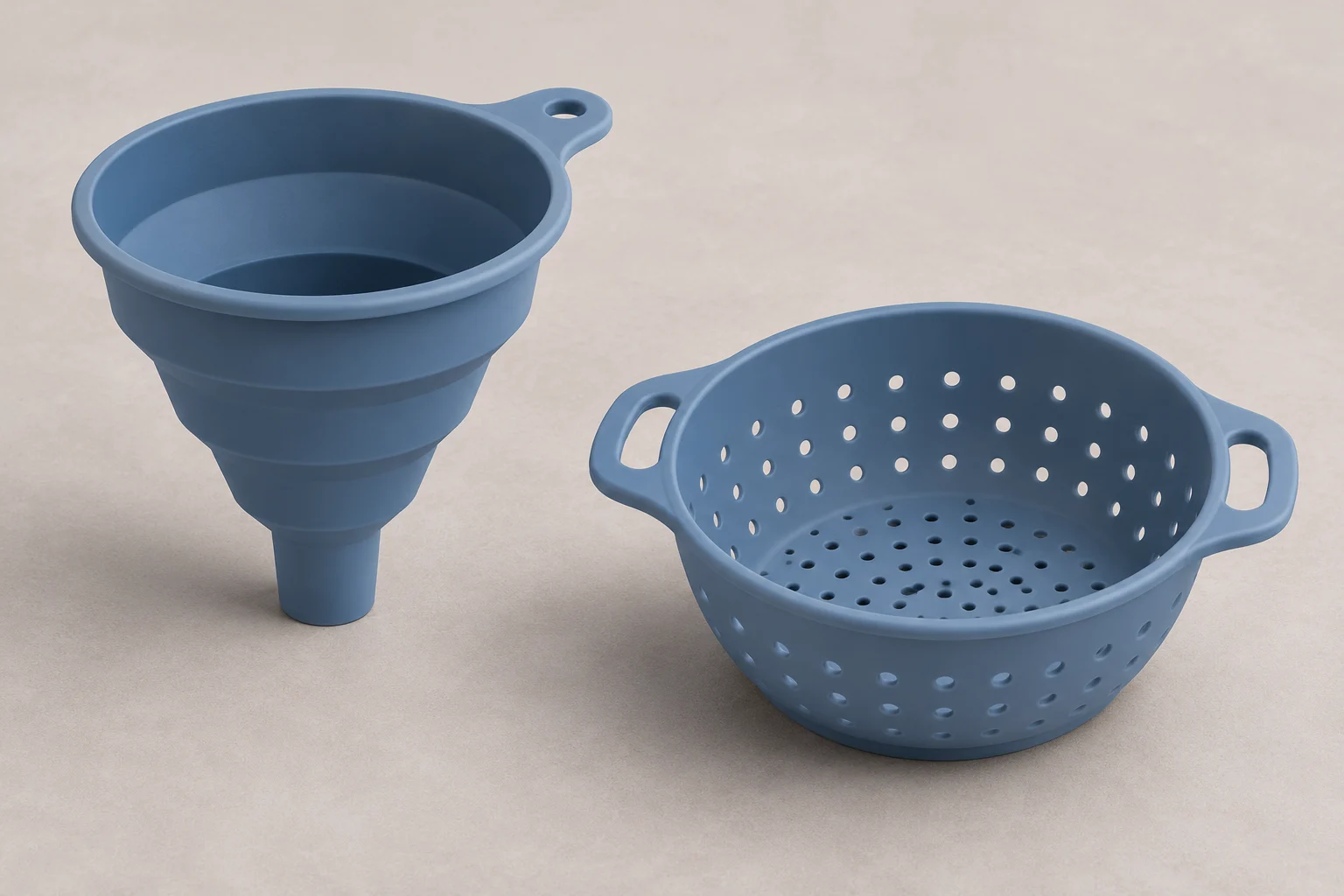
Silicone food preparation tools
Collapsible funnel and food straining basket

Silicone food preparation tools

Preparation tools help transfer, strain or portion ingredients before cooking or serving. They are selected around the food path and the container interface, rather than the sink drain.

Folding funnels
The inlet, outlet and support points control filling; folding zones also affect standing and storage.
Food strainers & colanders
Bowl volume, hole layout and handles should suit the ingredients and the supporting vessel.
Preparation scrapers
A working edge gathers or portions material on a bowl or worktop.
Portioning accessories
Openings and removal access should suit the portioning action and the food consistency.
  • Define where food enters, passes through and leaves the tool.
  • Allow access for hands, support and rinsing around the vessel.
Choices & tradeoffs
A foldable shape saves a different kind of storage space from a rigid outline, but the folds and supporting lip need review. A food colander and a drain strainer should not share one fit brief.
Bring to the review
Send the receiving-container opening, ingredient form, filling or draining action, support points and cleaning method.

Storage & serving

Separate a complete vessel from a closure component, and serving from surface protection.

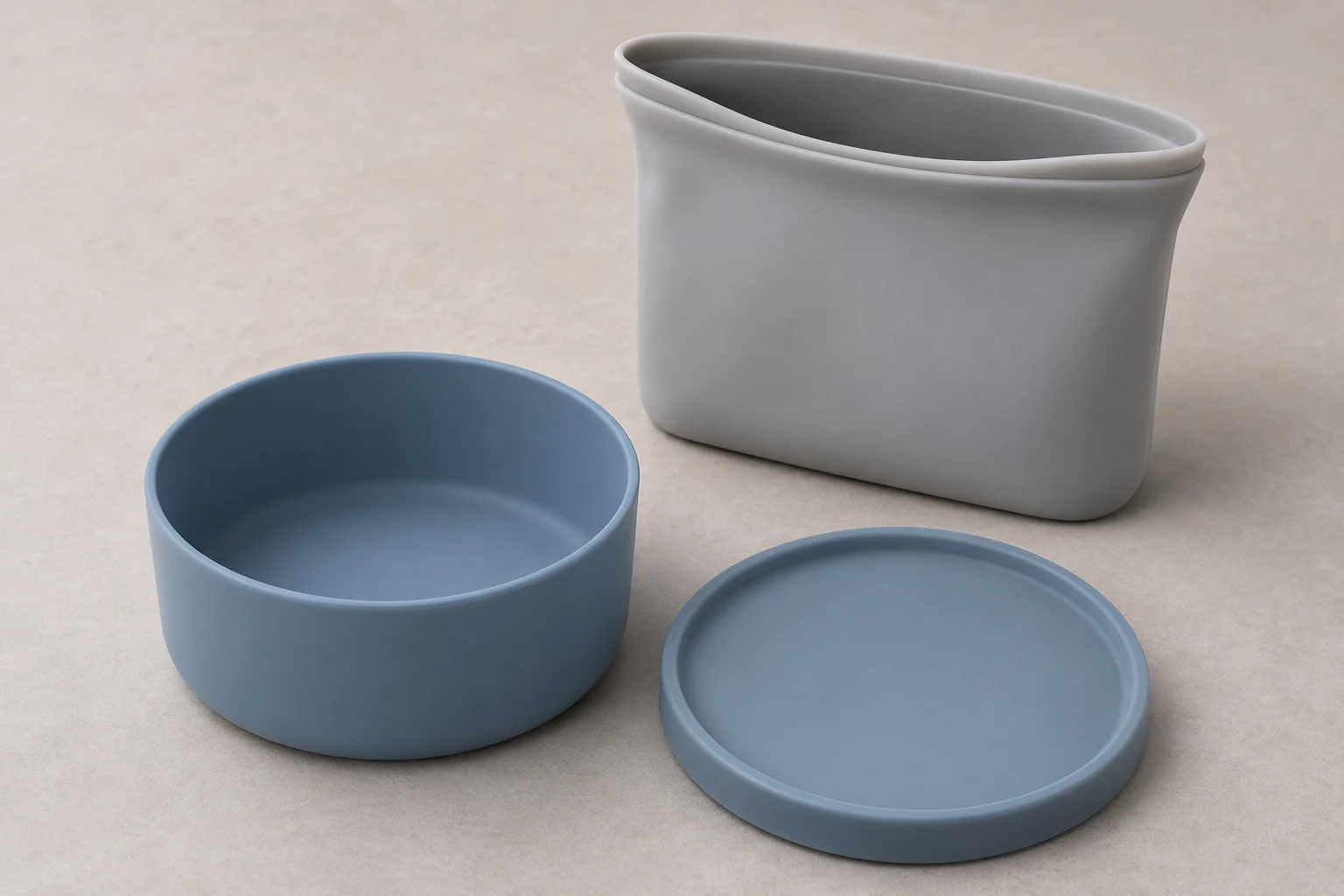
Food storage & silicone containers
Food container, lid and storage bag

Food storage & silicone containers

Storage projects may involve a complete container or a separate lid, bag or sealing component. Define that delivery scope first, then the opening, support and closure interfaces.

Covers & lids
The rim profile, removal tab and supporting container determine fit and opening force.
Storage bags
Body shape, filling access and the mouth structure affect standing, closure and washing.
Bowls & containers
Base support, wall shape, capacity and lid interface belong to the complete product brief.
Collapsible containers
Fold zones change storage height and need to remain usable during opening, loading and cleaning.
Container seals
A ring or gasket is one component of a closure system, defined by the mating groove and compression.
  • Separate carrying, dry storage, refrigerated storage and reheating requirements.
  • Set the conditions for closure and leakage checks if these are project requirements.
Choices & tradeoffs
A soft folding wall and a self-supporting base need different geometry. Treat the container, lid and seal as related but separately reviewed parts; closure performance depends on the assembled system.
Bring to the review
Provide the complete container or component scope, volume, mating rim, intended contents, storage conditions and opening method.
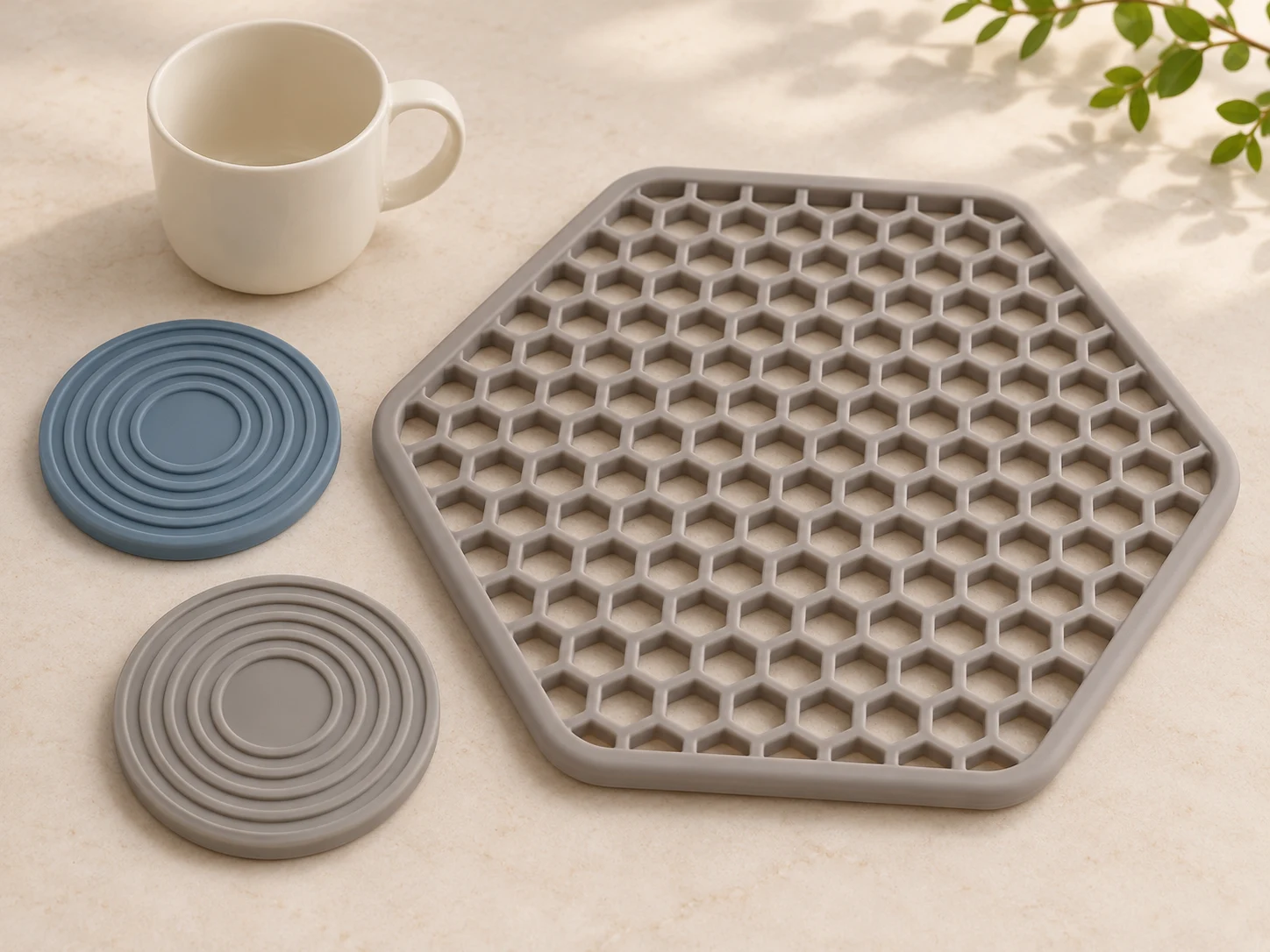
Silicone tableware, trivets & coasters

Silicone tableware, trivets & coasters

Tableware holds and serves food; mats separate the table from dishes or drinkware. A range can share its appearance while keeping vessel geometry and surface-contact tasks distinct.

Plates & bowls
Rim shape, usable volume, base stability and lifting access define the serving vessel.
Table mats & placemats
A larger footprint covers a place setting and must allow wiping, lifting and storage.
Trivets
The contact pattern should support the intended cookware and the surface below.
Coasters
Cup-base dimensions, rim geometry and collected moisture affect the small contact area.
  • Describe adult serving, tabletop coverage or cookware contact as separate uses.
  • Infant-specific feeding products need a separate use and safety brief.
Choices & tradeoffs
A vessel needs capacity and standing stability; a mat needs surface contact and manageable storage. Define contact temperature and duration for sample evaluation rather than assuming a rating from the product name.
Bring to the review
Provide the serving or contact object, dimensions, table surface, temperature conditions, cleaning and stacking or storage needs.
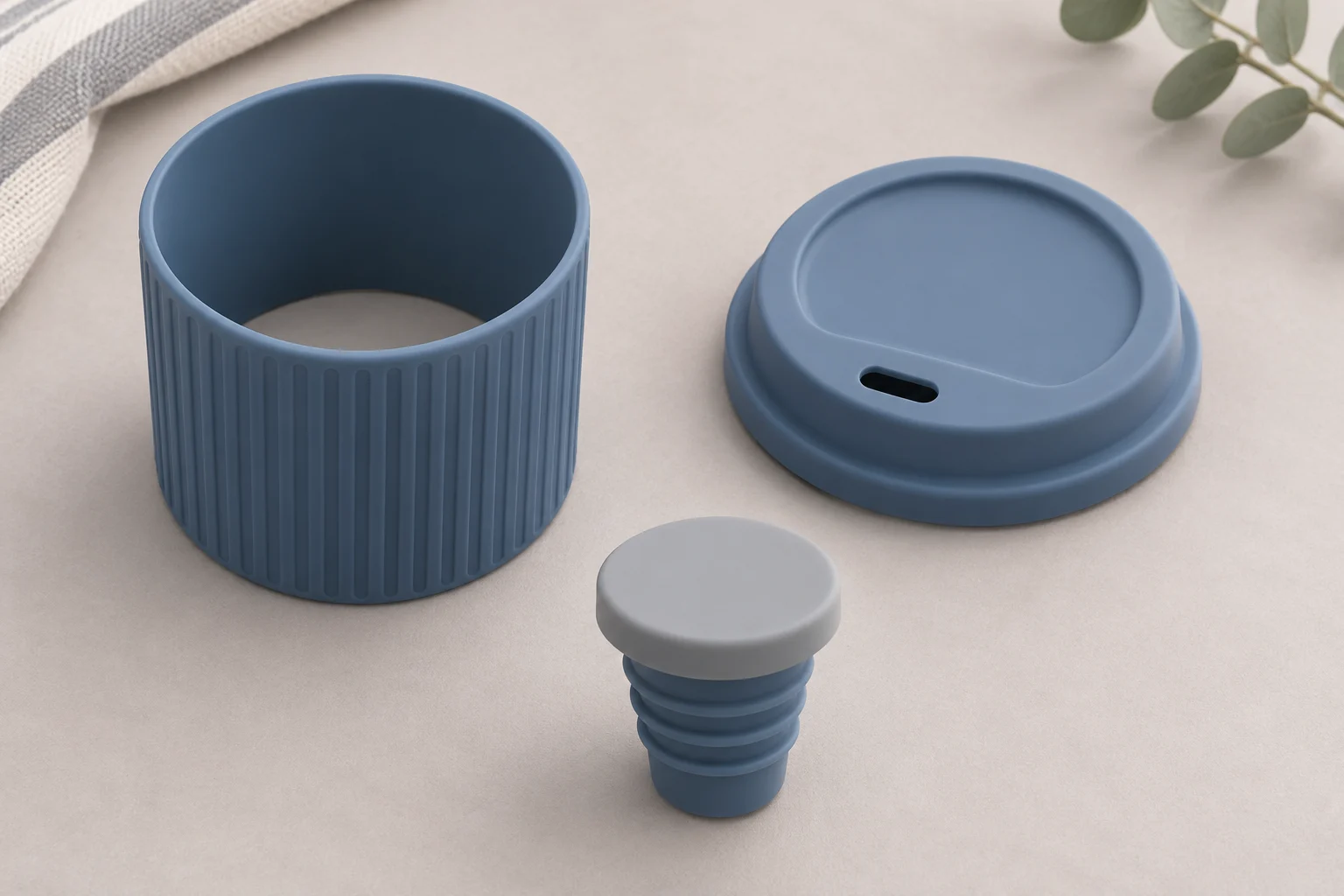
Silicone drinkware accessories
Cup sleeve, lid and bottle stopper

Silicone drinkware accessories

Drinkware accessories fit around a cup, its opening or a bottle neck. A sleeve, lid and stopper use different interfaces and should not be treated as universally interchangeable parts.

Cup sleeves
Internal contour and wall support affect holding, fitting and removal for cleaning.
Cup lids
The cup rim, drinking opening and vent arrangement define the use and fit.
Cup plugs & bottle stoppers
The opening profile and removal grip define a small closure component.
Silicone straws
Length, bore and cleaning access define the part; the required manufacturing route needs project review.
  • Match the actual cup or bottle interface, not only a nominal diameter.
  • Review drinking, venting, dismantling and cleaning as connected actions.
Choices & tradeoffs
A tight fit can affect removal; openings and vents affect the intended drinking action. Define any closure or leakage requirement with the assembled drinkware rather than assuming universal fit.
Bring to the review
Send cup-rim or bottle-neck drawings, mating samples, drinking and cleaning conditions, and the planned assembly.

Ice, drainage & cleaning

Follow water and contact conditions from the cavity to the countertop, sink and cleaning area.

Kitchen sink accessories
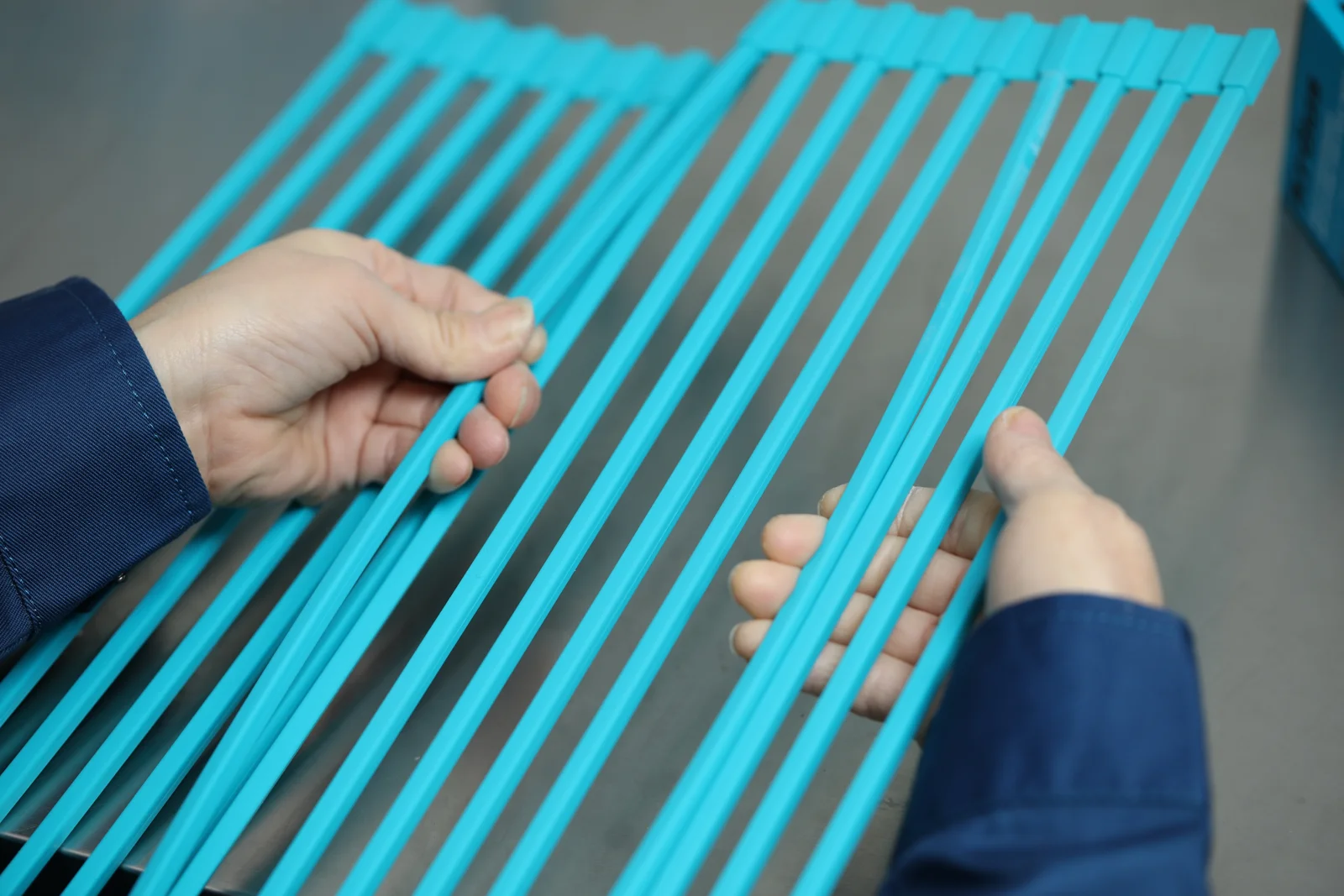
Handling a roll-up drying rack

Kitchen sink accessories

Sink accessories support dishes, manage drips, protect a basin or organize the cleaning area. Choose the location and water route before coordinating a range.

Countertop mats & over-sink racks
A mat collects or directs water on the counter; a rack drains openly across the basin.
In-basin protectors
The basin-floor contour, drain opening and support points define this contact layer.
Faucet mats & strainers
One collects drips around the faucet; the other filters at the drain opening.
Caddies & cabinet mats
Cleaning-tool storage and cabinet-floor collection involve different spaces and removal paths.
  • Countertop, over-sink, basin, faucet, drain and cabinet locations need different dimensions.
  • A coordinated look does not replace a separate interface review for each type.
Choices & tradeoffs
Start with the supporting surface and the desired water route. A countertop drying mat, a protector inside the basin and a cabinet mat are different products even when all are called silicone mats.
Bring to the review
Provide the installation layout, supporting edges, drain or faucet interfaces and the intended objects and cleaning method.
Read all seven sink accessory types →
Silicone ice trays & dessert molds
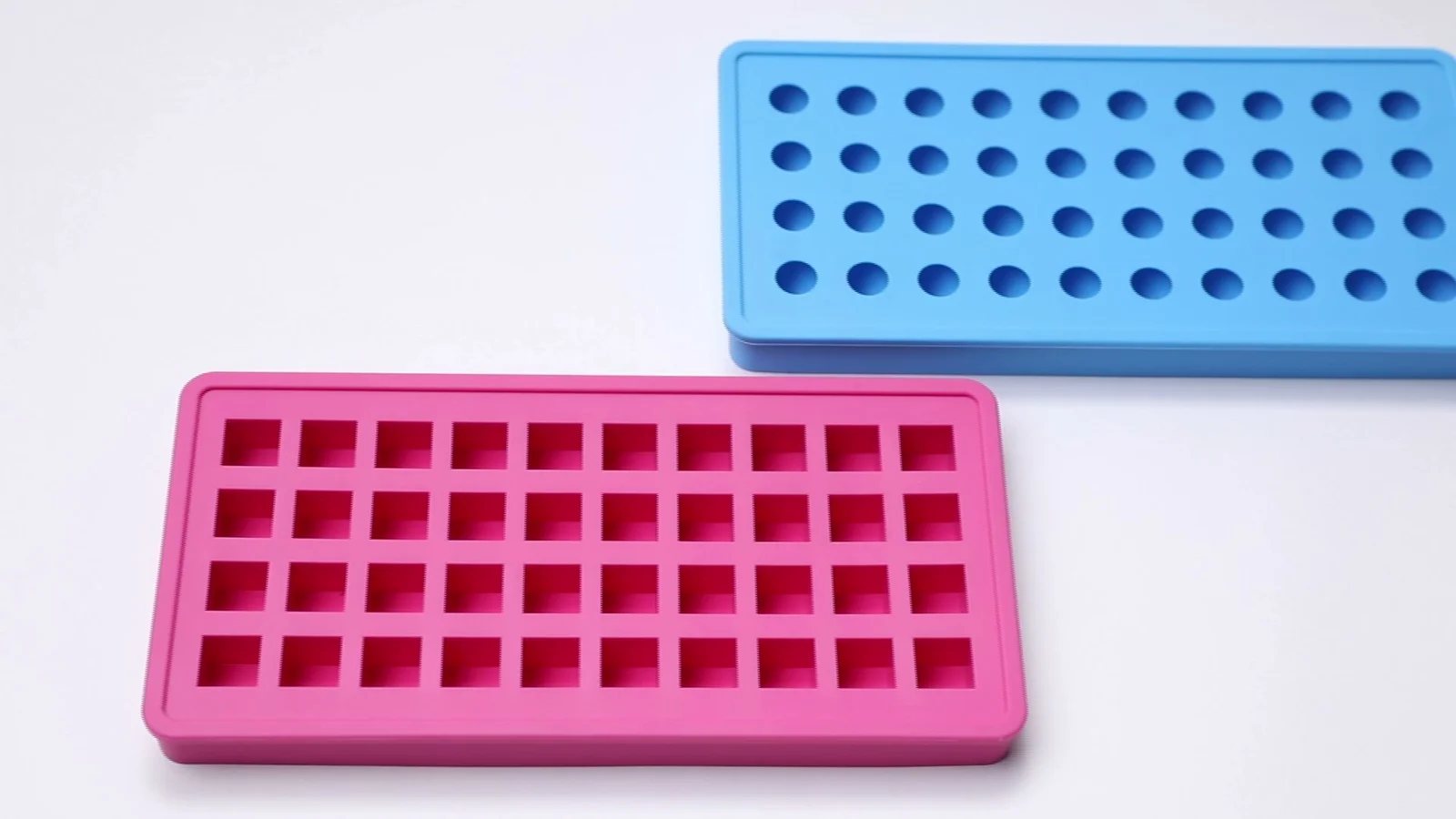
Square- and round-cavity ice trays

Silicone ice trays & dessert molds

Ice and dessert molds shape a filling through a cavity. The intended finished form, filling method and release action determine the cavity layout and handling.

Open ice trays
Open cavities simplify filling, while layout and support affect carrying and release.
Lidded or assembled molds
A separate lid covers open cavities; paired halves form the ice shape together. Their filling and separation actions differ.
Popsicle molds
Stick placement and filling access must suit the finished shape and removal action.
Chocolate & candy molds
Small details and multiple cavities affect filling, release and cleaning access.
  • Separate freezing and cool-set desserts from oven-baking requirements.
  • Define the complete finished shape, not just its top-view opening.
Choices & tradeoffs
More cavities change filling and release handling. Deeper or detailed shapes may need a different wall and support arrangement; agree the actual filling and release method on samples.
Bring to the review
Provide the target shape, cavity layout, fill material, setting conditions, release method and lid or stick interfaces.
Explore ice trays and molds →
Silicone kitchen cleaning tools
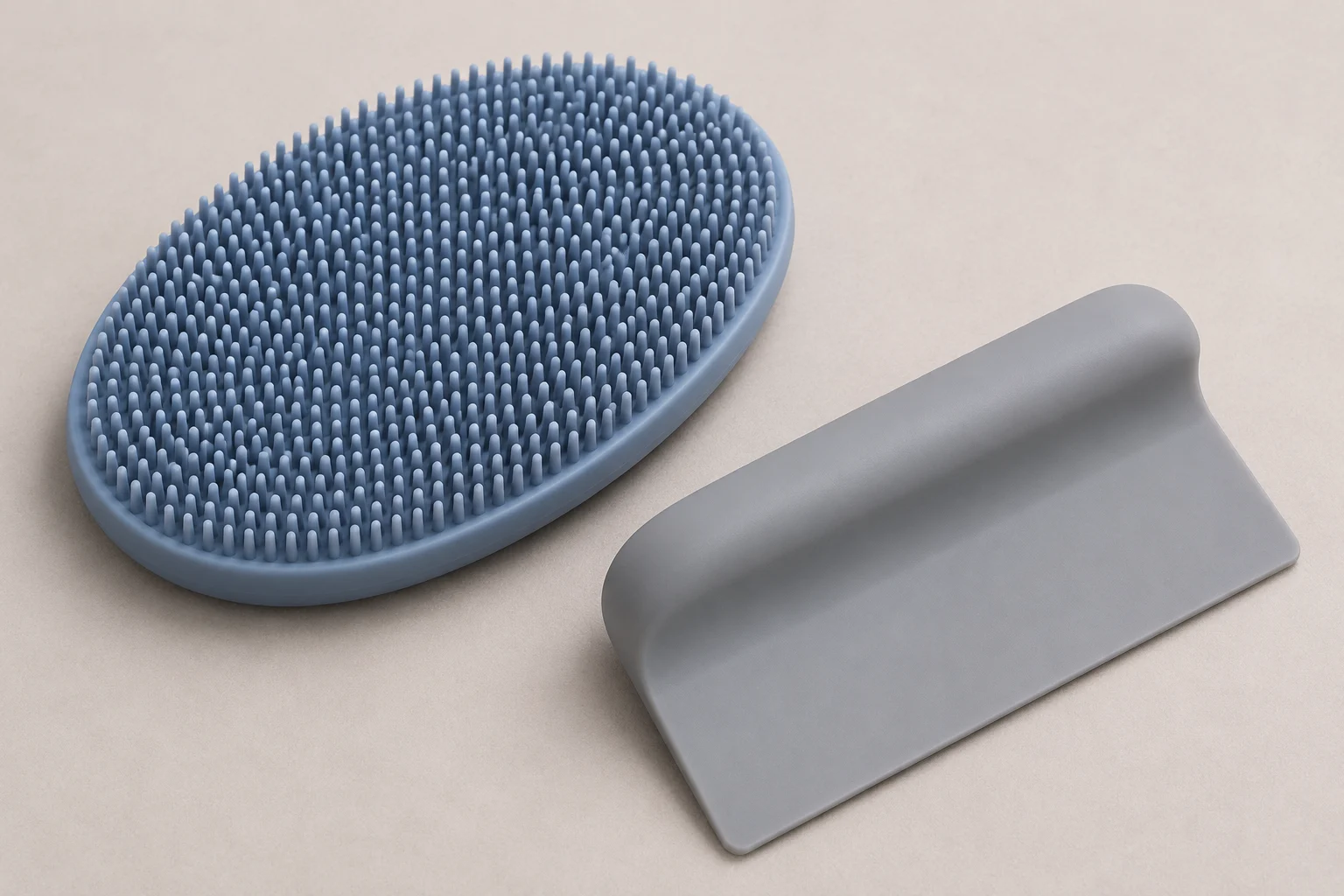
Cleaning brush pad and scraper

Silicone kitchen cleaning tools

Cleaning tools apply a working surface to dishes, utensils or a countertop. Their contact pattern and grip should suit the surface and the cleaning action.

Scrubbers
Flexible fingers provide many contact points and need open paths for rinsing.
Short-bristle pads
A broad pad changes hand pressure and access to curved or flat surfaces.
Cleaning scrapers
A defined edge gathers residue; edge shape and support affect the working angle.
  • Identify dishes, cookware or worktops and the expected residue.
  • Plan rinsing, drying and hanging or resting after use.
Choices & tradeoffs
Finger spacing and edge flexibility change contact and rinsing access. Match the working surface to the object and detergent conditions; a cleaning tool is separate from the tray that stores it.
Bring to the review
Send the target surface, cleaning motion, residue, detergent and temperature conditions, grip and storage requirements.

Key Engineering & Sourcing Decisions for Kitchen Ranges

Lock in insert supply, hardness zoning, platen layout and multi-SKU color matching early so tooling quotes and T1 silicone samples hit your target cost and launch window.

Structural ChoiceDesign & Sourcing TradeoffDetails to Share
Standalone silicone part vs. combined with a customer-supplied rigid partDesign & Sourcing TradeoffChanges fit coordination, component supply, and assembly ownership; actual overmolding requires customer-supplied PC, PP, PA or metal parts (stainless steel, aluminum, copper) and silane primer.Details to ShareRigid-part drawings, how parts join, and who supplies rigid components.
Working-edge flexibility and body supportDesign & Sourcing TradeoffBalances wiping flexibility at the working tip against structural support when lifted or loaded, tuned via wall-section transitions and 30–70 Shore A selection.Details to ShareContact geometry, working-edge areas, and expected load when filled or lifted.
Flat mat or lid surface vs. multi-cavity trayDesign & Sourcing TradeoffShifts tooling layout on our 400×400 to 650×650 mm HCR platens between wide uninterrupted mats and multi-cavity demolding clearance.Details to ShareCounter or tray support conditions, cavity layout sketch, and intended contents.
Fixed full-height shape vs. collapsible folding structureDesign & Sourcing TradeoffTrades compact stored height against hinge wall thickness (`≥0.5 mm` stable HCR / `≥0.3 mm` LSR) and dishwasher access; verified on T1 molded samples.Details to ShareOpen and stored shapes, plus how the item is carried and used.
Single standalone item vs. coordinated multi-piece setDesign & Sourcing TradeoffAligns custom Pantone batches compounded on our 2 in-house open mills with individual item tooling and coordinated retail gift-box or pouch packaging.Details to ShareItem list, quantity breakdown by item and color, and packaging format.

Sourcing & Tooling FAQ

Key Answers Before Tooling

Covering CAD readiness, custom MOQ evaluation, free 3D fit checks vs. T1 silicone samples, NDA protection and mold ownership.

Have a part-specific question?

Send your drawing or sample photo directly to Zhou Li’s engineering desk for a 24h DFM reply.

Can we develop a multi-SKU kitchenware collection with matching brand colors?

Yes. We compound custom Pantone shades in-house on two open mills and verify visual match across thick utensil handles, thin lids and matte mats under agreed lighting, while engineering each item’s mold, Shore A durometer and QC checklist separately.

Can we start an OEM project from a reference sample or concept sketch?

Yes. Share your reference item, target vessel dimensions and key upgrades. Our in-house mold design team replies within 24 hours with DFM feedback; once brief, quote and CAD are confirmed, we can provide 1–3 free 3D-printed geometry prototypes (shipping paid by buyer) before cutting 7–15 day T1 silicone tooling.

How do you choose between HCR compression molding, LSR injection and overmolding?

We match the process to geometry and volume—10 HCR presses (200–250T, platens up to 650×650 mm) handle large drying mats, bakeware and solid utensils; 2 LSR machines (85T & 120T) mold precision thin-wall valves and lids; and silane-primer overmolding bonds silicone onto customer-supplied stainless steel, aluminum, copper, PC, PP or PA cores.

How do you ensure odorless food-contact compliance for US and EU retail?

We formulate with platinum-cured elastomers from Wacker, Shin-Etsu, Momentive, Dow, Elkem and vetted domestic suppliers, run ventilated ~200 °C × 4 h secondary post-curing to keep volatiles ≤0.5% for LFGB, and coordinate order-specific FDA 21 CFR 177.2600 or LFGB lab reports via SGS, Intertek or TÜV (~10 days).

Do you sell off-the-shelf wholesale stock, and who owns custom molds?

We focus on B2B custom OEM/ODM rather than public wholesale stock so your brand avoids generic retail overlap. MOQ is evaluated flexibly per part weight and cavity layout, NDA protection is standard, and paid custom molds belong 100% to your company.

B2B Factory Direct · 24h Engineering & Tooling Review

Launch Your Custom Silicone Kitchenware Line

Send your 2D/3D CAD, reference photos, target markets and estimated order quantities—our engineering team responds within 24 hours with process recommendations and a clear quotation scope.

✓ NDA available before CAD exchange✓ Eligible for 1–3 free 3D fit prototypes✓ Paid molds 100% owned by customer

Direct Dongguan Engineering Desk

  • Accepts STEP / IGES / PDF / DWG or sample photos
  • New mold T1 typically 7–15 days · Mass run 15–30 days
  • Direct Tel / WeChat: +86 185 6655 6911 (Zhou Li)