Youbang · B2B Custom Silicone Manufacturing · Dongguan

Menstrual Cup vs. Disc: LSR Tooling and Sample Tests

A menstrual cup has a bell-shaped wall and a sealing rim. A menstrual disc uses a shallow reservoir supported by a wider rim. For LSR tooling, specify rim recovery separately from the wall or reservoir and validate the removal feature on molded samples.

Molding Process & DFM DesignUpdated

3 min readCompiled by Youbang Silicone Engineering Team
Direct Engineering Answer

A menstrual cup has a bell-shaped wall and a sealing rim. A menstrual disc uses a shallow reservoir supported by a wider rim. For LSR tooling, specify rim recovery separately from the wall or reservoir and validate the removal feature on molded samples.

Key Sourcing Takeaways

  • Cup drawings need the mouth diameter, wall profile, stem and any vents.
  • Disc drawings need both rim axes, reservoir depth and the notch or tab root.
  • Record the compound lot and cure schedule on the finished samples supplied for testing.

Four-Stage Lot Inspection & Raw-to-Shipment Traceability

  1. 01

    Material grade & batch COA

  2. 02

    Mixing & molding records

  3. 03

    2D optical FAI records

  4. 04

    SGS/TÜV finished-part scope

Engineering process control benchmark · final tolerances confirmed per project CAD
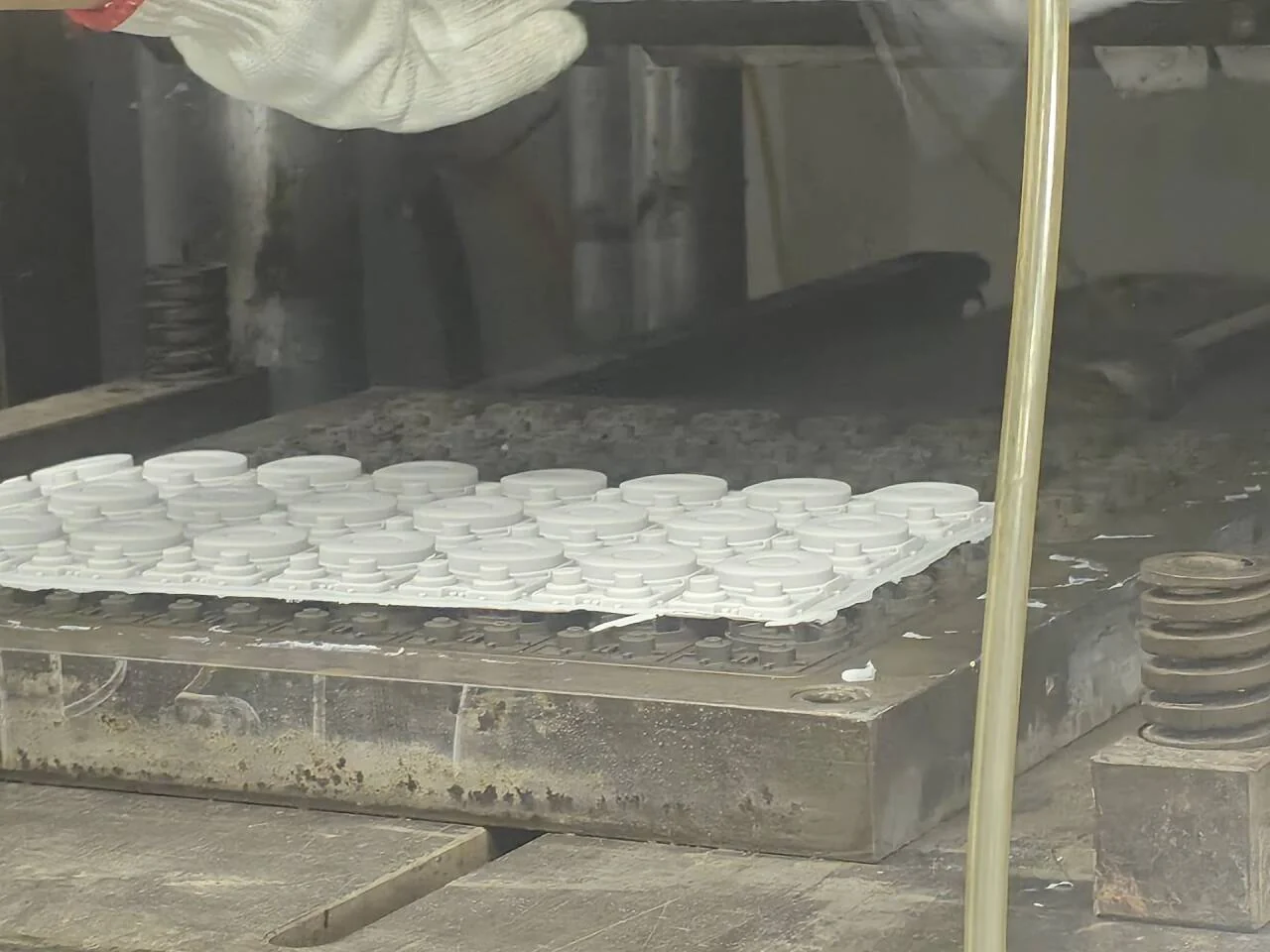
Compression-molding operation detail — Youbang Silicone
Compression-molding operation detail

Compare the part drawings

Drawing check Menstrual cup Menstrual disc
Rim Diameter, lip radius and wall transition Major/minor axes, rim section and twist
Holding volume Bell profile and graduation position if used Reservoir depth and film thickness
Removal feature Stem root, grip texture and any vent openings Finger notch or tab, with a generous root radius
T1 inspection Rim finish, open vents where specified and recovery after folding Rim recovery, reservoir creases and pull-feature durability

Agree on the mold and inspection points

For a cup, discuss gate and parting-line locations before cutting steel. Keep witness marks away from critical contact areas where the drawing permits, and check small vent features under lit inspection. For a disc, review the transition from the rim to the membrane, especially where thin stock can stretch during ejection. Use cross sections from the first samples to verify wall thickness where either part changes section.

Sign off cleaning and finished-product testing

Use a prototype for dimensional review and molded silicone for fold recovery, pull tests and the specified cleaning cycles. Inspect after conditioning as well as before. Record compound, pigment, lot and cure history in the submission. The finished-product owner defines intended use and confirms the applicable test and authorization path for each sales market.

Compare cup formats and the folding cleaning cup or review disc rim and removal formats.

Turn the selection into a reviewable project brief

Sourcing & Tooling FAQ

Key Answers Before Tooling

Covering CAD readiness, 100 pc trial & 1,000 pc / USD 2,000 standard MOQ policy, free 3D fit prototypes vs. T1 silicone samples, NDA protection, and mold ownership.

Have a part-specific question?

Send your drawing or sample photo directly to Youbang’s engineering desk; we send an initial response within 24 hours.

Can both formats use the same mold?

Design separate cavities and demolding plans around each section profile. A shared material specification may be evaluated on both molded designs.

Can the same Shore A give the same recovery?

Rim thickness and section profile also affect stiffness. Measure recovery after folding with the same conditioning and timing.

Which design needs inspection of air-release holes?

For a cup with specified vents, verify that every opening is clear and free of protruding flash. For a disc, inspect the rim and reservoir transition specified in its drawing.

What should a cleaning validation sample include?

Include the molded part, chosen pigment and any supplied cleaning accessory. Document the test sequence and changes after cycling.

B2B Factory Direct · initial response within 24 hours

Review the tooling drawing

Cup drawings need the mouth diameter, wall profile, stem and any vents. Disc drawings need both rim axes, reservoir depth and the notch or tab root.

✓ Trial from 100 pcs · Standard 1,000 pcs or USD 2,000✓ Free 3D-printed fit prototypes before steel tooling✓ Paid molds 100% owned by customer

Send Your Project Brief or CAD

First reply within 24 hours · Trial orders from 100 pcs

For confidential drawings, sign the mutual NDA before uploading the files.

Only rights holders or their authorized representatives may upload files. We keep inquiries and attachments to prepare quotes and follow up on your project.

Prefer email or files > 20 MB? Send directly to inquiry@ybsilicone.com · Privacy Policy