
Key Sourcing Takeaways
- Always approve custom silicone color on post-cured elastomer plaques molded at your actual part thickness under agreed light sources (such as D65 daylight and store TL84), never directly off printed paper cards alone.
- Identical pigmented silicone gum appears lighter where walls thin out (0.8–1.5 mm) and darker across thicker ribs (3–5+ mm) because translucent elastomer base scatters incident light differently with depth.
- At Youbang, compounding runs on 4 automatic open mixing mills with pre-compensation tuned for 200 °C × 4–6 hours oven post-curing, platinum vs. peroxide stability, and project-specific master plaque sign-off saved for 36 months.
Stepped Wall-Thickness Optical Shift & 200 °C × 4–6h Bake Compensation
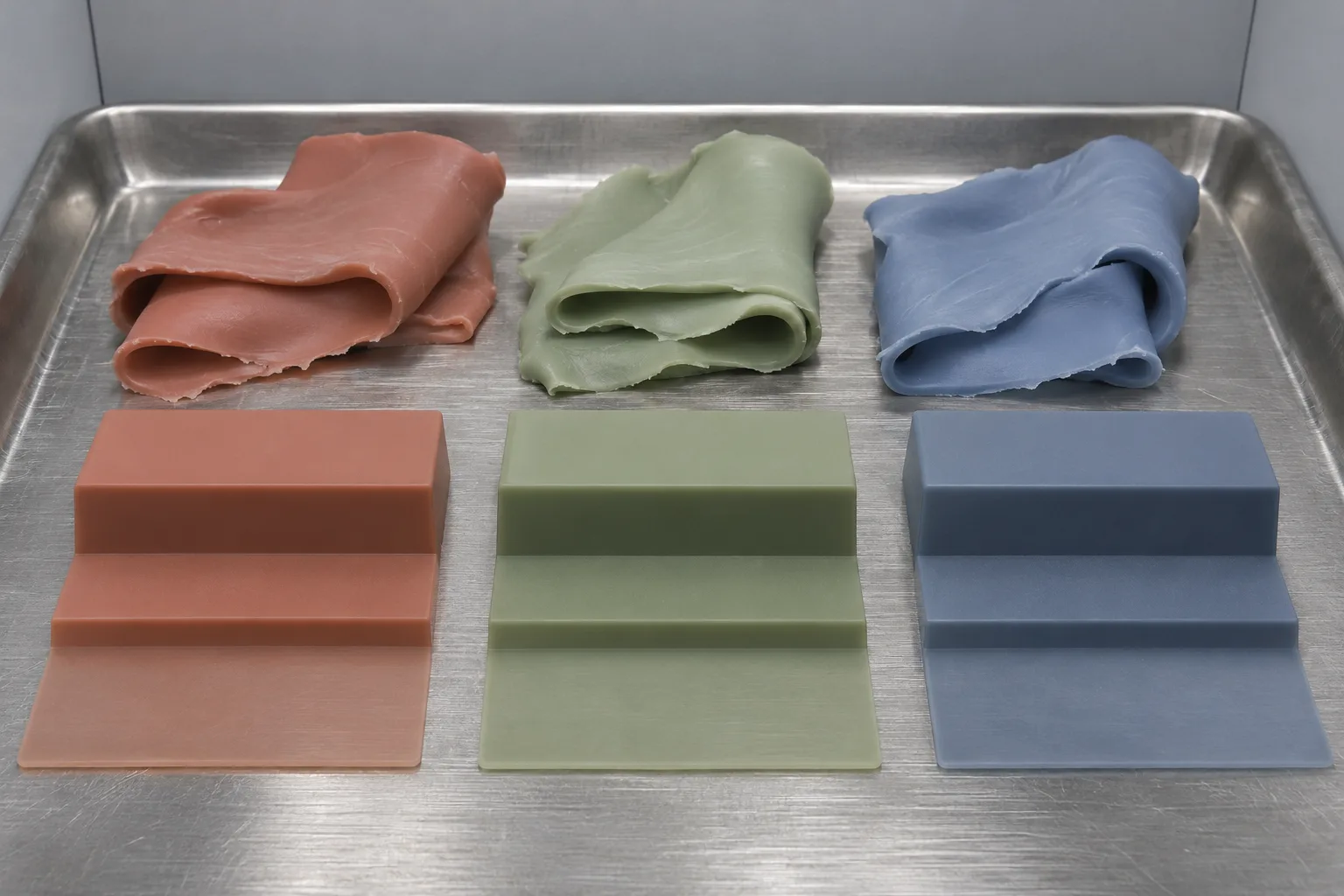
One of the most frequent quality friction points in custom silicone OEM purchasing has nothing to do with steel tooling dimensions—it shows up when marketing opens a T1 carton next to a glossy printed Pantone Coated chip or an injection-molded PP/PC lid. Silicone is an inherently semi-translucent, flexible rubber compounded in-house from clear gum and temperature-resistant pigments rather than opaque dyed ABS pellets, so small choices in section thickness, mold grain, curing chemistry, and light source visibly alter how your color reads to the eye.
Inside Dongguan Youbang (8,000 m² factory with 4 automatic open mixing mills & preformers and 6 ventilated post-cure ovens), batch color sign-off follows three physical rules confirmed ahead of mass mixing.
1. Four Physical Causes of Silicone Color Drift (And How Factory Control Stops Each One)
Match custom silicone colors reliably by signing off post-cured stepped elastomer plaques under agreed light-booth conditions (D65 / TL84) rather than paper swatch books alone: wall depth changes translucency, EDM cavity finish changes surface scatter, and 200 °C × 4–6 hours baking can shift peroxide-cured organic pigments unless compensated upfront on open mixing mills. Color acceptance tolerances are always set per project against the physical signed master plaque.
| Color Drift Mechanism | What Buyers Usually Notice First | Underlying Silicone Physics | Factory Correction at Youbang |
|---|---|---|---|
| Paper Card vs. Translucent Gum | Sample looks duller or slightly milky beside a Pantone C paper chip | Ink on glossy coated white stock reflects brightly; elastomer diffuses light internally | Adjust opacifying mineral filler vs. translucent tone, and sign physical silicone chips |
| Thin Lip vs. Thick Base Contrast | 1 mm lid seal looks brighter than the 4 mm bowl flange on the same piece | Beer-Lambert internal light absorption doubles as section thickness increases | Press stepped-thickness plaques during sample approval before mass runs |
| Post-Cure Oven Warm Shift | Warm off-whites, bright blues, or pastels yellow subtly after heating | Peroxide breakdown residues and heat-sensitive pigments oxidize inside hot ovens | Switch to platinum addition-cure gum and evaluate master plaques after 200 °C × 4–6h |
| Cross-Factory Multi-Part Sets | Silicone spoon handle mismatches rigid plastic lid or retail box ink | Divergent metamerism between ABS/PP plastics and elastomer under store LEDs | Check samples across multiple agreed light sources (D65 + TL84) side by side |
2. In-House Open-Mill Mixing & Cross-Process Alignment
Unlike small assembly shops that wait days for outside rubber vendors to guess colors, Youbang runs 4 automatic mixing mills directly on the factory floor alongside compression preforming:
- Master Chip Pre-Compensation (
4Open Mills): Compounding technicians blend heat-stable cosmetic/food-contact inorganic and approved organic pigments cleanly into platinum or peroxide base gum, then pass test slabs through your exact planned200 °C × 4–6 hourscure bake before dispatching visual review samples. - Matching Cavity Surface Texture: An identical silicone compound molded inside a mirror-polished cavity appears darker and higher contrast than the exact same compound pressed inside a fine VDI EDM micro-matte cavity, which diffuses light softer. T1 color verification always matches final production surface roughness.
- 36-Month Master Plaque Retention: Upon sign-off, divided master chips sit sealed inside Youbang’s light-protected retention cabinet for 36 months, paired with lot batch sheets for clean future replenishment orders.
3. Practical Color Sign-Off Checklist for Purchasing Teams
To keep T1 sample reviews smooth—whether developing a single-color matte wearable band or a 4-SKU pastel kitchen feeding collection:
- Send Either Pantone C Code OR Physical Benchmark Object: When matching an existing rigid PP/ABS housing or textile accessory, ship a physical mating swatch along with the Pantone reference so technicians test metamerism under both D65 daylight and indoor store lamps.
- Keep Minimum Pigment Discipline on Food & LFGB SKUs: Bright neon fluorescent pigments often fail European food-contact migration/volatile screening (
BfR XV ≤0.5%); stick to verified heat-stable food-contact masterbatch grades reviewed before mold release. - Group Similar-Shade Accessories Under Signed Family Plaques: On items like custom automotive wireless console mats or multi-part baby utensil kits, approve both thin seal lips and thick body ribs against one stepped color target.
Ready to submit target Pantone codes alongside your 3D step files? Send your target shades and part drawings through our color compounding & OEM quote workflow for a first engineering reply within 24 hours, or review surface printing and packaging pairings on our color, logo & packaging page.