
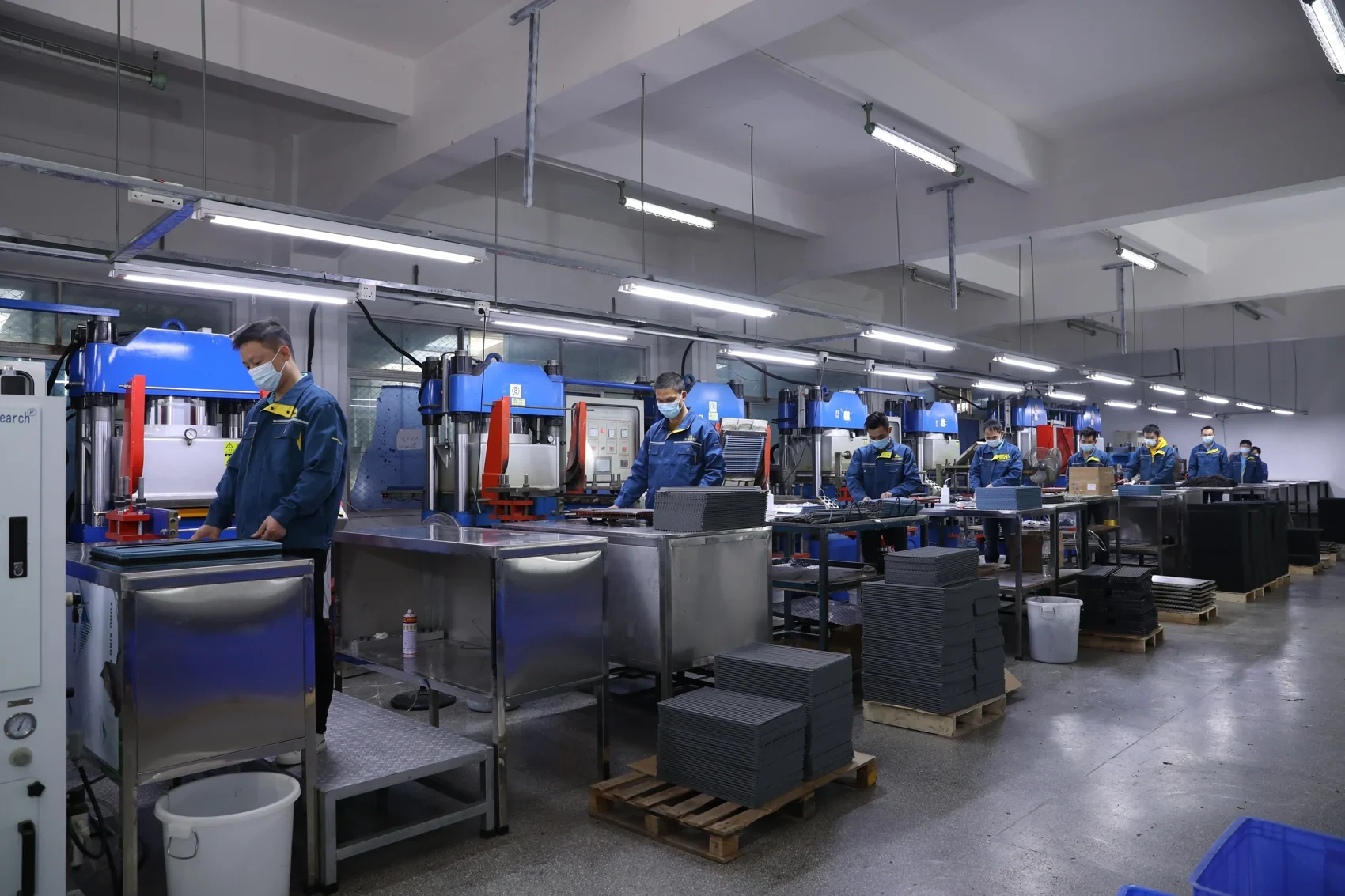
Large-Platen 0.8–1.2 mm Wireless Console Mats & Tray Liners
Molded across 650×650 mm heated platens with micro-vented vacuum channels so wide charging mats release flat without edge curl or pocket air voids.
Explore 200T–350T large-platen lineYoubang · B2B Custom Silicone Manufacturing · Dongguan
Dongguan Youbang molds flat center-console wireless charging mats, tethered EV charging-port caps, and wire-harness bulkhead grommets across 15 HCR vacuum compression presses (200T–350T, platens up to 650×650 mm) and 10 LSR liquid injection presses. Low-volatile platinum grades, 0.8–1.2 mm induction bay walls, and 200 °C × 4–6 hours post-curing keep cockpit trim flat and non-greasy—starting from 100 pcs trial runs.
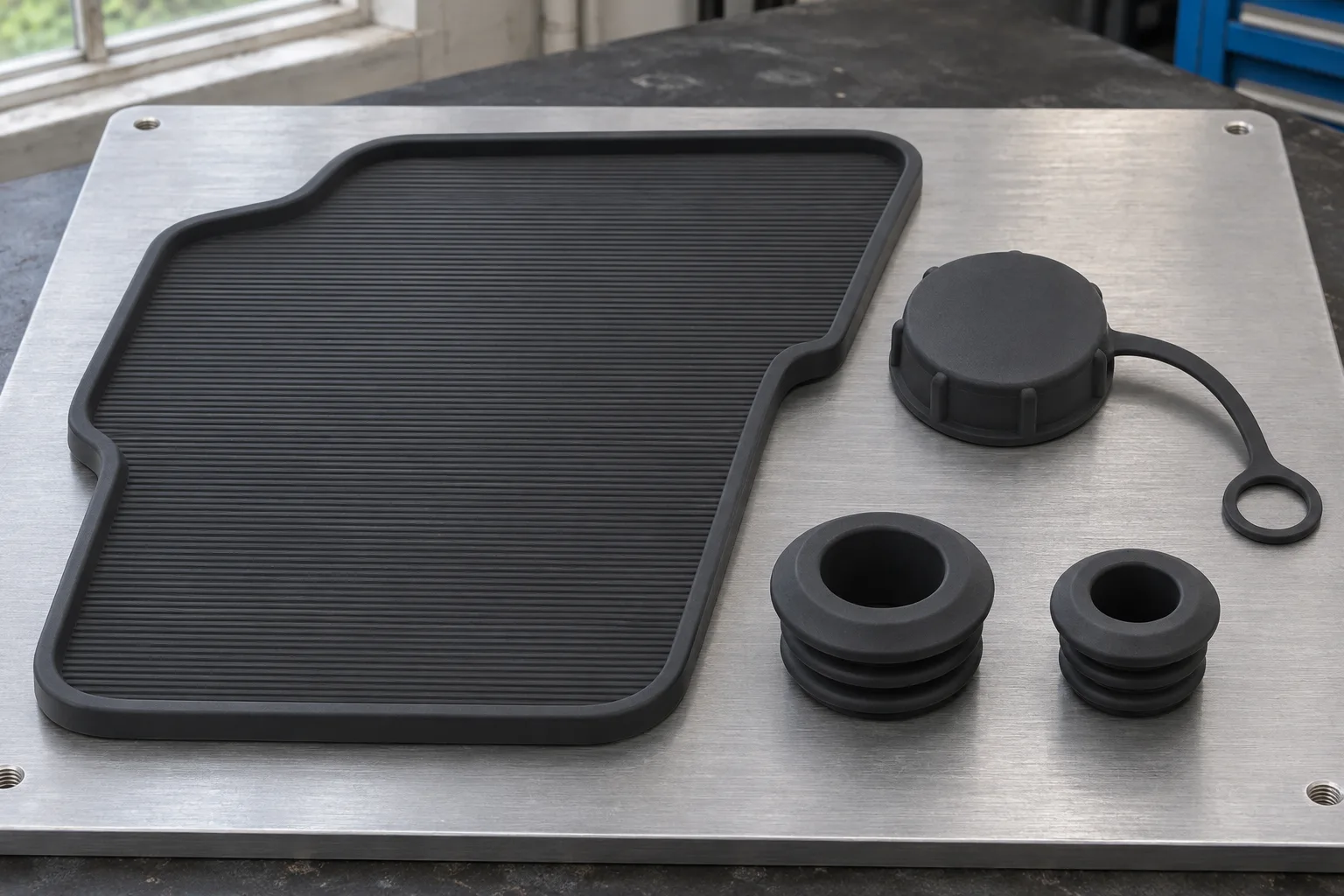
Molded across 650×650 mm heated platens with micro-vented vacuum channels so wide charging mats release flat without edge curl or pocket air voids.
Explore 200T–350T large-platen line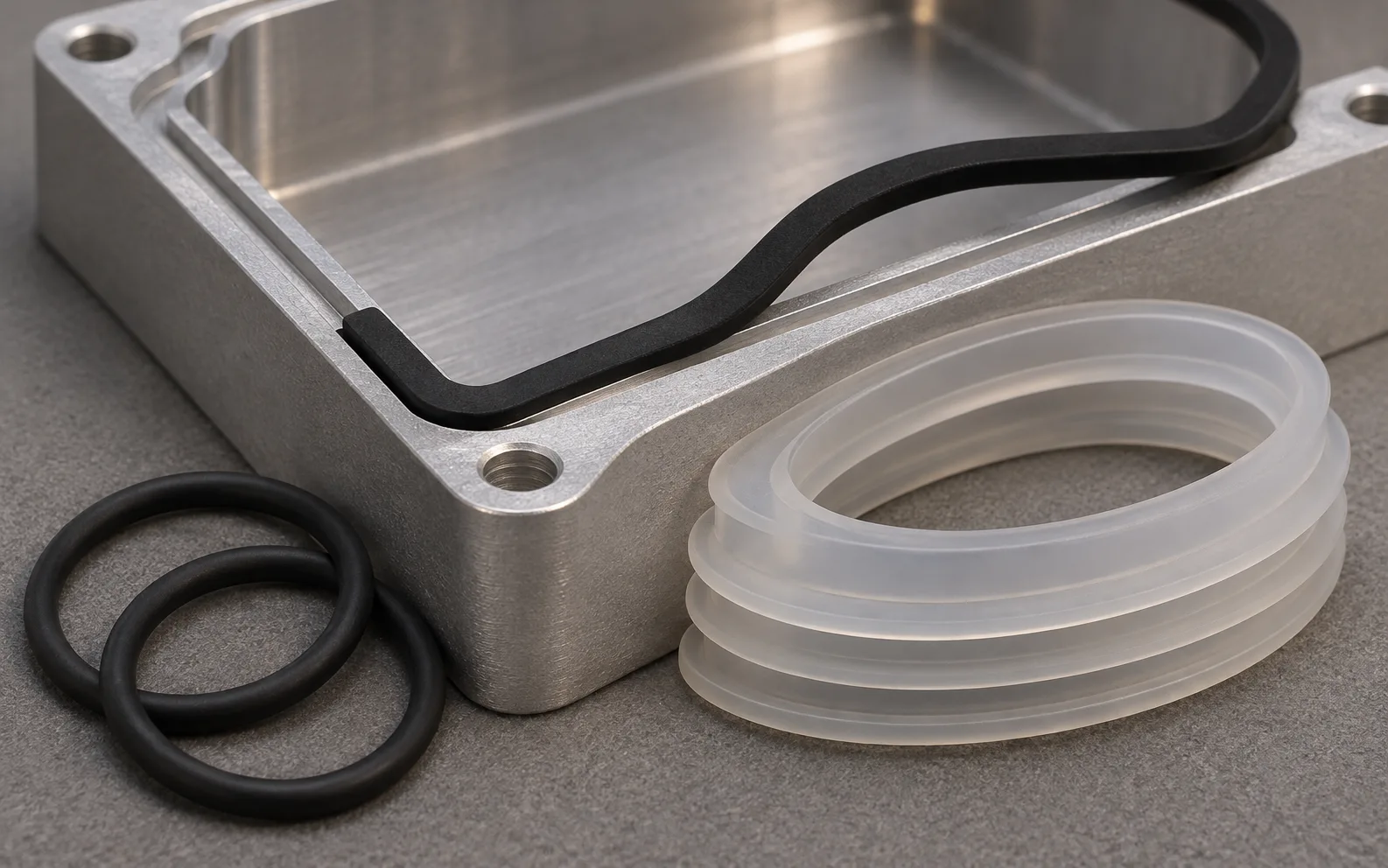
Precision elastomer pass-through grommets and tethered AC/DC port caps molded in weather-resistant silicone or oil-resistant EPDM/NBR/FKM per zone.
Review seal & grommet tolerancesLocation, attachment and cleaning change the interface to be reviewed.
Uniform thin mat floors directly over inductive coils minimize heat buildup and Qi charging drop while raised ribs catch dust and keys.
Low-volatile oven conditioning prevents cabin haze, sour outgassing, or greasy plasticizer migration onto suede console trim under summer sun.
Bond platinum LSR or HCR cleanly around buyer-supplied stainless, aluminum, or PC locking frames via baked silane primer chemistry.
Cut 5-axis CNC/EDM steel tooling in 7–15 days to catch new EV refresh launches cleanly with 100-pc pilot validation runs.
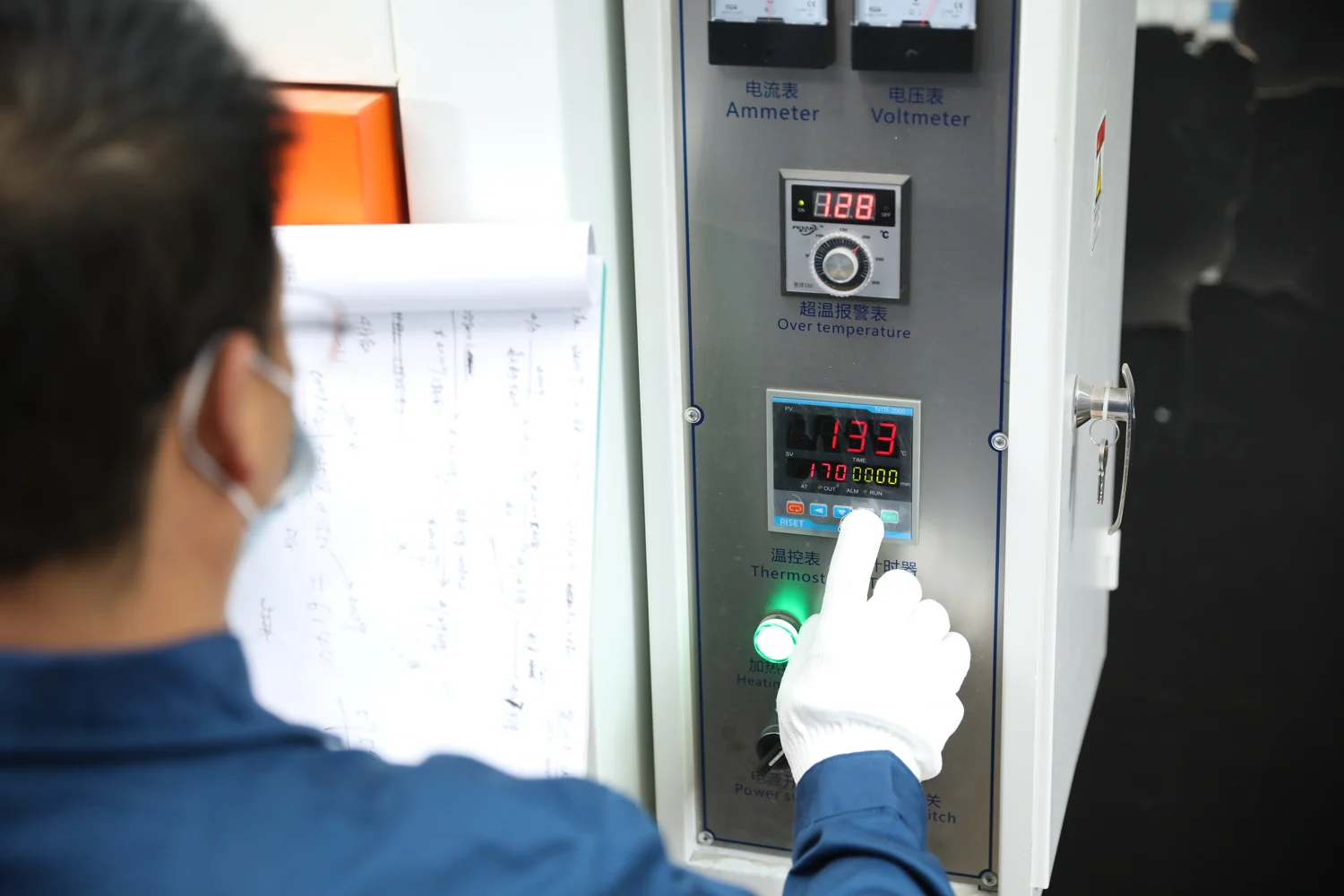
Every cabin trim trial runs 200 °C × 4–6 hours post-curing followed by 2D optical section checks and mating trim heat-contact inspection (±0.1–0.2 mm overall footprint; ±0.05 mm tight locating bosses).
Sourcing & Tooling FAQ
Covering CAD readiness, 100 pc trial & 1,000 pc / $2,000 USD standard MOQ policy, free 3D fit prototypes vs. T1 silicone samples, NDA protection, and mold ownership.
Send your drawing or sample photo directly to Youbang’s engineering desk; we send an initial response within 24 hours.
Keep the silicone pad area directly over the vehicle inductive coil at a uniform 0.8–1.2 mm floor thickness, while raising the perimeter rim to 3–5 mm with shallow drainage channels to grip phones on sharp turns without stalling wireless handshake or overheating.
Uncured cyclic siloxanes and migrating plasticizer oils vaporize above 70–85 °C inside a parked cabin. Youbang eliminates migrating oils via pure food/auto-grade silicone gums and 200 °C × 4–6 hours ventilated post-curing across 6 circulating hot-air ovens before testing against buyer interior swatches.
Using 3D console scan STEP data, our engineers scale cavity dimensions precisely for Shore A shrinkage (typically 1.8%–2.5%), mill micro vacuum vents around outer ribs on our 650×650 mm platens, and verify real-console seating at T1 before approving bulk production.
Not always. Cabin trim favors low-volatile silicone for UV and heat stability; however, grommets and seals touching engine oil, fuel vapors, or coolant should specify oil-resistant EPDM, NBR, or FKM compounds which we compression-mold in the same workshop.
We certify and audit strictly under ISO 9001:2015 (21424Q0270R1S) and ISO 13485:2016 (62026Q00072R100), not IATF 16949. Please share your exact buyer or distributor PPAP/lab package requirements before quotation so both sides align cleanly.
Once design, pricing, and clear 3D CAD are confirmed, free 3D-printed fit prototypes ship early for trim pocket check (freight on buyer). Steel molds finish T1 silicone samples in 7–15 days, followed by trial orders from 100 pcs and standard production from 1,000 pcs or $2,000 USD.
B2B Factory Direct · initial response within 24 hours
Upload your STEP assembly data, charging-pad thickness target, and cabin material pairing for a first engineering reply within 24 hours.