
Key Sourcing Takeaways
- U.S. FDA 21 CFR 177.2600 focuses on distilled-water and n-hexane total extractives across intended aqueous or fatty contact temperatures.
- German LFGB (§30/31 with BfR Recommendation XV) adds a mandatory volatile organic matter ceiling (≤0.5%), organoleptic smell/taste transfer checks, and acetic-acid/ethanol simulants that flag residual cyclic siloxanes and peroxide breakdown odors immediately.
- At Dongguan Youbang, our 6 hot-air circulation ovens run 200 °C × 4–6 hours post-curing on sourced platinum-cured HCR and LSR compounds before scheduling ~10-day third-party testing at SGS, Intertek, or TÜV.
200 °C Ventilated Post-Curing & Food-Contact Limits
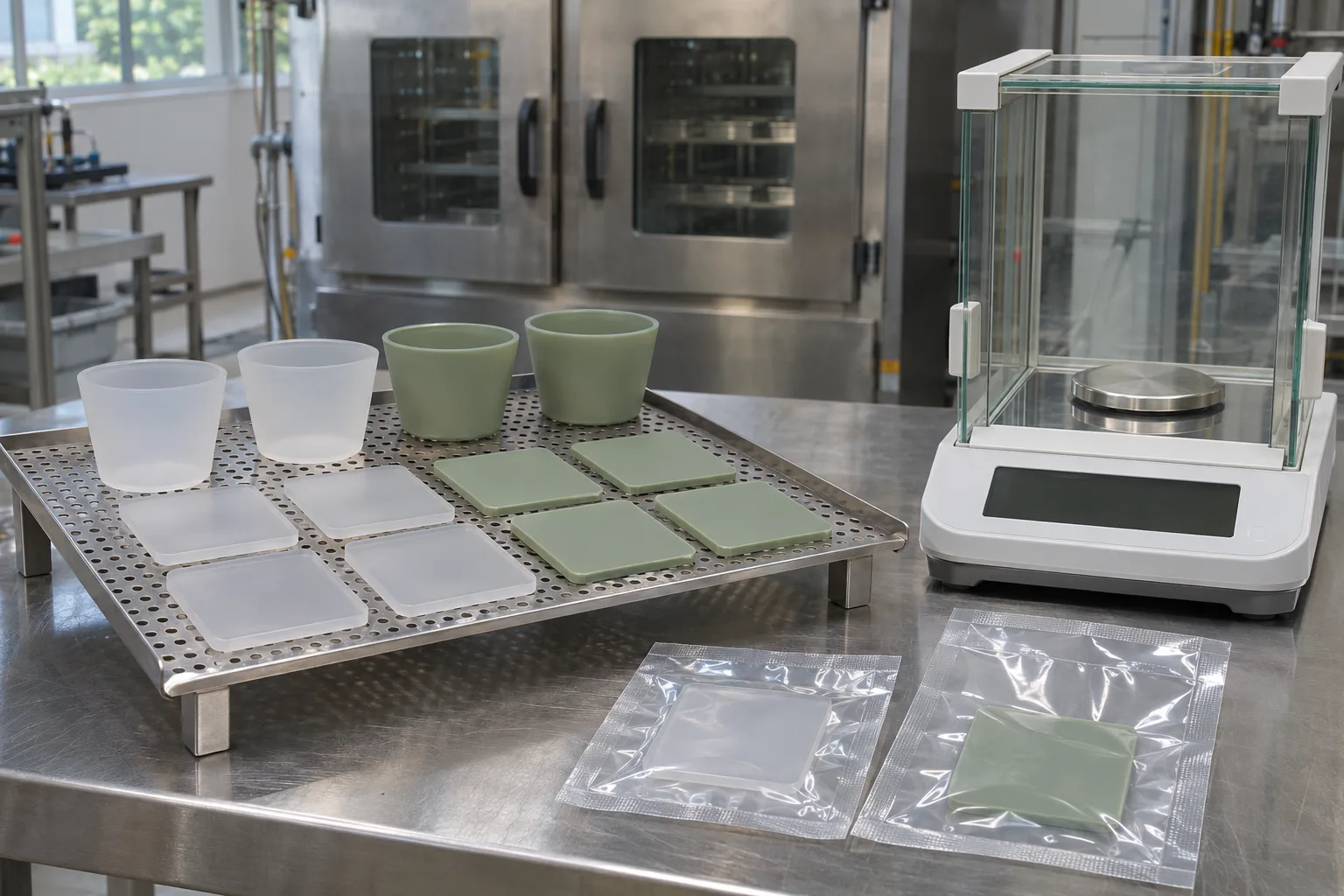
Cross-border kitchenware and baby-feeding brands frequently assume that holding a U.S. FDA 21 CFR 177.2600 laboratory pass means the same container, spatula, or bib can clear European Union and German retail audits automatically. In reality, German customs inspectors and EU Amazon compliance teams test under LFGB §30/31 paired with BfR Recommendation XV—a stricter framework that catches residual odor, peroxide breakdown products, and unbaked volatile siloxanes that FDA reflux testing leaves unflagged.
At Dongguan Youbang, our team coordinates material CoAs from sourced suppliers (Wacker, Momentive, Dow, Shin-Etsu, Dongjue, Elkem, and Zhengan), mixes food-contact Pantone color batches across 4 open mixing mills, molds on 10 LSR + 15 vacuum HCR presses, and bakes parts across 6 ventilated post-cure ovens before submitting representative SKUs to SGS, Intertek, or TÜV.
1. Side-by-Side Comparison: U.S. FDA 21 CFR 177.2600 vs. German LFGB / BfR XV
Choose peroxide-cured compounds only when budget dictates non-odor-sensitive U.S.-only lines and confirm extraction limits; switch to sourced platinum-cured silicone plus 200 °C × 4–6 hours ventilated post-curing whenever selling into Germany or multi-region EU retail (≤0.5% BfR XV volatile organic matter cap). Never rely on uncolored slab reports alone when bright red, charcoal, or black pigmented SKUs go to market.
| Test Dimension | U.S. FDA 21 CFR 177.2600 [1] | German LFGB (§30/31) & BfR Recommendation XV [2] | Factory Action Needed at Youbang |
|---|---|---|---|
| Primary Extraction Simulants | Distilled water + n-hexane reflux (aqueous vs. fatty food classification) | Distilled water, 3% acetic acid, 10–50% ethanol, and olive oil / isooctane simulants | Select finished-part test simulants matching hot coffee, dairy, tomato sauce, or oily meat |
| Volatile Organic Matter Limit | No separate gravimetric volatile weight-loss ceiling inside §177.2600 | Mandatory ≤0.5% volatile weight loss measured via four-hour oven gravimetric test at 200 °C | Bake production runs 200 °C × 4–6 hours across 6 ventilated hot-air ovens on open mesh trays |
| Organoleptic (Smell / Taste) | Focused strictly on mg/sq-in chemical extractives | Strict sensory taste & odor panel transfer check in water/simulants (Score ≤2.5 typical threshold) | Switch from peroxide (DBPH) to platinum addition-cure LSR/HCR and enforce clean double-PE bagging |
| Peroxide Residue & Organotin | Evaluated within approved elastomer formulation list | Must test negative for peroxide decomposition residues and restricted organotin catalysts | Confirm buyer-approved platinum-cured silicone formulation at quotation stage before cutting steel |
| Colorant & Packaging Sensitivity | Check colorant food-contact status under finished lot review | Pigments + surface spray oils frequently fail acetic-acid extractives or sensory taint | Avoid polyurethane tactile oils on food faces; choose in-mold EDM micro-matte finish instead |
2. Four Production Reasons Silicone Kitchen Parts Fail LFGB at Final QC
When launching custom collapsible silicone food containers and stretch lids or baby bibs and fitted highchair placemats, compliance failures rarely start inside the test lab—they begin earlier on the molding and oven floor:
- Short-Cycled Oven Baking to Cut Power Costs: Thick 3–5 mm suction bases or folded rim collars outgas slowly in stacked heaps. Skipping full 200 °C × 4–6 hours spacing across trays leaves trapped cyclotetrasiloxane (
D4/D5) inside the part wall, spiking BfR XV gravimetric loss past0.5%. - Peroxide Cure Substitution for Margin: Double-25 peroxide (DBPH) raw gum cures cleanly at lower raw-material cost, yet emits characteristic sour-chemical notes in boiling water and fails the German sensory panel unless over-baked—even then, peroxide-negative compliance under EU rules favors platinum addition cure.
- Topical Spray Coatings on Food Zones: Spraying smooth dust-repellent polyurethane tactile oil onto interior tray walls traps solvent carriers and flakes in acidic tomato sauce. Always specify bare in-mold VDI/EDM micro-matte texture for food surfaces.
- Submitting Clear Lab Plaques Instead of Pigmented Finished SKUs: Passing a raw supplier clear sheet report proves compound pedigree via CoA, yet finished-goods EU/Amazon compliance checks evaluate the exact pigmented geometry, wall thickness, and ink-printed surface shipped in retail boxes.
3. Who-Owns-What Compliance Workflow from Raw Lot to ~10-Day Lab Report
- Upstream Material Pedigree: Youbang purchases commercial silicone compounds from established producers (Wacker, Momentive, Dow, Shin-Etsu, Dongjue, Elkem, and Zhengan) and passes lot-matched upstream CoA documentation alongside 36-month batch retention records.
- Factory Conditioning Before Submission: T1 molded prototypes undergo full ventilated post-curing (200 °C × 4–6 hours) and pure-water ultrasonic clean washing in our 600 m² clean assembly zone prior to lab sealing in fresh double-PE pouches.
- Third-Party Lab Coordination (
~10 days): Buyer selects target test scopes (U.S. FDA, German LFGB, Japan MHLW 370, CPSIA, or EN 14350); Youbang coordinates sealed finished-SKU samples with SGS, Intertek, or TÜV so your brand obtains verifiable SKU-specific certificates.
Ready to lock raw elastomer selection and post-cure cycle time for your next kitchenware or baby collection? Send destination country list and part CAD through our quote & compliance review brief for a first engineering reply within 24 hours.