
Key Sourcing Takeaways
- Inert Si–O–Si backbone (~444 kJ/mol bond energy) contains zero BPA, zero ortho-phthalates, and zero PVC plasticizers.
- Real-world failures come from mineral filler adulteration, cheap pigments, or skipping ventilated 200 °C × 4 h post-curing (≤ 0.5% LFGB volatile limit).
- Verify safety per SKU through raw-material CoAs, ISO 13485 / 9001 batch traceability, and ~10-day SGS/Intertek/TÜV extraction testing.
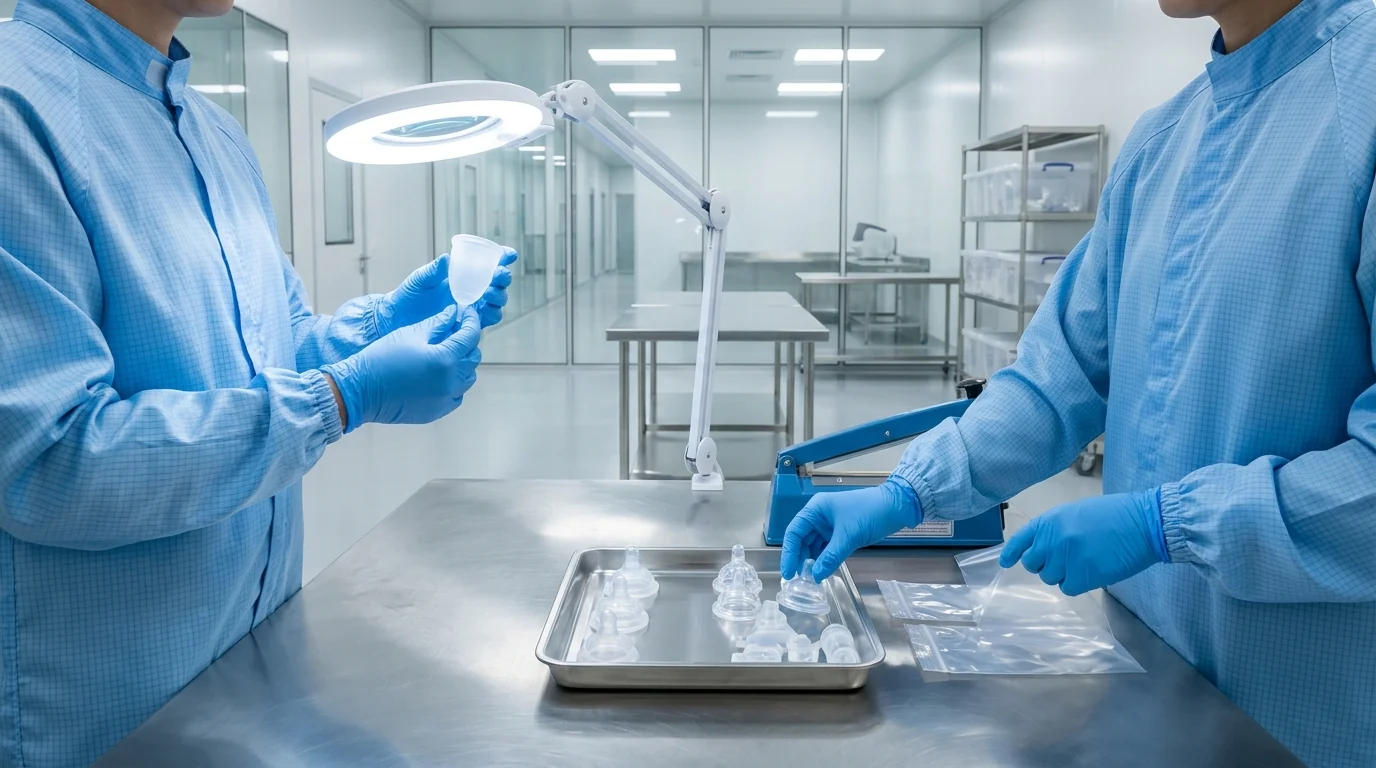
Yes—properly formulated, platinum-cured, and post-cured silicone elastomer is chemically inert and non-toxic for food-contact, infant feeding, baking, microwave, and skin/mucosal applications. Built on an inorganic siloxane (Si–O–Si) backbone (~444 kJ/mol bond dissociation energy vs. ~348 kJ/mol for C–C plastics), pure silicone requires zero BPA, BPS, ortho-phthalates, or leachable plasticizers to stay soft from -40 °C to +230 °C. In B2B manufacturing, safety failures stem not from silicone polymer itself, but from mineral-filler adulteration, non-compliant pigments, or skipping ventilated 200 °C × 4 h secondary post-curing.
For product developers and retail compliance teams sourcing custom parts from Dongguan Youbang, the matrix below maps consumer safety questions directly to factory process controls and third-party verification tests.
1. Silicone Safety by Application: Engineering Controls & Test Standards
| Buyer / Consumer Safety Question | Polymer & Thermal Reality | Mandatory Factory Compounding & Cure Control | Applicable Lab Verification Standard |
|---|---|---|---|
| Is silicone toxic or hormone-disrupting? | Crosslinked polydimethylsiloxane (PDMS) is biologically inert and contains zero bisphenols, phthalates, or latex proteins |
100% silica-reinforced elastomer from vetted producers (Wacker, Shin-Etsu, Momentive, Dow, Elkem, Dongjue, Zheng'an); zero talc/chalk fillers | US FDA 21 CFR 177.2600, EU REACH SVHC, RoHS, US CPSIA |
Is silicone safe to cook & bake with (up to 230 °C)? |
Thermoset elastomer never melts into food and needs no PFAS/PTFE non-stick coatings | Platinum-cured HCR or LSR + ventilated convection post-curing (typically 200 °C × 4 h) to keep volatile loss ≤ 0.5% |
German LFGB §§ 30–31 / BfR XV (≤ 0.5% volatiles & peroxide-zero), FDA n-hexane reflux |
| Is silicone microwave & dishwasher safe? | Low dielectric loss prevents microwave self-heating; hydrophobic surface resists detergent cracking | Pure silicone or PA-nylon core only for microwaves (never microwave overmolded stainless-steel/aluminum/copper cores!) | EN 14350 (infant feeding), FDA 21 CFR 177.2600 |
| Is silicone safe for prolonged skin & intimate contact? | Addition-cured platinum silicone generates zero acidic peroxide cleavage residues | Closed-loop 85T/120T LSR molding + 200 °C × 4 h post-cure + 150–200 m² clean washing, inspection & packing |
Upstream ISO 10993-5 / -10 & USP Class VI raw data + finished-part testing under ISO 13485 traceability |
2. Why Siloxane (Si–O–Si) Chemistry Needs Zero Leachable Plasticizers
Flexible petroleum plastics (such as plasticized PVC) start out rigid and rely on small-molecule liquid softeners that can migrate into warm milk, oils, or saliva. Silicone elastomers behave fundamentally differently:
- Inherent Chain Flexibility: Alternating silicon-oxygen bonds rotate freely with wide bond angles, giving cured silicone native softness across 0–80 Shore A (commonly
30–70A) with zero monomeric softeners. - Permanent Thermoset Crosslinking: Once vulcanized in our
85T/120TLSR presses or200–250THCR presses, polymer chains are locked into a permanent 3D covalent network that cannot melt back into liquid at cooking or boiling temperatures.
3. Four Factory Shortcuts That Cause Unsafe or Smelly Silicone Products
Whenever a consumer complains of white stress marks, chemical odor, or failed lab extraction, one of four manufacturing shortcuts is responsible:
- Mineral Filler Adulteration (Failing the "Pinch Test"): Genuine silicone is reinforced solely with high-purity fumed or precipitated silica. Cut-rate workshops blend cheap calcium carbonate or talc powder to lower raw-material cost—causing the part to turn chalky white when twisted 180° and fail extraction limits.
- Unbaked Volatile Oligomers (
D4–D8): Skipping or shortening ventilated oven secondary post-curing (typically 200 °C × 4 hours) leaves residual low-molecular-weight cyclic siloxanes trapped in the part, causing oily residue or soapy taste when baking high-fat batters above180 °C. - Unpost-Cured Peroxide Chemistry in Sensitive Goods: Using general-purpose peroxide HCR instead of platinum-cured silicone for bakeware, baby teethers, or personal-care cups introduces organic peroxide breakdown odors and fails LFGB peroxide screening.
- Unscreened Pigments, Primers, or Mold-Release Sprays: Heavy-metal-contaminated masterbatches or external chemical release sprays can fail
CPSIA,RoHS, orLFGBeven when the base clear gum is compliant.
4. How B2B Buyers Verify Safety Before Mass Production
At Dongguan Youbang, we pair physical sample screening with transparent regulatory boundaries:
- Physical Twist &
200 °CBake Check onT1Samples (7–15 days): Twist a flat section of your moldedT1sample—pure silica-reinforced silicone holds uniform color without chalky whitening—and bake a specimen at200 °Cfor 30 minutes to verify zero pungent odor. (Before cutting mold steel, 1–3 free 3D-printed samples are also available on confirmed quote & CAD to check geometry only; shipping by buyer.) - Clean Post-Cure Handling & Lot Traceability: Sensitive medical and personal-care silicone components are washed, inspected, assembled, and sealed in our 150–200 m² clean zone under ISO 13485:2016 (
62026Q00072R100) traceability (raw-material lot → production batch → shipment ID; non-food industrial parts follow ISO 9001:201521424Q0270R1S). - Accredited Finished-Part Testing (
~10 days): Coordinate SKU-specific extraction testing with SGS, Intertek, or TÜV against your exact destination standards (note: commercial finished-device FDA/CE registrations belong to the brand owner).
Regulatory & Technical References
- U.S. FDA eCFR — 21 CFR § 177.2600 Rubber Articles Intended for Repeated Use
- German BfR — Recommendations on Food Contact Materials (XV. Silicones)
- U.S. CPSC — Children's Products Business Guidance (CPSIA)
- Shin-Etsu Silicone — Siloxane Bond Chemistry & Properties
Dive deeper into extraction limits in Food-Grade Silicone: FDA vs. LFGB and document auditing in Silicone Product Test Reports.
Pre-Tooling DFM Spec Sheet
8-Point Custom Silicone DFM Self-Check
Check these eight engineering points on your CAD or brief before cutting steel tooling.