Youbang · B2B Custom Silicone Manufacturing · Dongguan

Custom Silicone Vibration Isolator Mounts & Overmolded Anti-Slip Feet

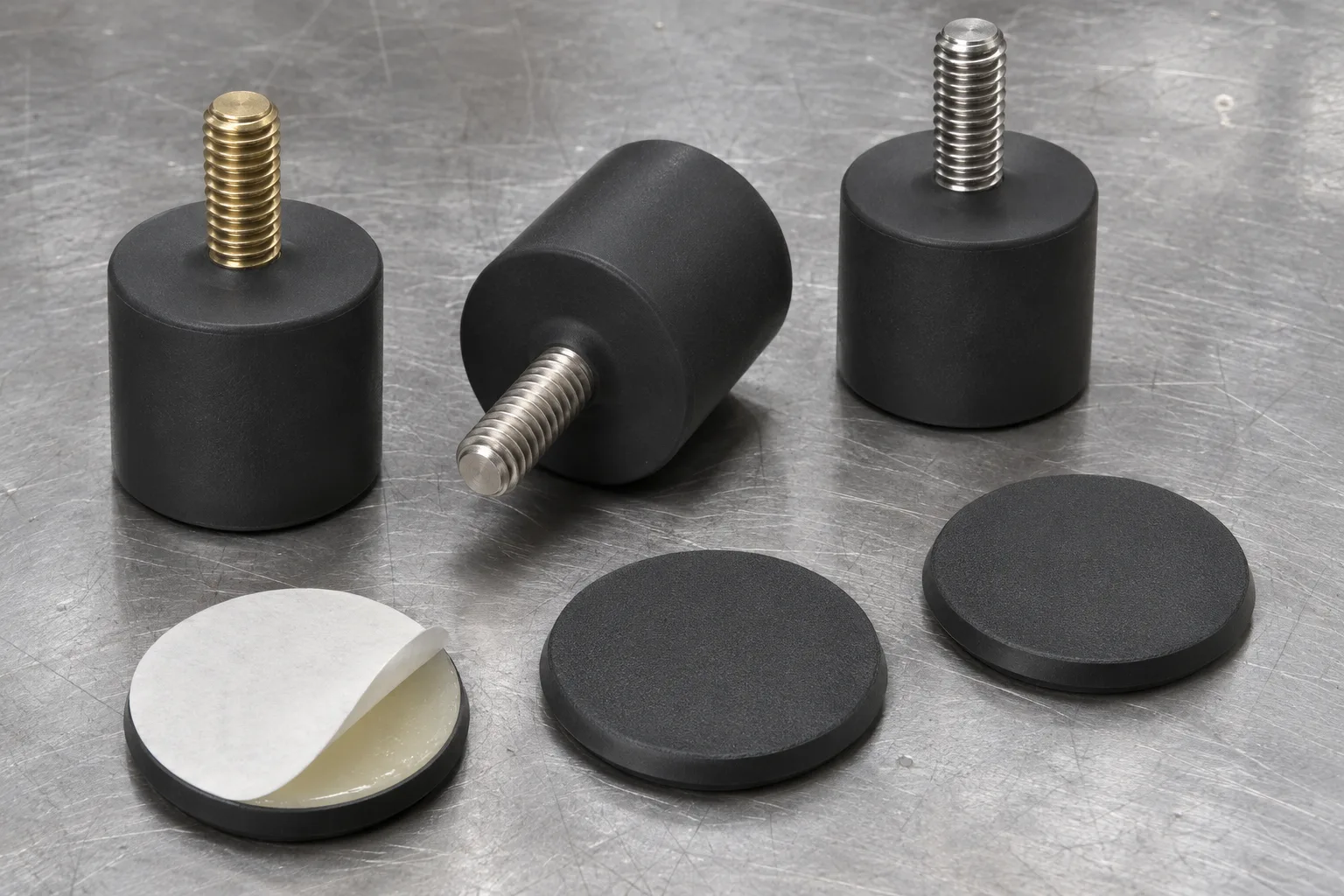
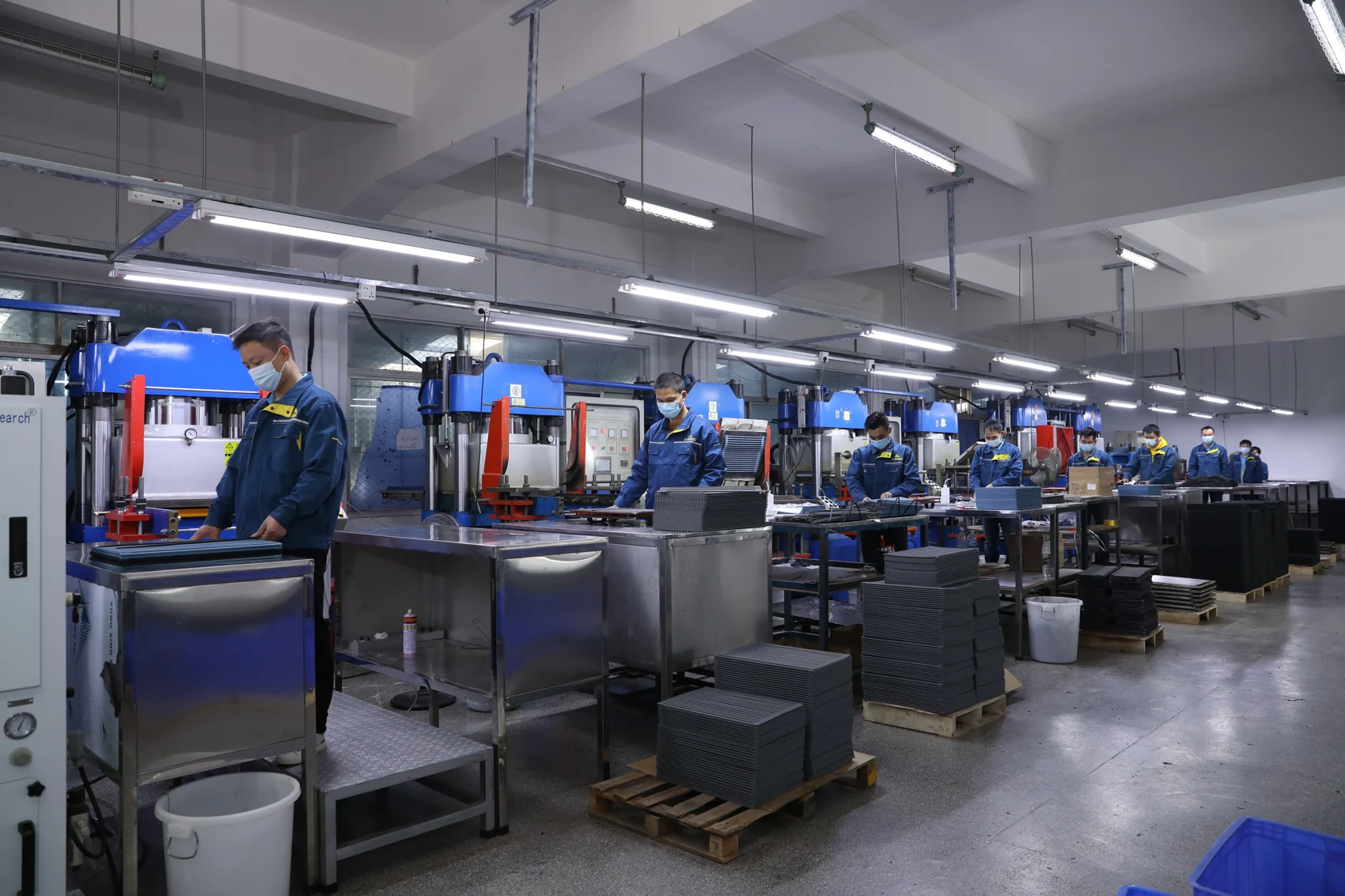
Dongguan Youbang molds shock-absorbing cylindrical vibration mounts (overmolded onto buyer-supplied M4/M6 stainless or brass threaded studs with baked silane primer) alongside precision equipment feet across 15 HCR vacuum presses and 10 closed-loop LSR lines—supporting 30–70A silicone, EPDM, NBR, and FKM from 100-pc pilot runs.

Matte charcoal cylindrical elastomer isolator mounts overmolded onto stainless steel and brass M4/M6 studs beside chamfered adhesive-backed equipment feet

More interface directions

Location, attachment and cleaning change the interface to be reviewed.

  • Stainless Steel, Aluminum & Brass/Copper Primer Isolation Protocol

    Review ultrasonic degreasing, nickel-plating vs. primer isolation on copper alloys, and destructive cohesive-tear pull testing for bonded mounts.

    Read metal insert primer rules →
  • Selective Tolerance Budgeting & Compression Set Limits for Mounts

    Keep mount thread datum concentricity and load-bearing flatness balanced cleanly under ISO 3302-1 M1/M2 classes without over-specifying steel costs.

    Review shrinkage & ISO 3302 tolerance guide →
  • Enclosure Flange Gaskets, Cable Pass-Through Grommets & Blind Plugs

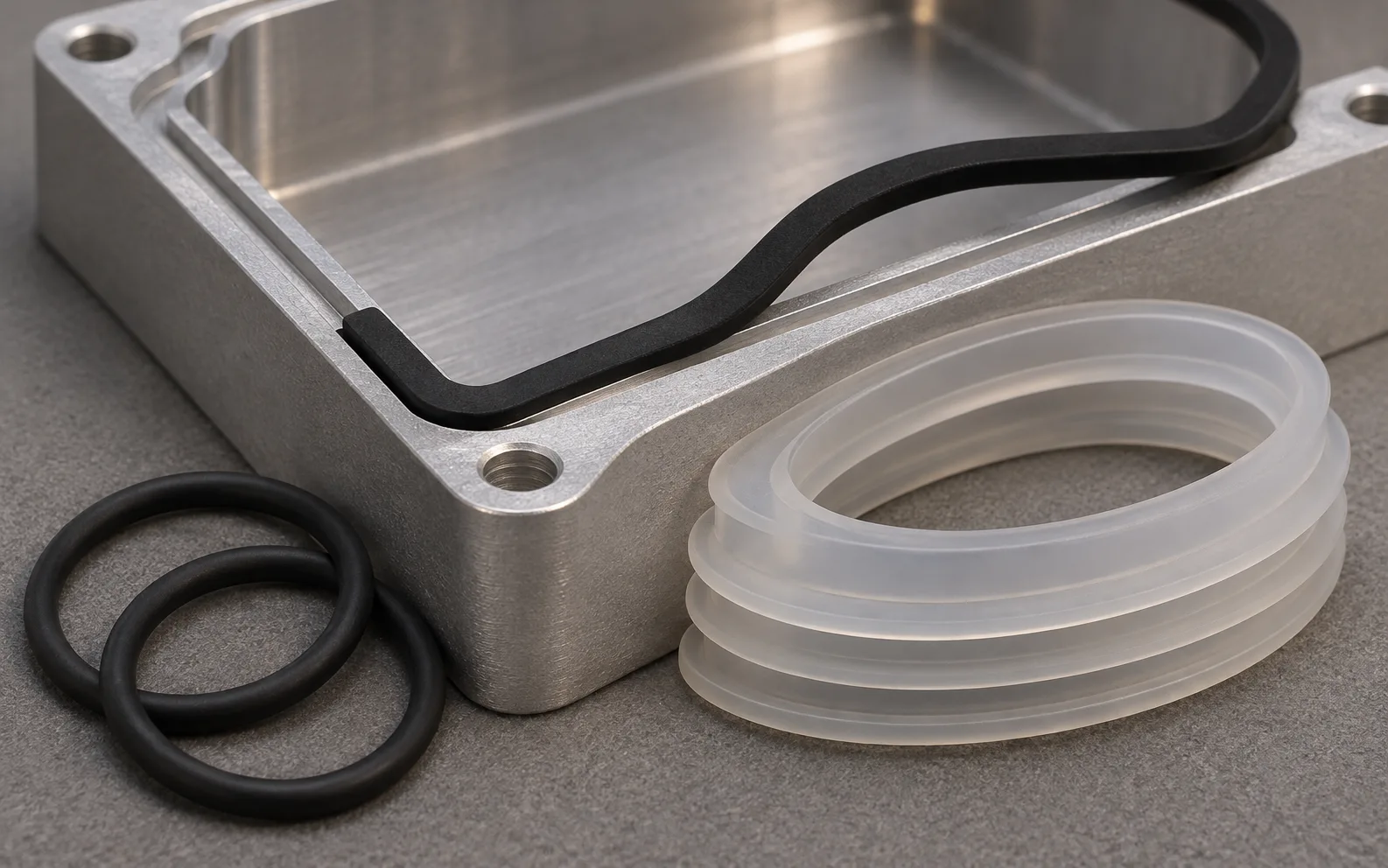
    Consolidate instrument vibration pads alongside NEMA/IP panel grommets and non-standard enclosure O-rings under one Dongguan vendor code.

    Browse industrial gaskets & grommets →
  • Rigid Hardware Overmolding Substrate & Primer Troubleshooting

    Check thermal limits and pull-to-tear inspection criteria across customer-supplied stainless, brass, aluminum, and polymer mounts.

    Troubleshoot overmolded bond peel →
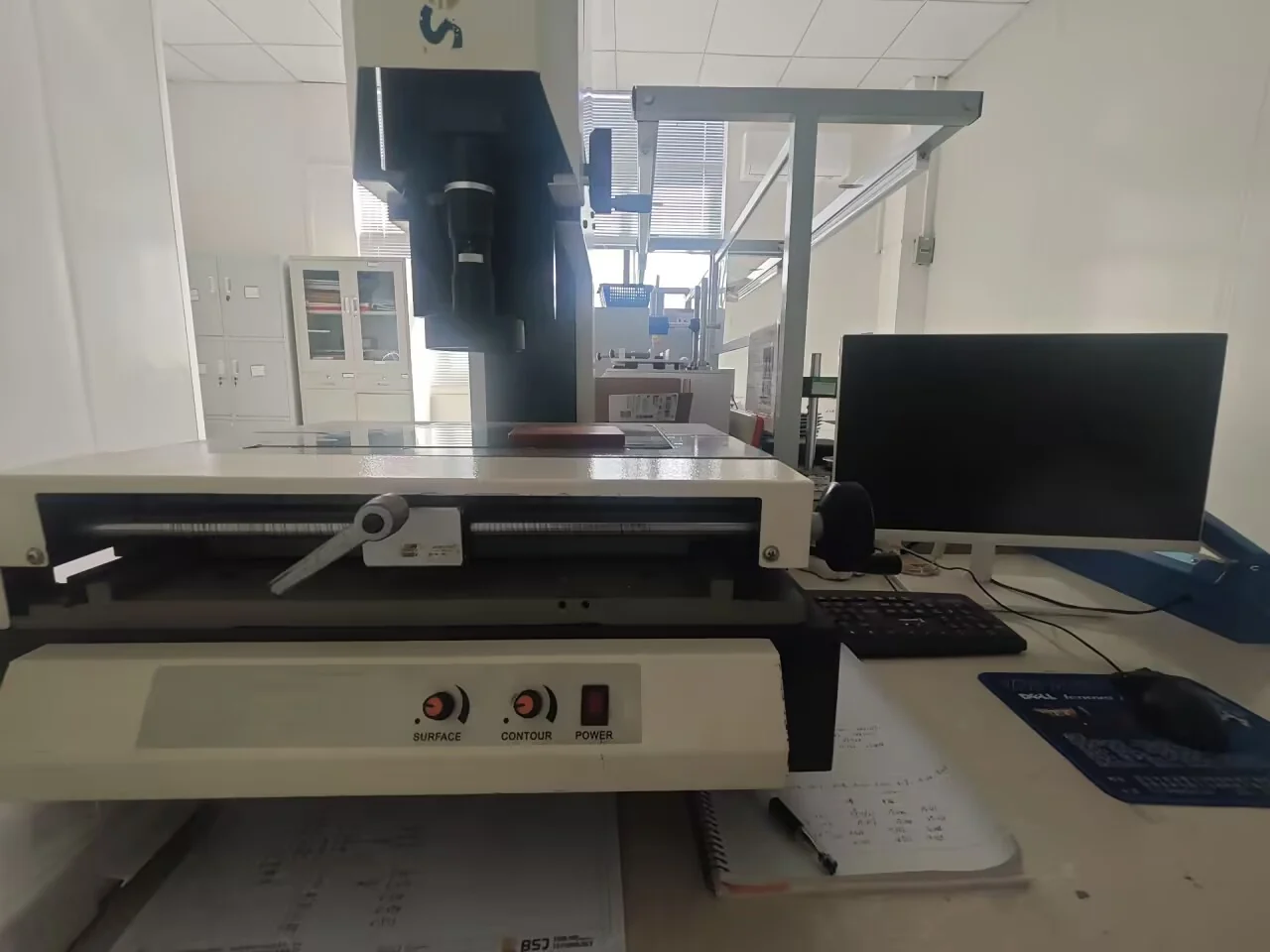
Dimensional measurement equipment

Destructive Stud Peel Checks, 200 °C × 4–6h Cure & Lot Traceability

Vibration dampers pass ultrasonic stud degrease checks, baked silane primer application, 200 °C × 4–6 hours circulating oven conditioning across 6 ovens (for silicone), calibrated Shore A checks, optical height checks (±0.05 mm precision lands / ±0.1–0.2 mm body profiles), and destructive shear/pull checks proving cohesive rubber tearing before bare-metal release.

  • Raw compound CoAs, stud batch logs, and pull-to-tear test samples retained 36 months.
  • Buyer-funded vibration mold tools stay exclusively dedicated on numbered storage racks.

Sourcing & Tooling FAQ

Key Answers Before Tooling

Covering CAD readiness, 100 pc trial & 1,000 pc / $2,000 USD standard MOQ policy, free 3D fit prototypes vs. T1 silicone samples, NDA protection, and mold ownership.

Have a part-specific question?

Send your drawing or sample photo directly to Youbang’s engineering desk; we send an initial response within 24 hours.

Do you supply threaded M4/M6 steel and brass studs ourselves, or must buyers supply the hardware inserts?

Metal and rigid plastic inserts are strictly buyer-supplied to your specified thread class, plating, and alloy grade (stainless steel, aluminum, brass/copper). Youbang manages ultrasonic degreasing, silane primer baking, precision mold clamping, and elastomer overmolding.

Can adhesive-backed silicone feet stick securely without curling on powder-coated metal cabinets?

Raw cured silicone resists ordinary acrylic glues unless paired with proper primer systems or silicone-transfer double tapes like 3M VHB converted by packaging partners and laminated after our 200 °C × 4–6h post-cure bake so outgassed volatiles never lift the tape.

Why do bare brass or copper studs sometimes leave uncured sticky silicone at the metal interface?

Sulfur and amine stabilizers/compounds on raw copper alloys can poison platinum cure catalysts right at the surface. Requiring nickel plating, thorough ultrasonic cutting-oil removal, or barrier primer isolation ensures full interfacial vulcanization.

When should an industrial mount use silicone vs. EPDM, NBR, or FKM elastomers?

Use silicone across extreme −50 °C to +230 °C temperature swings, outdoor UV, or food/lab environments; choose NBR or FKM where continuous crankcase oil or fuel drips contact the damper foot.

Can we verify mount height clearance and bolt pattern with 3D prints before cutting compression mold steel?

Yes. Where specs, quote, and 3D CAD are confirmed, free 3D-printed dimensional prototypes let mechanical engineers verify bracket spacing (buyer covers shipping) prior to 7–15 day T1 vulcanized elastomer testing.

What minimum order quantities apply for prototype instrument dampers and replacement feet?

Low-volume equipment builds start cleanly from 100 pcs per Shore A trial, expanding into 1,000-pc or $2,000 USD commercial production schedules delivered within 15–30 days after T1 approval.

B2B Factory Direct · initial response within 24 hours

Upload Vibration Damper CAD & Threaded Insert Drawing for a 24h DFM Reply

Share mount load, M4/M6 stud alloy/plating details, desired 30–70A elastomer, and adhesive needs for an initial engineering response within 24 hours.

✓ Trial from 100 pcs · Standard 1,000 pcs or $2,000 USD✓ Free 3D-printed fit prototypes before steel tooling✓ Paid molds 100% owned by customer
View helpful RFQ inputs
  • Isolator 3D STEP + supplied stainless/aluminum/brass stud CAD
  • Operating load/temperature/oil exposure & 30–70A elastomer preference
  • Adhesive backing (e.g. 3M VHB) requirement & pilot quantity (from 100 pcs)

Send Your Project Brief or CAD

For confidential drawings, sign the mutual NDA before uploading the files.

Only rights holders or their authorized representatives may upload files. We keep inquiries and attachments to prepare quotes and follow up on your project.

Prefer email or files > 20 MB? Send directly to zhouli@ybsilicone.com · Privacy Policy