
Youbang · B2B Custom Silicone Manufacturing · Dongguan

Custom Silicone Cake Pans, Muffin Trays & Loaf Molds

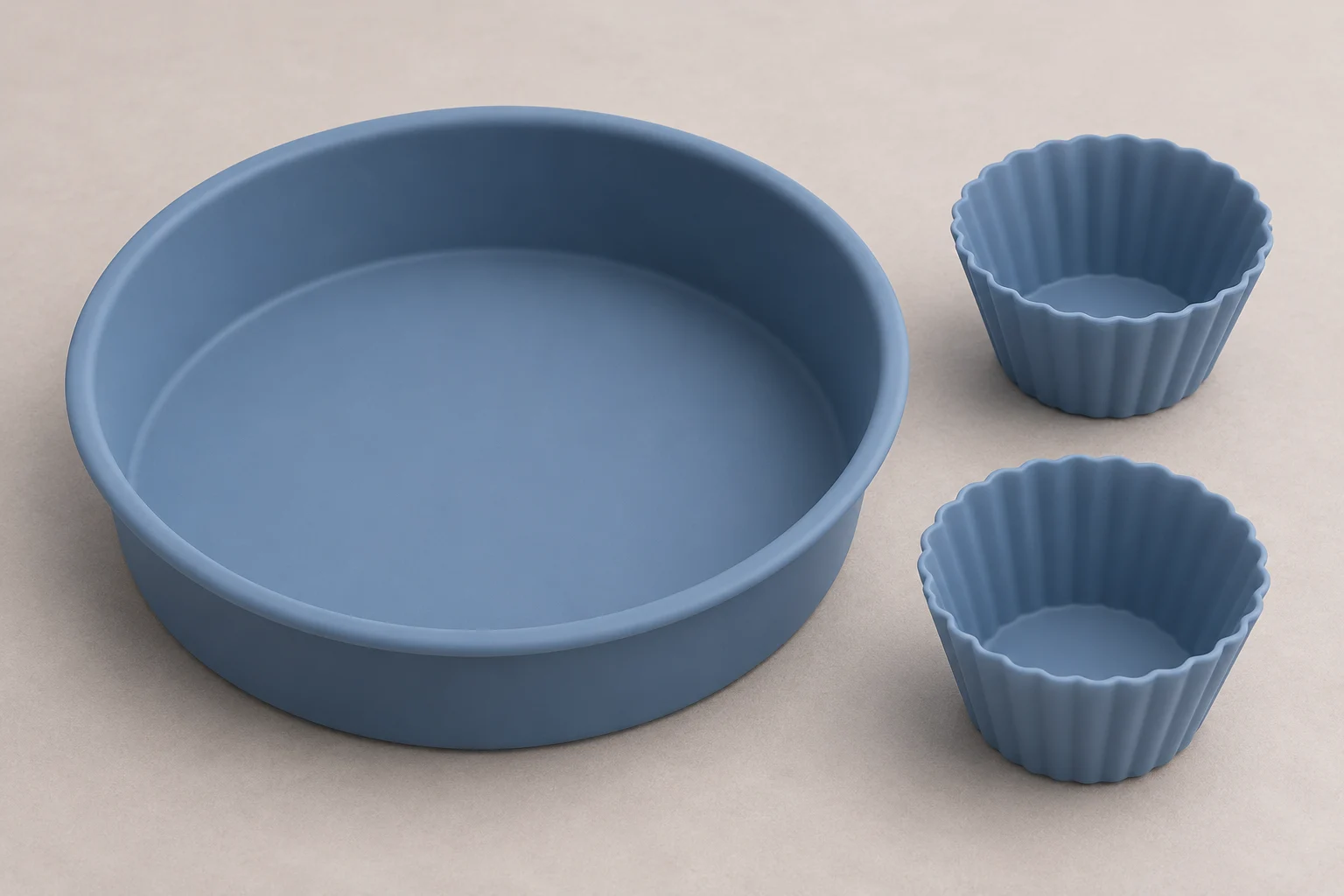
Engineer private-label round cake pans, 6-to-24-cup muffin trays, fluted bundt/madeleine molds and reinforced loaf pans on our 200–250T HCR presses (platens up to 650×650 mm)—combining odorless ~200 °C × 4 h post-cured platinum silicone, crisp pastry release, and optional silane-primer steel-frame overmolding.

Select Single-Basin, Multi-Cup or Fluted Pastry Architecture

One continuous basin

Round or square cake and brownie pans offer a broad area; an elongated loaf pan adds longer sidewalls and different end access. Depth and wall shape affect useful volume, filling and the way the result is reached.

Compare the outline with its filled placement and lifting arrangement. A deep shape is not simply a shallow pan stretched taller.

Provide the cavity outline and depth, desired result, working fill level and available support space.

Individual cups or a connected tray

Individual muffin or cupcake cups can be placed and removed independently. A connected muffin tray keeps a repeated layout together but introduces spaces and bridges between cavities.

Compare filling access, support beneath the complete layout and the way individual results are removed. Include access between cavities when planning cleanup.

Show cup positions, any supporting sheet or carrier, the filling method and the intended removal sequence.

Plain, fluted or shaped cavities

A plain basin emphasizes overall outline. Bundt or central-tube forms and madeleine or shell details add flutes, relief or central features that the formed result must clear. These details can be combined with different container layouts.

Review the intended result and the negative cavity together. Fine detail, projecting shapes and changes in section need an accessible release route.

Provide a positive model or section views of the desired result and identify the direction and sequence of removal.

Define support and filled handling separately

Decide where the mold is filled, where it rests during the intended process and how it is moved. The cavity footprint is only part of the working space: hands, a carrier and nearby equipment also need room.

A separate tray can support a flexible mold during the planned handling sequence. Define the contacting area and clearance, and identify who supplies the tray. A rigid element overmolded inside the pan is a different construction and is assessed separately; the layout below shows an unreinforced silicone pan.

A mold and a separate supporting tray

A mold and a separate supporting trayIndependent exterior concept: A marks the silicone mold outline and B a separate supporting tray. The mold base rests on the tray. No incorporated hardware, section or validated handling is shown.AB

A · Mold body  B · Separate supporting tray

Exterior relationship between a mold and a separate supporting tray; external support is a project option.

Working space

Show the open cavity arrangement, placement area, fill level and the surfaces supporting the mold.

Moving and placing

Describe the filled state, where hands or a carrier act, and the route between filling, processing and setting down.

Plan release and cleaning with the cavity

Start with the intended result and the stage at which it is removed. Show whether the mold is supported, peeled back locally or separated from another component. Work through deep ends, relief roots and any center feature in the proposed sequence.

Then trace the cleaning route: the bottom, wall junctions, flutes and spaces between cavities need access with the intended tools. Consider draining, drying and storage alongside the selected cavity finish.

Provide the mixture, processing and removal conditions, desired surface and cleaning method. Heating, cooling or chemical exposure requirements belong in the project specification, not a universal temperature label.

Approve the geometry, then the molded part and use checks

  1. Resolve cavity and support drawings

    Identify the intended result, cavity surfaces, rim, base and supporting components. Mark lettering direction and the required appearance on the formed result. Mold design is internal; machining is coordinated externally.

  2. Choose useful sample questions

    An optional 3D print can help review outline, size or support fit. Molded silicone samples are needed for the selected material, color, flexible behavior and the agreed filling, handling, release and cleaning observations.

  3. Record material and project approval

    Agree the material grade, process and contact conditions, sample observations and documents required for the intended product. Approve the drawing revision, quantities, color references and packaging before the production plan.

Sourcing & Tooling FAQ

Key Answers Before Tooling

Covering CAD readiness, custom MOQ evaluation, free 3D fit checks vs. T1 silicone samples, NDA protection and mold ownership.

Have a part-specific question?

Send your drawing or sample photo directly to Zhou Li’s engineering desk for a 24h DFM reply.

When does a custom silicone cake or loaf pan need an embedded steel rim vs. a thickened silicone flange?

Deep rectangular loaf pans and wide 12-cup muffin trays tend to bow outward under heavy liquid batter unless placed on a sheet pan or reinforced. We can thicken ribs and wide grab handles in pure HCR silicone, or silane-primer overmold onto customer-supplied stainless-steel wire frames or rigid PA/PP rims for one-hand oven transfer.

How do you ensure intricate bundt flutes and madeleine shells unmold cleanly without tearing?

Send your positive pastry 3D model or reference pan—our in-house mold design team tunes draft angles, root fillet radii and cavity surface polish while selecting a responsive 40–55 Shore A platinum compound so delicate ridges peel back intact on 7–15 day T1 baking trials.

How do you prevent smoke, white residue or chemical odor during oven baking?

We mold bakeware strictly from platinum-cured food-contact elastomers and run ventilated ~200 °C × 4 h secondary post-curing to drive volatile weight loss ≤0.5% for German LFGB and US FDA 21 CFR 177.2600 requirements, with batch CoA records and optional SGS, Intertek or TÜV lab testing (~10 days).

Can we bundle cake pans, muffin cups and spatulas in matching Pantone shades and retail boxes?

Yes. Our two in-house open-mill compounders match custom Pantone swatches across pans, liners and overmolded utensils, and we coordinate nested gift boxes, belly-bands or retail color sleeves with Dongguan packaging partners.

B2B Factory Direct · 24h Engineering & Tooling Review

Custom-Tool Your Branded Bakeware Mold

Share your pastry shape or pan dimensions, reinforcement preference, target oven conditions and estimated order volume—receive DFM feedback within 24 hours.

✓ NDA available before CAD exchange✓ Eligible for 1–3 free 3D fit prototypes✓ Paid molds 100% owned by customer

Helpful RFQ Inputs

  • Desired result, cavity layout and drawings
  • Support tray, fill state and handling sequence
  • Process, release, cleaning and document requirements
  • Item/set quantities, color references and packaging