Youbang · B2B Custom Silicone Manufacturing · Dongguan

Custom Silicone
Kitchen Sink Accessories

Develop OEM silicone sink accessories across all seven installation zones—countertop dish drying mats, steel-rod over-sink roll-up racks, in-basin protectors, faucet drip catchers, drain strainers, sponge caddies and under-sink cabinet mats—molded on 200–250T HCR presses up to 650×650 mm with custom Pantone compounding.

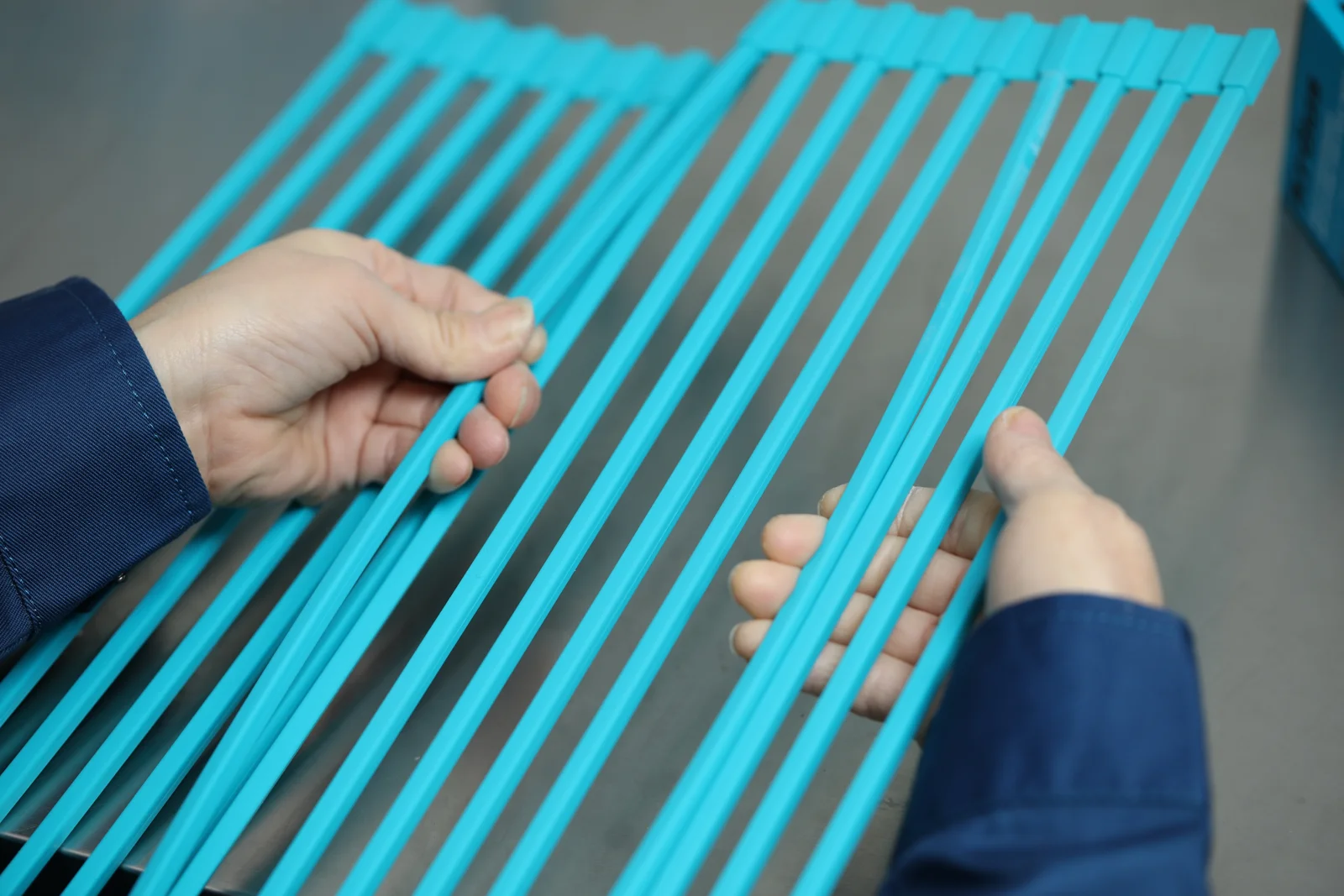
Handling a roll-up drying rack

Seven OEM Product Zones Around the Kitchen Sink

Build a coordinated private-label sink organization line by matching each SKU’s mounting ledge, drainage slope and Shore A stiffness to its exact installation zone.

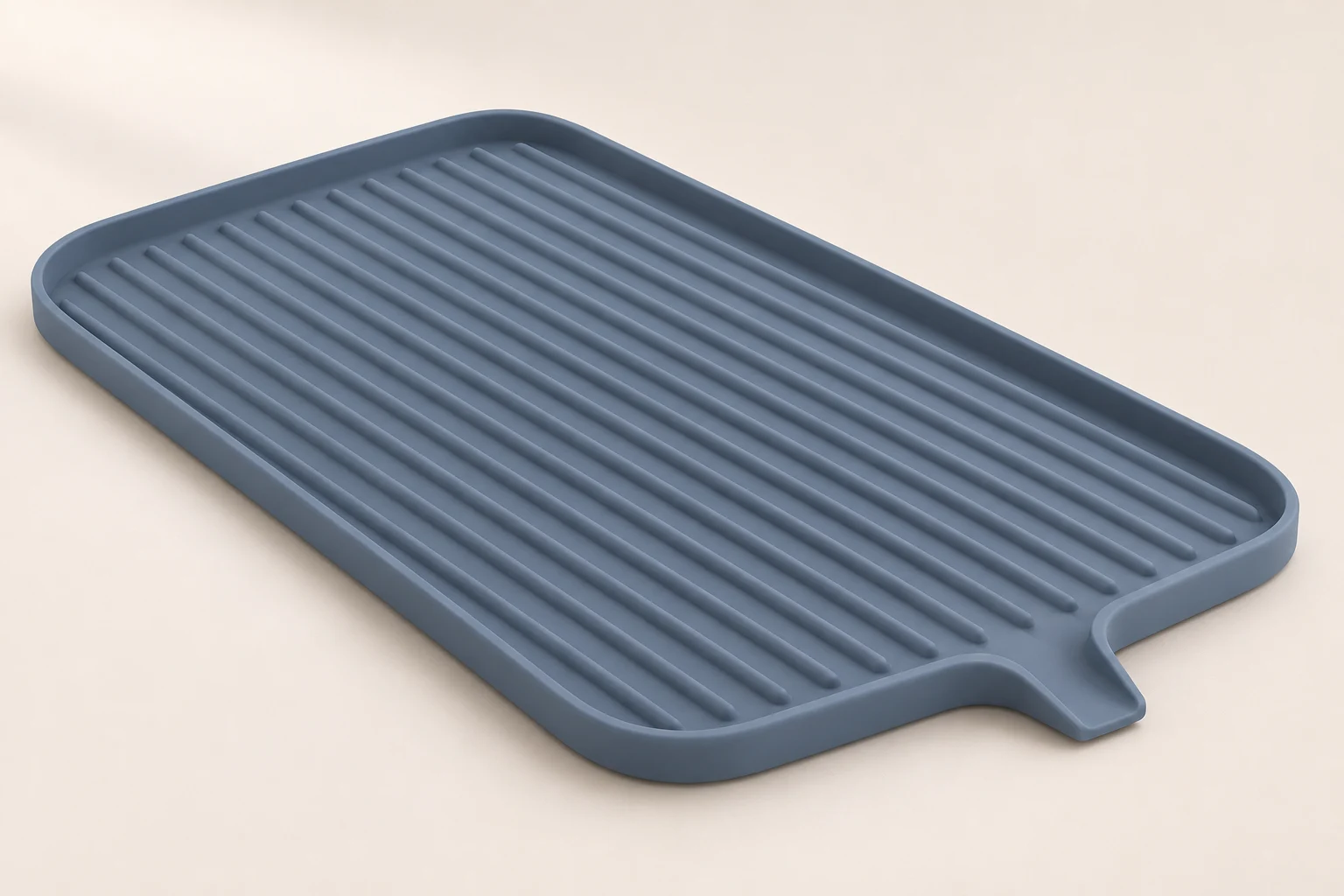
  1. Silicone dish drying matsRibbed countertop mat with sloped spout or raised perimeter rim.
  2. Roll-up dish drying racksRigid metal-bar rack with molded silicone end tracks spanning the basin.
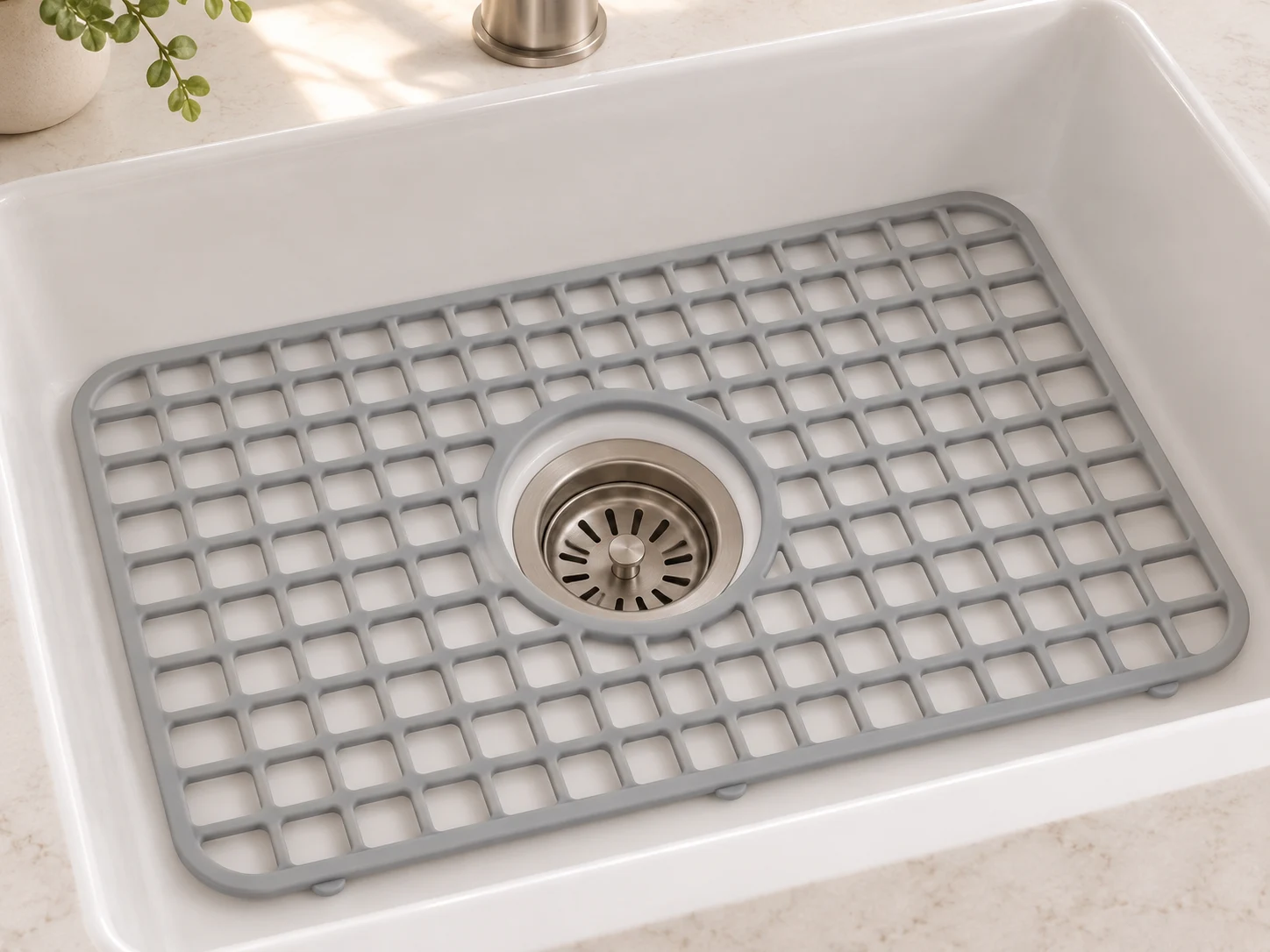
  3. Silicone sink protector matsOpen-grid floor mat with raised feet and positioned drain cutout.
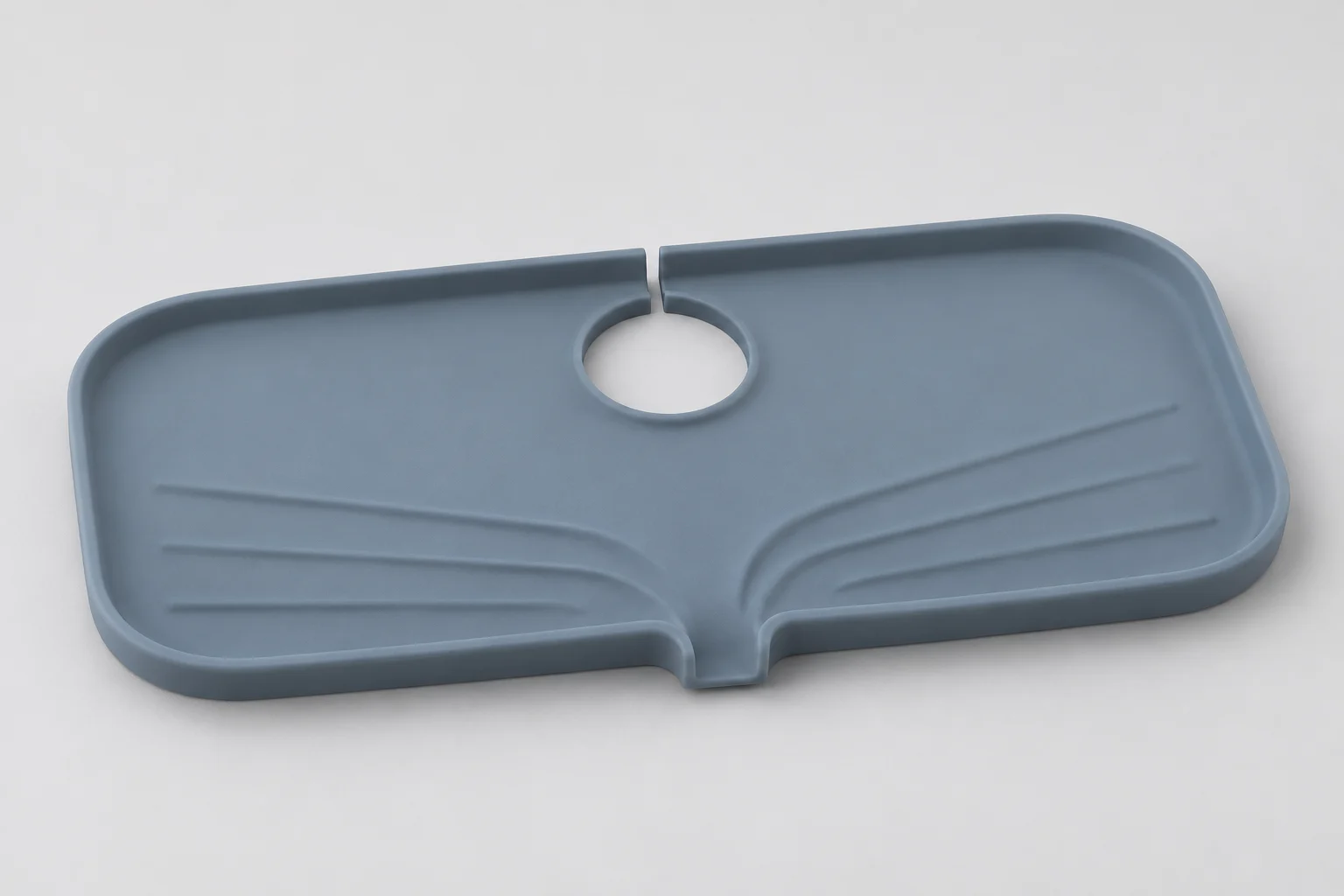
  4. Silicone faucet drip matsWrap-around tap-base catcher with rear installation slit and drain lip.
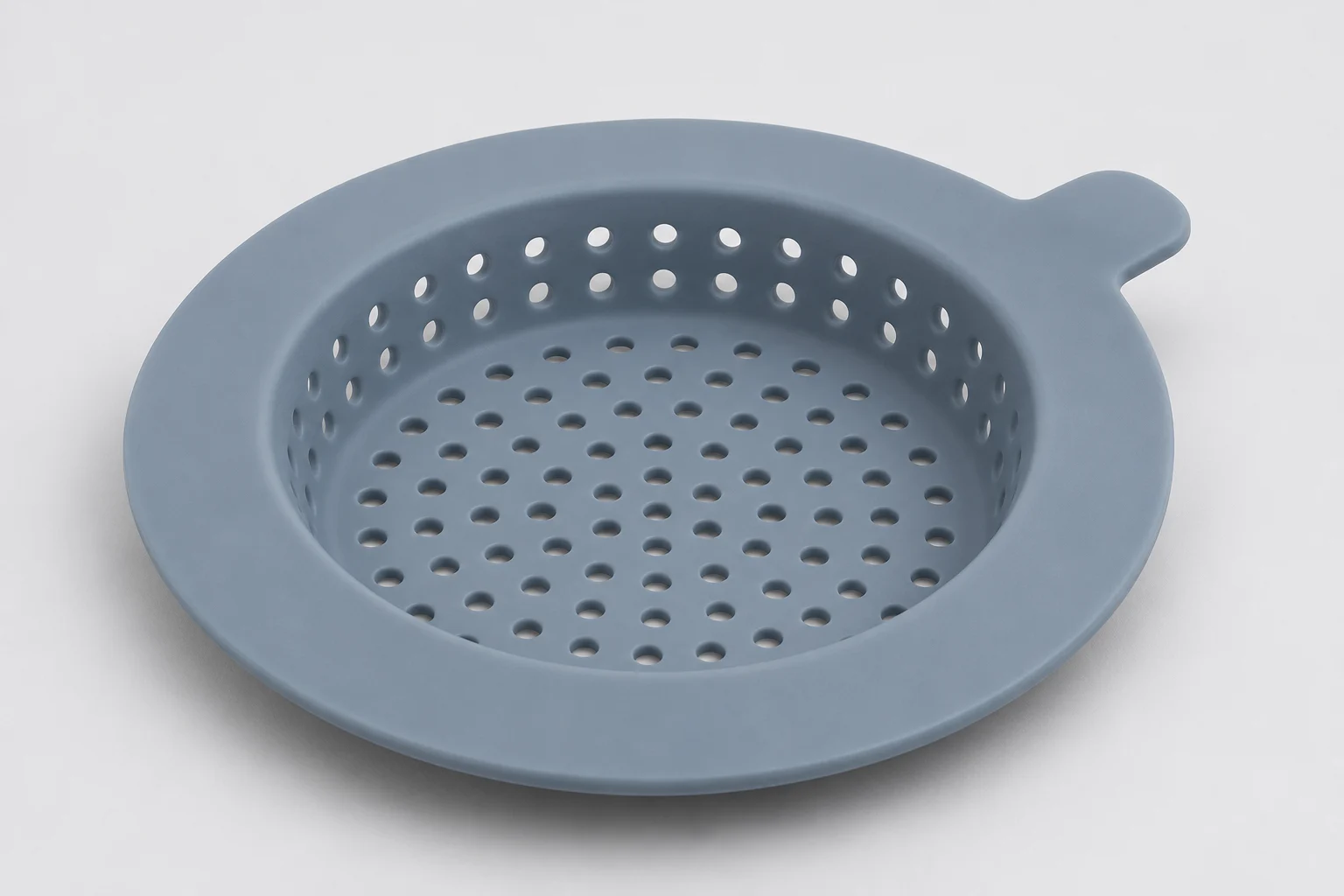
  5. Silicone sink strainersPerforated drain basket with seating flange and finger-pull tab.
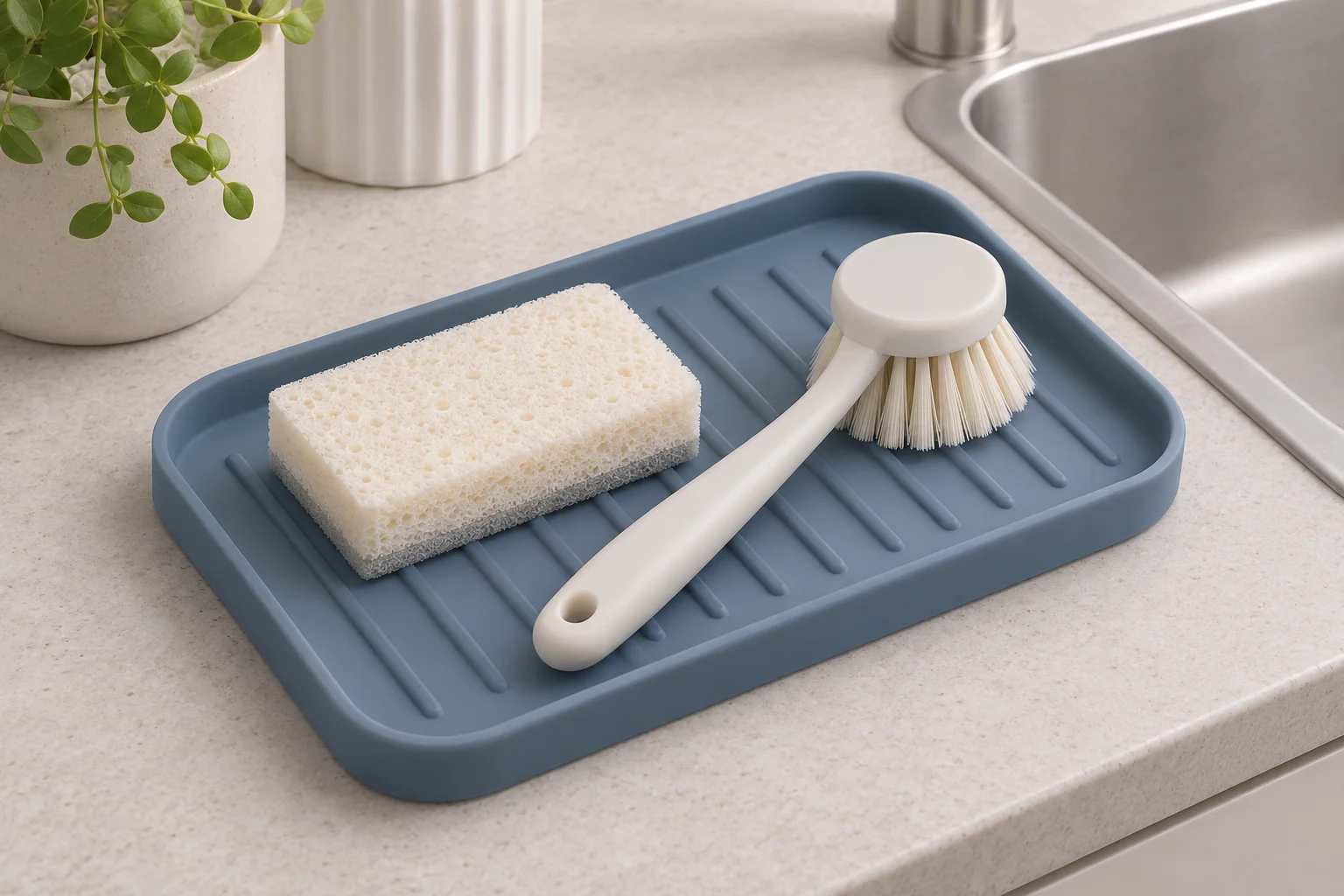
  6. Sink caddies & organizer traysRaised-rib countertop or mounted organizer for sponges and brushes.
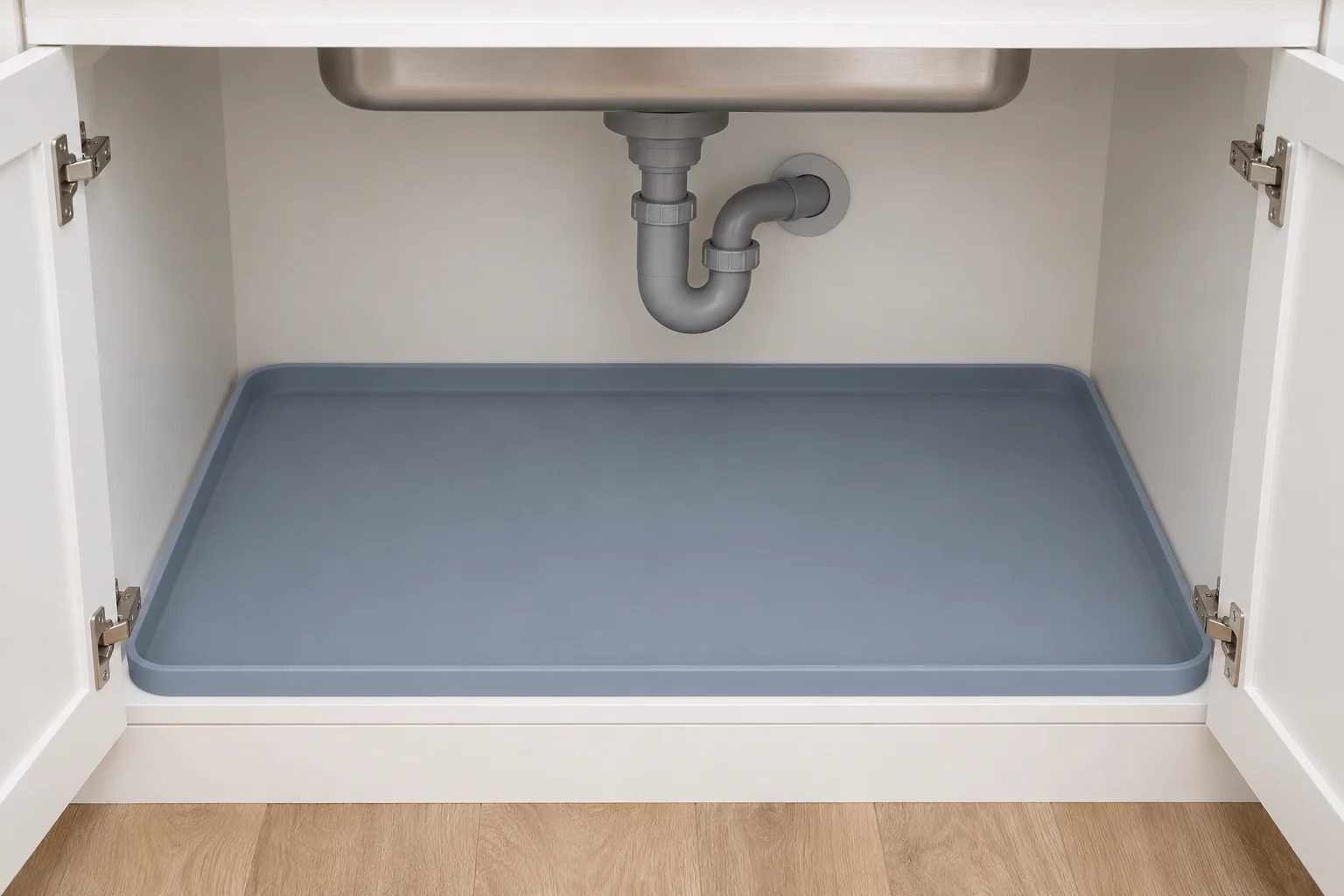
  7. Under-sink cabinet matsLarge-footprint containment tray molded on platens up to 650×650 mm.
Seven accessory locations around a kitchen sink1 countertop drying mat, 2 rack across the basin, 3 protector inside the basin, 4 drip mat at the faucet base, 5 strainer at the drain, 6 counter storage, 7 cabinet-floor mat. Numbers indicate use locations, not installation dimensions.1234567
Use-location guide, not an installation drawing. Confirm the countertop, basin and faucet layout for your project.

Dish support & drainage

Countertop mats, spanning racks and in-basin protectors have different supporting surfaces and water routes.

Silicone dish drying mats

Silicone dish drying mats

A one-piece mat rests on the countertop and supports dishes above water channels. Its drainage arrangement depends on the relationship between the counter and the sink.

Outlet-spout mats
Channels lead toward a defined edge outlet beside the sink.
Collection mats
A retaining edge collects water for lifting and manual emptying.
Wide or narrow footprints
The proportion suits different dish or glassware areas within either drainage arrangement.
  • Countertop resting space for cups, plates and utensils.
  • Water collection or a route toward the adjacent basin.
Choices & tradeoffs
A spout ties the orientation to the sink edge. A collection mat is less tied to that edge but needs an emptying action. Rib contact and cleaning access must suit the placed objects.
Bring to the review
Send the countertop width and depth, sink-rim step, outlet direction, representative dishes and cleaning method.
Explore drying-mat structures and uses →
Roll-up dish drying racks
Handling a roll-up drying rack

Roll-up dish drying racks

Parallel bars bridge the basin and let water pass through the open spaces. Flexible connections allow the rack to roll for handling and storage.

Spanning bar layout
Bar length and spacing define the supported area over the basin.
Resting edges & connections
End contacts and silicone connections locate the bars and the rack on the sink.
Roll-up arrangement
Connection spacing and end details affect the roll and the space needed for storage.
  • Drying above the basin rather than collecting water on the countertop.
  • A removable resting area that can be rolled away after use.
Choices & tradeoffs
Span, overlap and intended objects govern the bar and connection design. Open spaces release water but also change support for small objects; define the rod material and load conditions for the project.
Bring to the review
Provide the basin opening, available resting edges, required overlap, objects and planned cleaning and storage.
Explore roll-up drying racks →
Silicone sink protector mats

Silicone sink protector mats

A protector forms a contact layer inside the basin, separating utensils from the floor. Water and cleaning access remain part of that interface.

Open-grid surfaces
Gaps allow water and provide access between contact points.
Drain cutouts
An opening keeps the drain and removable fittings accessible.
Support feet
Raised contacts create clearance beneath the mat and change how loads meet the basin.
  • Separation between utensils and the basin floor.
  • A removable layer with access to the drain and the floor below.
Choices & tradeoffs
More support contacts change water paths and the space available for cleaning beneath the mat. The basin outline and drain position determine the layout; this is not a countertop drying mat.
Bring to the review
Send the basin-floor outline, corner radii, drain position, fittings and the way the mat will be lifted for cleaning.

Faucet & drain interfaces

Collecting drips around a base and filtering at an opening are separate product tasks.

Silicone faucet drip mats
Faucet drip mat with installation slit and outlet

Silicone faucet drip mats

A shallow horizontal mat collects drips around a faucet base. Its opening and rear clearance must work with the installed tap and the wall behind it.

Base opening
The opening follows the base profile while leaving the intended contact and installation clearance.
Installation slit
A rear slit can provide an installation path around the base.
Return-water edge
A front edge or outlet defines where collected water is directed.
  • Drip collection around the faucet rather than a whole dish-drying area.
  • Horizontal collection is a different task from a vertical splash guard.
Choices & tradeoffs
The opening, slit, wall clearance and water route constrain each other. A rear wall or raised sink rim can change both installation and drainage.
Bring to the review
Provide the faucet-base outline, rear-wall distance, surrounding ledge and intended return-water direction.
Silicone sink strainers
Open perforated sink strainer basket

Silicone sink strainers

An open strainer catches debris at the drain while water passes through its holes. It is removed for emptying and cleaning rather than used as a sealing plug.

Perforated basket
The basket holds collected debris while leaving a water path.
Supporting flange
The outer rim rests against the drain opening and locates the basket.
Lifting tab
A tab or grip allows removal without relying on the perforated floor.
  • Debris collection at a kitchen drain opening.
  • Regular lifting, emptying and rinsing with the actual sink fittings.
Choices & tradeoffs
Smaller openings change collection, water flow and cleaning access together. The flange must match the drain; agree the target debris and checking method rather than assuming a filtration rating.
Bring to the review
Send the drain dimensions, supporting contact, basket clearance, lifting access and expected debris.

Cleaning tools & cabinet space

Storage, collected water and removal access matter above and below the sink.

Sink caddies & organizer trays
Sink-side cleaning-tool tray

Sink caddies & organizer trays

A sink caddy keeps sponges, brushes and cleaning items together near the work area. Its resting and water-management details are separate from the cleaning tool itself.

Countertop trays
A shallow footprint gathers tools without requiring an attached mounting system.
Raised-rib trays
Raised contacts separate stored items from water collected below.
Attached organizers
Mounting interfaces add a separate support and removal requirement.
  • Organize the actual sponge, brush and cleaning-item sizes.
  • Leave access to rinse the tray and remove the stored objects.
Choices & tradeoffs
A shallow countertop tray is simpler to relocate; an attached design depends on the mating surface and fixing method. Rib height and tool spacing affect retained water and cleaning access.
Bring to the review
Provide the stored items, available counter or mounting area, water route, fixing preference and removal method.
Under-sink cabinet mats
Under-sink cabinet mat

Under-sink cabinet mats

A cabinet mat covers the floor beneath a sink and can collect drips within a retaining edge. The cabinet opening, obstructions and removal path define its shape.

Plain cabinet footprints
The mat follows the usable floor and the space through which it is installed.
Raised retaining rims
A rim changes collection space and how the mat can be lifted or emptied.
Planned pipe clearance
Openings or shaped edges must be designed around actual pipe positions.
  • Cabinet-floor drip collection and easier access to the covered area.
  • A removable cabinet product, distinct from a protector inside the basin.
Choices & tradeoffs
A higher rim changes collection space but can make removal harder through a narrow door. Pipe avoidance belongs in the design; arbitrary cutting can change the retaining edge and water route.
Bring to the review
Send internal cabinet dimensions, door opening, hinges, pipe positions, floor obstacles and the emptying method.
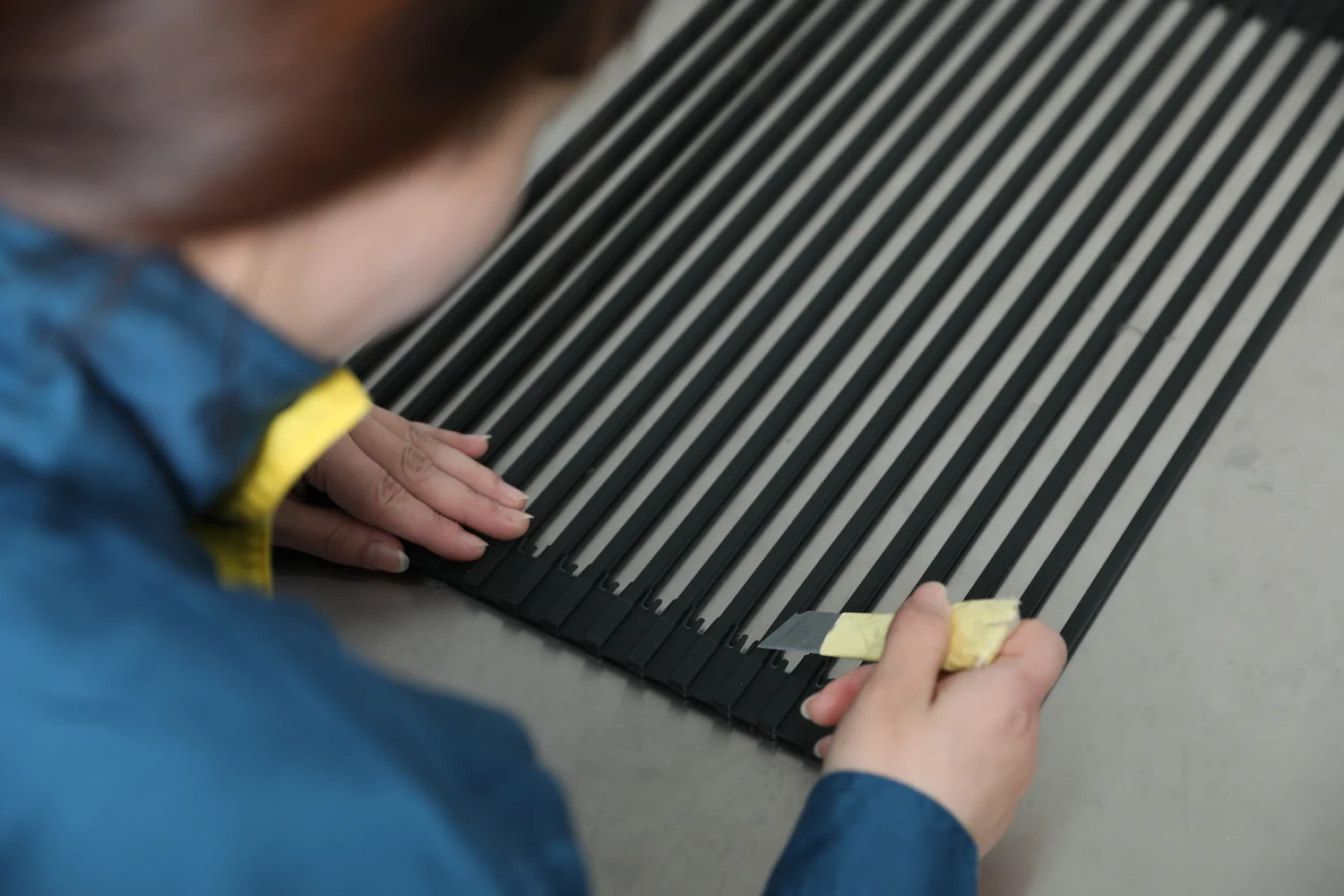
End-detail finishing on a roll-up rack

Key Sink Interface Dimensions to Lock Before Tooling

Our factory photograph shows flash trimming at a roll-up rack bar socket. Share the critical ledge, tap, drain or cabinet dimensions below so our in-house mold designers can engineer clean seating, drainage and removal.

  • Countertop: available width, depth and sink-rim step.
  • Over-sink: opening, resting edges and overlap.
  • In-basin: floor outline and drain position.
  • Faucet: base profile, rear clearance and installation path.
  • Drain: opening, flange contact and basket clearance.
  • Cabinet and storage: available footprint, pipe positions and removal path.

Sourcing & Tooling FAQ

Key Answers Before Tooling

Covering CAD readiness, custom MOQ evaluation, free 3D fit checks vs. T1 silicone samples, NDA protection and mold ownership.

Have a part-specific question?

Send your drawing or sample photo directly to Zhou Li’s engineering desk for a 24h DFM reply.

Can one universal SKU fit every residential kitchen sink?

Residential undermount, drop-in, farmhouse and workstation sinks vary widely in rim step, corner radius, tap setback and drain offset. Most brands define a target standard sink envelope (such as 33-inch or workstation ledges) and verify fit on 1–3 free 3D geometry prints or 7–15 day T1 molded silicone samples.

How does a horizontal faucet drip mat differ from a vertical splash guard?

A horizontal faucet drip mat wraps the tap collar to channel base drips forward into the basin, constrained by rear backsplash clearance and tap-hole pitch; a vertical splash guard stands in front of or behind the basin and requires a suction or mechanical mounting brief.

Can we launch a color-matched sink bundle (drying mat + roll-up rack + sponge caddy)?

Yes. Our two in-house open-mill compounders match custom Pantone swatches across solid HCR mats, caddies and overmolded rack end-links, while we engineer each SKU’s Shore A durometer, mold platen layout and retail box or belly-band packaging separately.

What platen sizes do you run for large countertop drying mats and cabinet mats?

We operate 10 solid HCR compression presses (200–250T) with heated platens from 400×400 mm up to 650×650 mm—well suited for wide countertop drying mats, sink grid protectors and under-sink drip trays with raised containment rims.

Should under-sink cabinet mats use field-cut pipe slots or molded cutouts?

Cutting through a raised perimeter rim on-site breaks water containment. Where plumbing passes through the cabinet floor, we recommend molding dedicated collared cutouts or trim zones bordered by secondary sealing ribs directly into the CAD design.

B2B Factory Direct · 24h Engineering & Tooling Review

Scope Your Custom Sink Accessory Line

Send your target sink dimensions, 2D/3D CAD or reference samples and estimated volumes—our engineering team replies within 24 hours with DFM notes and tooling quotes.

✓ NDA available before CAD exchange✓ Eligible for 1–3 free 3D fit prototypes✓ Paid molds 100% owned by customer

Direct Dongguan Engineering Desk

  • Accepts STEP / IGES / PDF / DWG or sample photos
  • New mold T1 typically 7–15 days · Mass run 15–30 days
  • Direct Tel / WeChat: +86 185 6655 6911 (Zhou Li)