
Youbang · B2B Custom Silicone Manufacturing · Dongguan

Custom Silicone
Ice Trays & Sphere Molds

Develop private-label cocktail ice cube trays, stackable lidded trays, slender water-bottle sticks and two-part whiskey sphere molds—molded in odorless platinum-cured silicone post-cured at ~200 °C × 4 h so sub-zero bases stay supple for clean push-out release without freezer odor transfer.

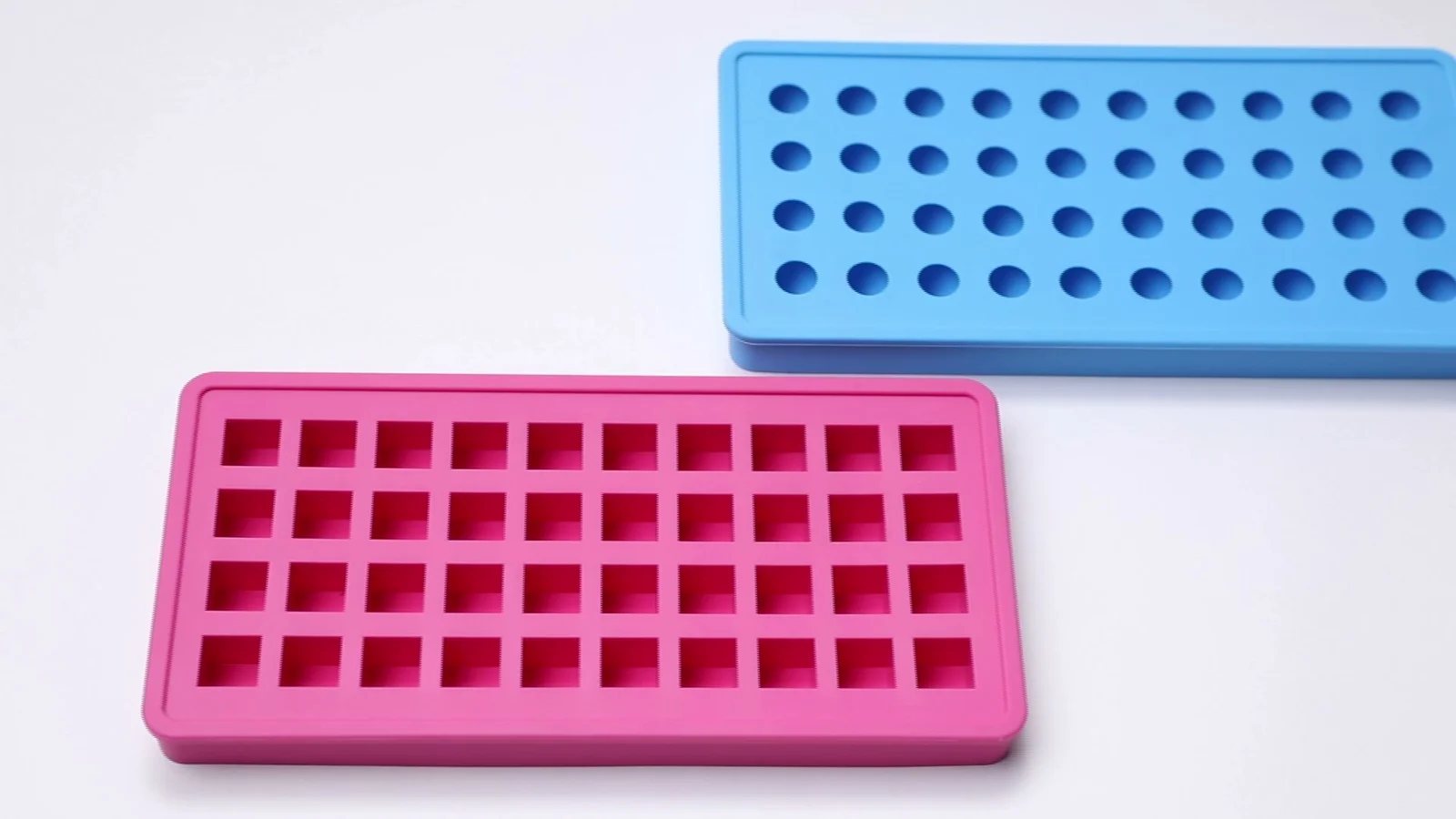
Square- and round-cavity ice trays

FILLING & CLOSURE

Match Tray Closure Architecture to Freezer Stacking & Demolding

A snap-on lid shields open cubes for freezer stacking, whereas a mated two-piece mold seals a full 3D sphere or emblem cavity—requiring distinct fill ports, expansion vents and parting lips.

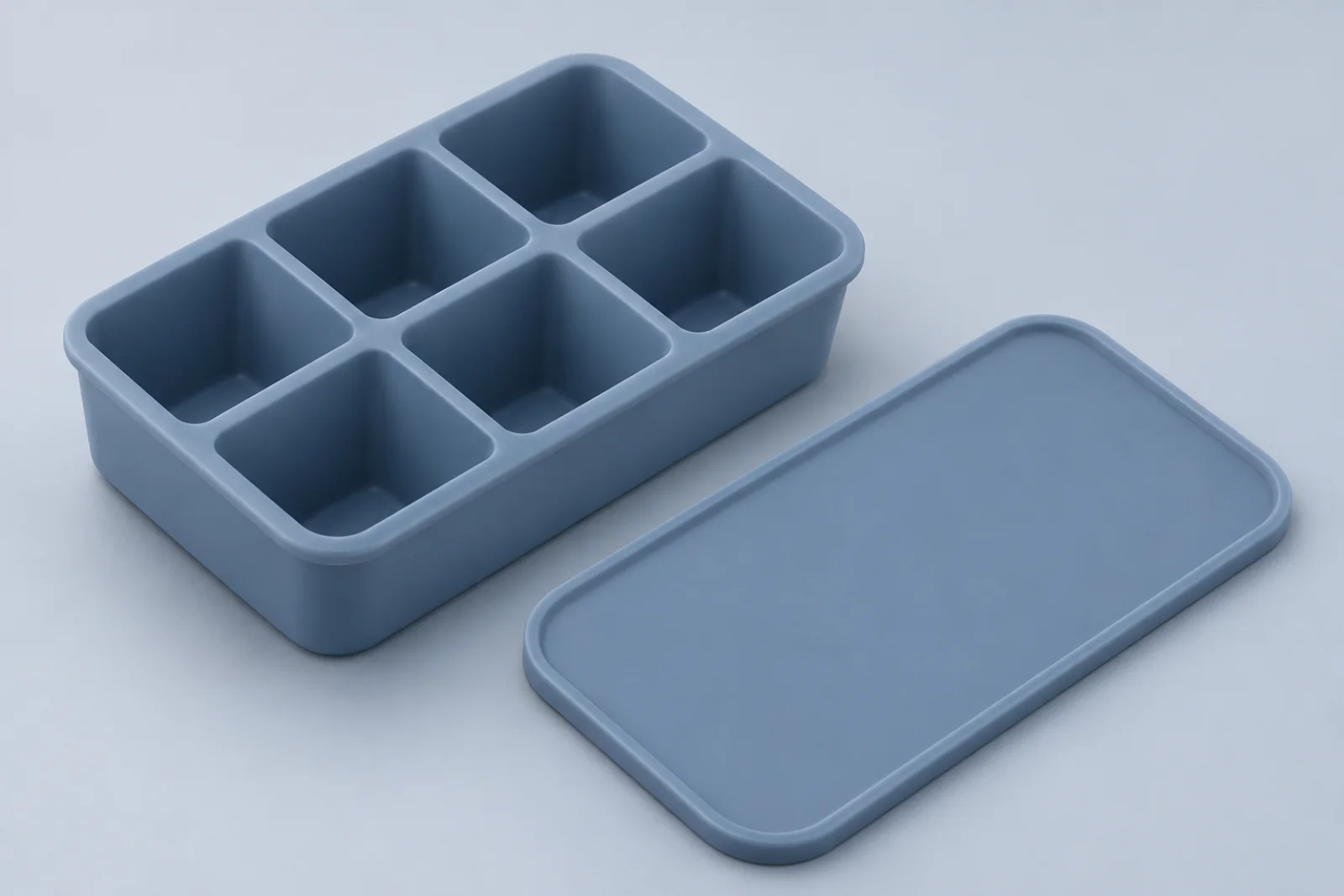
Square-cavity tray and separate lid

Open trays

Water is poured directly into visible cavities, and the frozen pieces are removed from the same open side.

Tray and closure relationshipRelationship only, not to scale; dimensions confirmed per project CAD.
Structural schematic · Not to scale
Individual cavities
Each cavity sets a portion. The walls between cavities and the rim influence how a filled tray can be supported.
Connected tray layouts
Rows create a compact tray, but the overall span, water level and freezer shelf determine how it is carried and placed.

Design trade-off · Balance flexible release areas with a rim that can be carried in the intended filled state.
Trays with a separate lid

A removable cover adds positioning and stacking surfaces above an open tray without becoming the cavity roof.

Tray and closure relationshipRelationship only, not to scale; dimensions confirmed per project CAD.
Structural schematic · Not to scale
Loose or locating covers
A lid may simply cover the opening or locate against a rim. Define removal access, contact points and the water level below it.
Lid and tray as separate components
Silicone or other specified lid materials require their own drawings, supplier responsibilities and fit review. A matching outline alone does not establish sealing.

Design trade-off · Confirm lid location and stacking contact with filled samples; specify leakage or odor-related requirements separately if needed.

Two-part ice molds

Two matching cavity halves form an enclosed shape. A filling opening and parting interface determine how water enters and the ice is removed.

Tray and closure relationshipRelationship only, not to scale; dimensions confirmed per project CAD.
Separated upper and lower halves; top filling opening and dashed alignment axis. Principle only, not to scale.
Paired spherical cavities
Both halves contribute to the shape. Review fill access, venting needs, alignment and how the halves separate.
Other enclosed shapes
More detailed geometry adds surfaces and parting decisions. Compare the shape detail with the intended opening and release direction.

Design trade-off · Paired halves enclose more of the shape. As the parting surface becomes more complex, filling, alignment and removal need to be designed together.

Size Ice Geometry Around Glassware, Tumblers & Bottle Mouths

Engineer frozen ice dimensions—accounting for water expansion—to clear target whiskey rocks glasses, insulated tumblers or narrow sports-bottle necks while preserving crisp logo relief.

Ice-shape outlineRelationship only, not to scale; dimensions confirmed per project CAD.
Structural schematic · Not to scale

Regular cubes & geometry

Repeated shapes simplify portion planning. Check the finished piece against the glass opening and the space taken up by multiple pieces.

Ice-shape outlineRelationship only, not to scale; dimensions confirmed per project CAD.
Structural schematic · Not to scale

Larger individual pieces

A larger piece can provide a single-piece presentation in a wide glass. Leave room at the opening and for removal, with the outline matched to the vessel.

Ice-shape outlineRelationship only, not to scale; dimensions confirmed per project CAD.
Structural schematic · Not to scale

Small pieces, more cavities

More cavities change the tray span and the number of release actions. Compare batch size with handling and cleaning access.

Ice-shape outlineRelationship only, not to scale; dimensions confirmed per project CAD.
Structural schematic · Not to scale

Slender bottle ice

Long narrow pieces suit a different opening from a tumbler. Check width, usable bottle depth and the support needed during removal.

Ice-shape outlineRelationship only, not to scale; dimensions confirmed per project CAD.
Structural schematic · Not to scale

Marks & custom outlines

Relief depth and narrow features affect shape detail and release. Agree the artwork, readable scale and acceptable detail on samples.

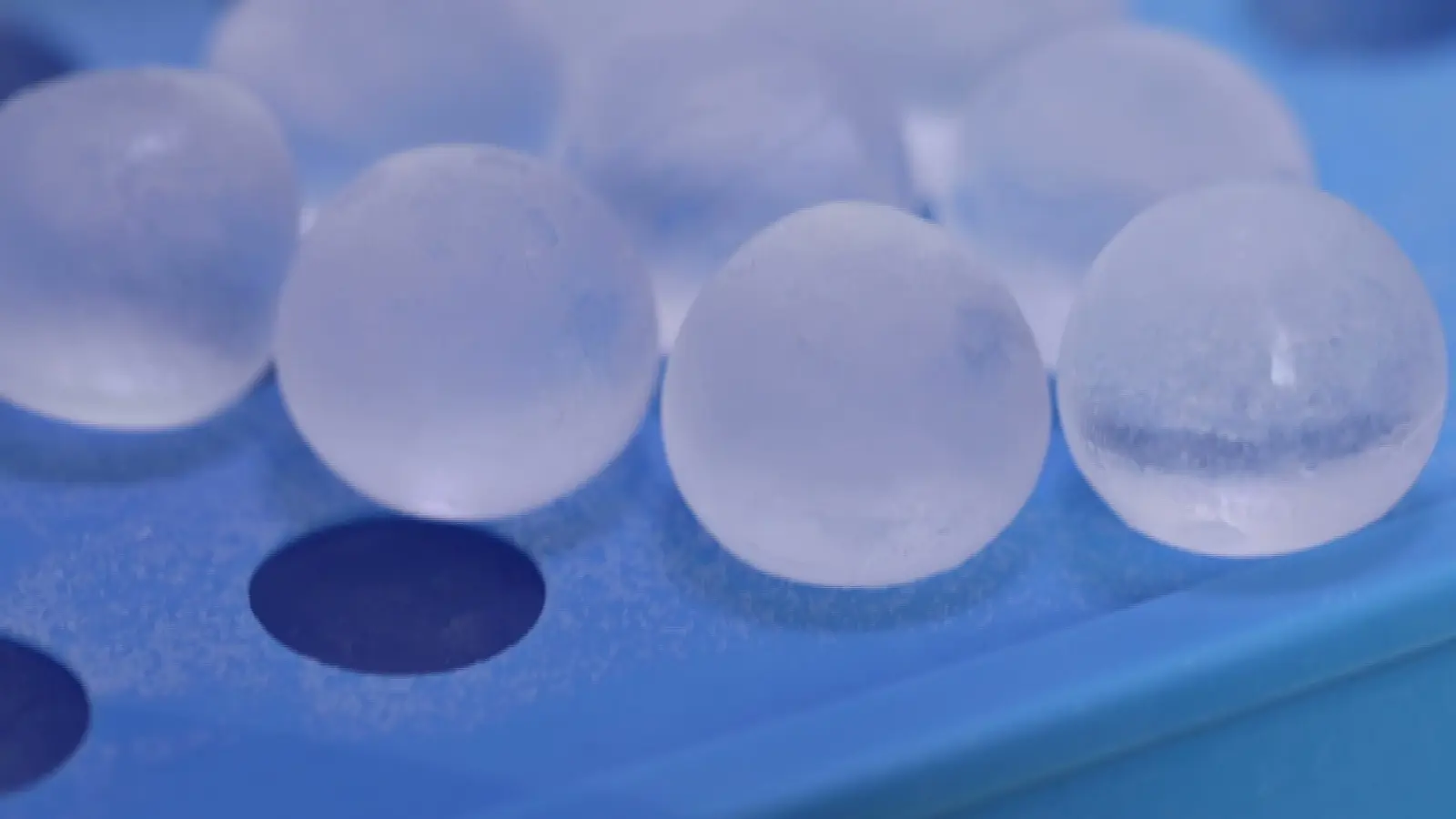
Rounded ice example shown in factory footage

A rounded ice form is visible in the footage. Define the target shape through the complete cavity and sample review.

Engineer Every Step From Tap Filling to Sub-Zero Push-Out

Balance rim carrying stiffness against soft cavity-floor pop-out flex, and log fill-line, freeze-expansion and demolding checks on T1 silicone samples.

Filling and ice-mold structure footage

The footage shows filling and the underside of another ice-mold design; the lidded square-cavity tray uses a separate mold configuration.

  1. Fill

    Check access to each cavity, fill marks if requested, and where excess water travels. For paired molds, define the filling and air-release route.

  2. Carry & place

    Observe bending with the intended water level and hand support. Check shelf fit and contact between stacked components. Keep release flexibility at the cavity base and carrying support at the rim; agree supply and assembly separately for any extra support component.

  3. Remove after freezing

    Record the opening or flexing motion, accessible grip areas and the condition of shape details, using the agreed freezing conditions. Also observe relief detail and the release direction around narrow features.

  4. Clean & store

    Inspect cavity corners, lid joints and separable surfaces with the intended cleaning method; check drying and storage space.

Standardize Freezer & Demolding Checks Across Sample Revisions

Log lid retention, fill-line expansion, tray carry flex, sub-zero release force and logo sharpness under identical freezer conditions before approving mass production.

Sub-zero flexibility, two-part seam sealing and embossed ice clarity must be verified on 7–15 day T1 molded silicone samples. Eligible projects can use 1–3 free 3D-printed models first (with clear brief, confirmed quote & CAD; buyer pays shipping) to check ice-to-tumbler clearance and lid fit.

Sourcing & Tooling FAQ

Key Answers Before Tooling

Covering CAD readiness, custom MOQ evaluation, free 3D fit checks vs. T1 silicone samples, NDA protection and mold ownership.

Have a part-specific question?

Send your drawing or sample photo directly to Zhou Li’s engineering desk for a 24h DFM reply.

How do you engineer leak-resistant 2-part whiskey sphere or custom 3D emblem ice molds?

Our in-house mold designers build tongue-and-groove sealing lips, top fill funnels, air-bleed vents and ice-expansion relief zones around your 3D artwork, then fine-tune Shore A hardness on T1 silicone samples so halves stay sealed during freezing yet peel apart cleanly without cracking fine details.

Can we pair a silicone ice tray with a rigid PP/PC lid, outer bin or embedded steel rim?

Yes. For internal rigid frames overmolded inside a tray rim, customer-supplied stainless steel, PC, PP or PA inserts are bonded using silane primer. For separate hard lids, ice storage bins or tongs, clarify who supplies the rigid components so we verify snap-fit tolerances on T1 samples.

How do you prevent taste transfer, white residue and freezer odor in silicone ice molds?

Unlike low-cost peroxide-cured trays, we mold ice trays from platinum-cured food-contact elastomers and run ~200 °C × 4 hour ventilated post-curing (targeting ≤0.5% volatile weight loss for LFGB), backed by batch CoA traceability and optional SGS/Intertek/TÜV FDA or LFGB lab testing (~10 days).

B2B Factory Direct · 24h Engineering & Tooling Review

Custom-Tool Your Branded Ice Tray or Sphere Mold

Send your target ice geometry or logo artwork, tumbler mouth diameter, cavity count, lid style and order volume—our engineers reply within 24 hours.

✓ NDA available before CAD exchange✓ Eligible for 1–3 free 3D fit prototypes✓ Paid molds 100% owned by customer

Direct Dongguan Engineering Desk

  • Accepts STEP / IGES / PDF / DWG or sample photos
  • New mold T1 typically 7–15 days · Mass run 15–30 days
  • Direct Tel / WeChat: +86 185 6655 6911 (Zhou Li)