
Seamless Core Overmolding
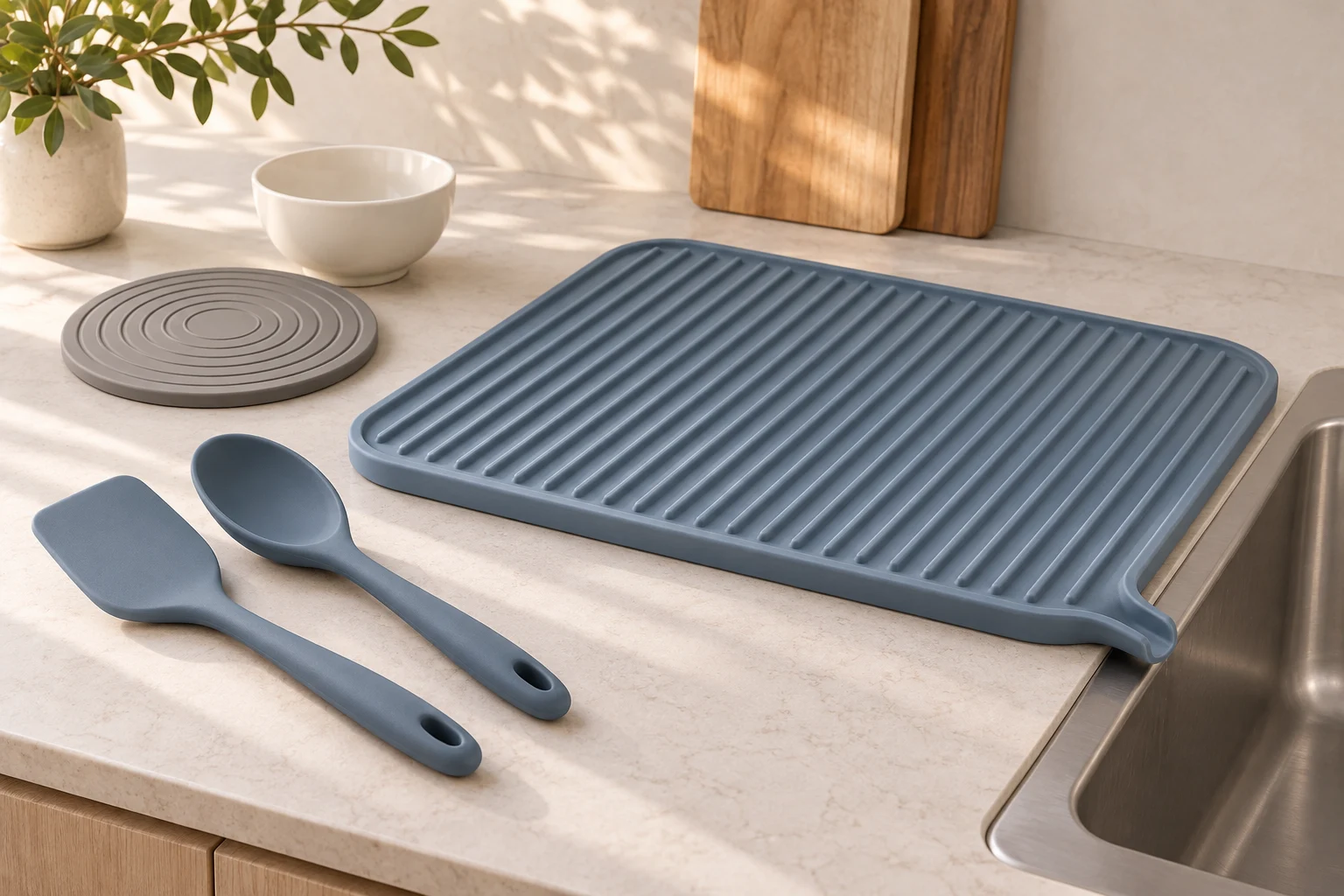
Spatulas, ladles, and reinforced baking frames encapsulate customer-supplied PA (nylon), PP, PC, stainless steel, aluminum, or copper inserts using primer adhesion so food liquids cannot enter handle seams.
Youbang · B2B Custom Silicone Manufacturing · Dongguan
Dongguan Youbang Silicone Products Co., Ltd. builds custom kitchen utensils, large countertop and sink mats, ice trays, collapsible containers, and baking molds for cookware brands, retail buyers, and food-service suppliers. Across ten 200–250T HCR presses (400×400 to 650×650 mm platens) and 85T/120T LSR machines, we pair primer-bonded core overmolding with 200 °C × 4 h ventilated post-curing to meet US FDA 21 CFR 177.2600 and German LFGB requirements.
Youbang operates under ISO 13485:2016 (62026Q00072R100) and ISO 9001:2015 (21424Q0270R1S, non-food & medical QMS scope). For food-contact SKUs, we source food-contact platinum-cured elastomers (Wacker, Shin-Etsu, Momentive, Dow, Elkem), run documented 200 °C × 4 h post-curing (≤ 0.5% volatile loss), maintain raw-lot-to-shipment traceability, and coordinate finished-part FDA 21 CFR 177.2600 / LFGB lab reports via SGS, Intertek, or TÜV (~10 days).
View certificate scans and scope →Spatulas, ladles, and reinforced baking frames encapsulate customer-supplied PA (nylon), PP, PC, stainless steel, aluminum, or copper inserts using primer adhesion so food liquids cannot enter handle seams.
Compression-molded pans, mats, and collapsible bowls (40–70 Shore A; folding travel bowls up to ~100,000 pcs/month capacity) balance rigid rim support against 0.50 mm+ flexible folding hinges and clean cavity release.
While US FDA 21 CFR 177.2600 focuses on water and n-hexane extractables, EU/German LFGB adds strict sensory odor/taste checks and ≤ 0.5% volatile loss—requiring platinum curing and full ventilated post-curing.
Destination market regulations dictate raw compound selection and post-curing time—confirm these four parameters before approving mold steel.
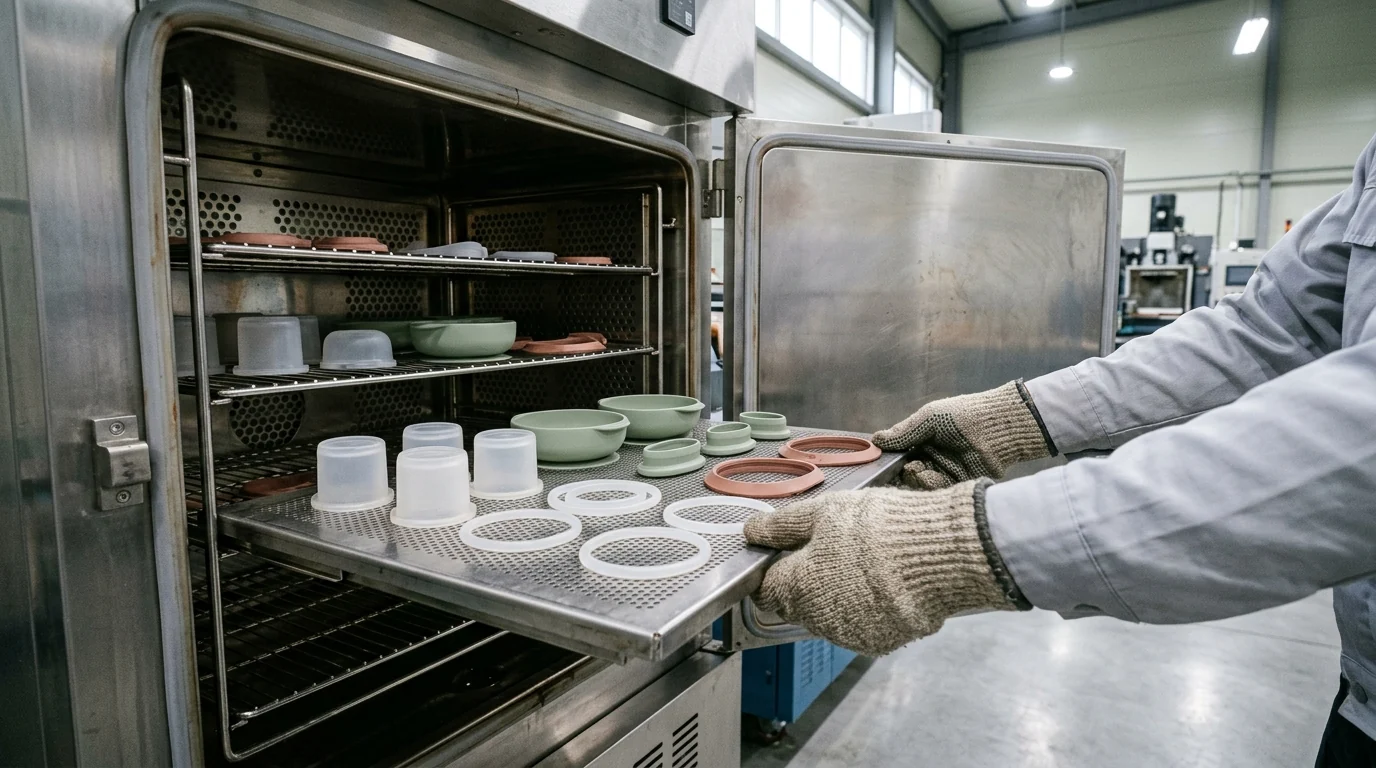
Passing food-contact testing depends on processing discipline on the shop floor, not just an upstream raw-material datasheet. Every production lot links elastomer CoAs, post-cure oven logs, and final inspection records.
Sourcing & Tooling FAQ
Covering CAD readiness, custom MOQ evaluation, free 3D fit checks vs. T1 silicone samples, NDA protection and mold ownership.
Send your drawing or sample photo directly to Zhou Li’s engineering desk for a 24h DFM reply.
FDA 21 CFR 177.2600 primarily measures extractive residues in distilled water and n-hexane, whereas German LFGB additionally enforces sensory taste/odor transfer tests and a 0.5% maximum volatile organic matter weight loss (200 °C × 4 h). Skipping platinum-cured elastomers or shortening ventilated post-curing causes LFGB failures and retail odor complaints.
Yes. We perform HCR and LSR overmolding onto customer-supplied rigid inserts made of PA (nylon), PP, PC, stainless steel, aluminum, or copper using food-contact-appropriate primer systems and mechanical through-hole interlocks.
Free 3D-printed structural samples (1–3 pcs, shipping paid by customer) are available once requirements, quote, and drawings are confirmed; existing-mold silicone samples take typically 3–5 days; new custom mold T1 samples take typically 7–15 days; and mass production runs typically 15–30 days depending on order quantity and post-curing schedule.
Upstream reports verify the base uncolored elastomer only. Because masterbatch pigments and molding/post-curing conditions affect extractables and volatiles, European and Amazon/retail buyers usually require finished-article testing—which we coordinate through SGS, Intertek, or TÜV in approximately 10 days.
B2B Factory Direct · 24h Engineering & Tooling Review
Include 2D/3D CAD files, target FDA or LFGB market standards, Shore A firmness, and estimated SKU quantities for a 24-hour quotation.