
Oral-Contact & Bite Geometry
Handheld teethers and LSR feeder sacs (down to 0.25 mm min / 0.30 mm stable LSR wall) require tear-resistant platinum compounds, generous fillet radii, and parting lines positioned away from gum-chewing edges.
Youbang · B2B Custom Silicone Manufacturing · Dongguan
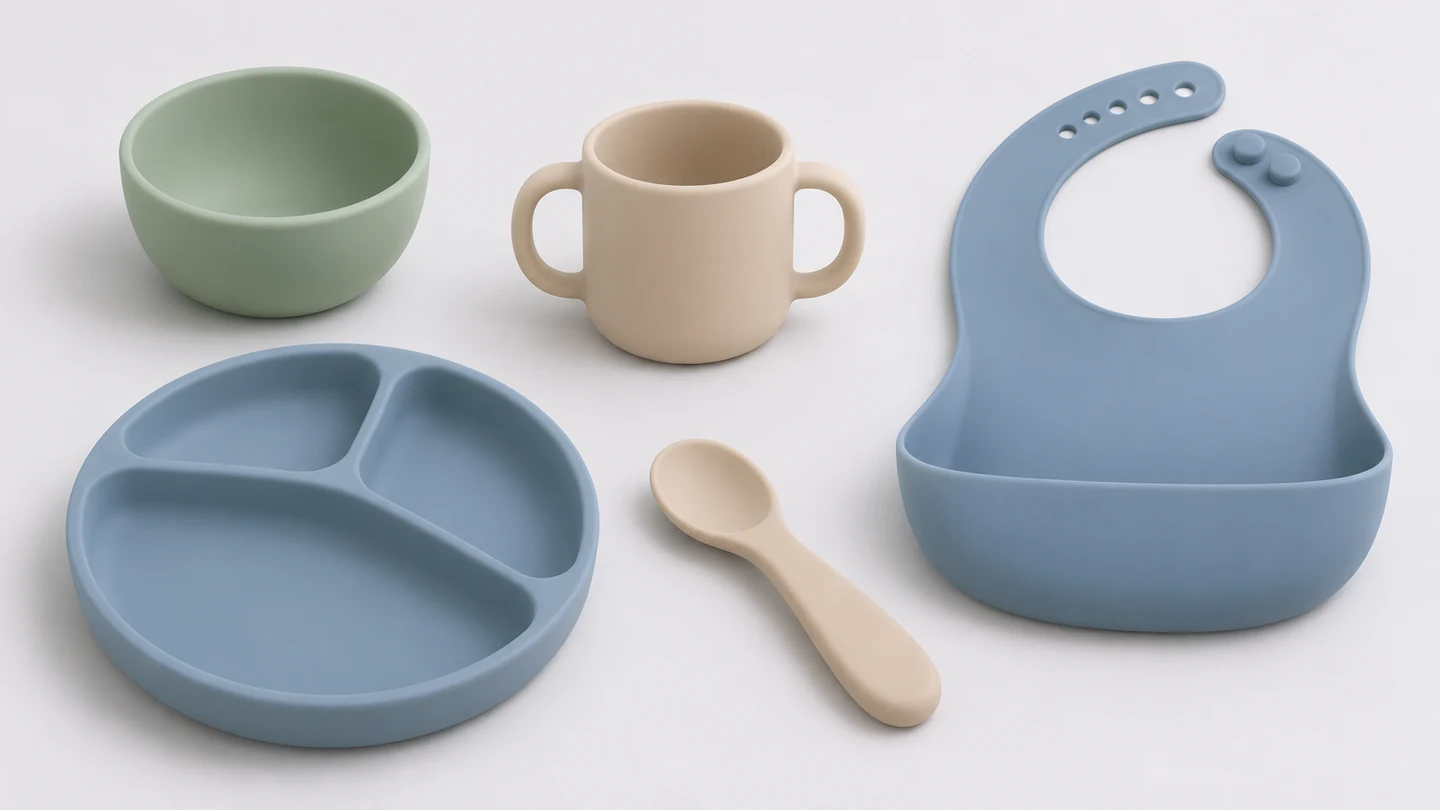
Dongguan Youbang Silicone Products Co., Ltd. partners with infant feeding brands, nursery retailers, and DTC founders to manufacture custom suction plates, bowls, pocket bibs, overmolded spoons, handheld teethers, and LSR fruit-feeder pouches. Combining 85T/120T LSR injection molding, ten 200–250T HCR compression presses, and 200 °C × 4 h ventilated post-curing, we build low-volatile, bite-resilient collections engineered for US and European infant safety testing.
Youbang operates under ISO 13485:2016 (62026Q00072R100) and ISO 9001:2015 (21424Q0270R1S) with full raw-lot-to-shipment traceability. We supply upstream platinum elastomer CoA/SDS documents (Wacker, Shin-Etsu, Momentive, Dow, Elkem), run 200 °C × 4 h post-curing (≤ 0.5% volatiles), and coordinate ~10-day SGS/Intertek/TÜV lab testing (CPSIA, ASTM F963, EN 71, EN 14350, FDA, LFGB); the brand owner issues the finished Children's Product Certificate (CPC) or EU Declaration of Conformity.
View certificate scans and scope →Handheld teethers and LSR feeder sacs (down to 0.25 mm min / 0.30 mm stable LSR wall) require tear-resistant platinum compounds, generous fillet radii, and parting lines positioned away from gum-chewing edges.
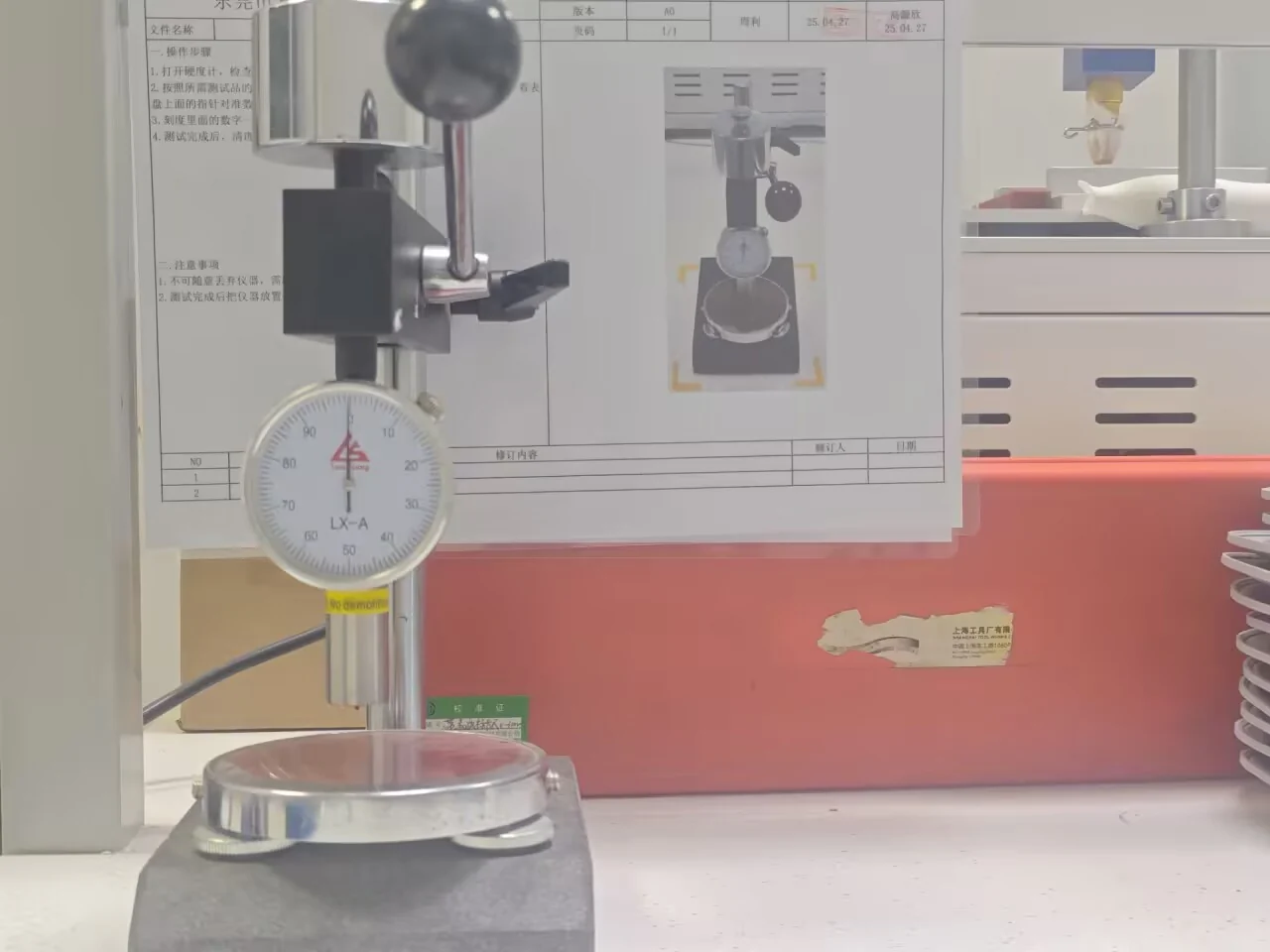
Divided plates and bowls (45–60 Shore A) balance tapered suction-skirt seal geometry against highchair tray footprints, while spoons primer-overmold soft gum tips onto customer-supplied stainless steel, PA, PP, or PC cores.
Infant feeding sets achieve coordinated muted Pantone palettes on our 2 open mixing mills and low-tack surfaces via fine mold bead-blasting and 200 °C × 4 h post-curing—never topical polyurethane spray oils.
Mechanical small-parts gauges and volatile limits constrain industrial design early—review these four inputs with our engineers before cutting steel.
Infant brands win repeat retail placement through odorless unboxing, consistent suction performance, and audit-ready batch records connecting every carton to its elastomer and test lot.
Sourcing & Tooling FAQ
Covering CAD readiness, custom MOQ evaluation, free 3D fit checks vs. T1 silicone samples, NDA protection and mold ownership.
Send your drawing or sample photo directly to Zhou Li’s engineering desk for a 24h DFM reply.
Yes. We routinely prepare T1 molded silicone samples in your exact production compound and Pantone shades for submission to accredited laboratories including SGS, Intertek, and TÜV (turnaround typically ~10 days) covering FDA 21 CFR 177.2600, LFGB, CPSIA lead/phthalates, EN 71, and EN 14350 so your team can issue its US CPC or EU compliance dossier.
Topical soft-touch polyurethane coatings must never be used on infant oral- or food-contact silicone. Instead, we specify platinum-cured elastomers, apply controlled micro-matte EDM/sandblast textures directly to the steel mold cavities, and complete 200 °C × 4 h ventilated post-curing to remove tackiness.
Overmolding uses customer-supplied rigid cores in stainless steel, PA (nylon), PP, PC, aluminum, or copper with primer surface preparation. Mechanical retention holes in the core tip prevent the soft silicone bite zone from pulling free under toddler chewing loads.
Free 3D-printed structural samples (1–3 pcs, shipping paid by buyer) verify tray fit and handle proportions once requirements, quote, and drawings are confirmed; existing-mold silicone samples ship in 3–5 days; custom T1 mold samples take 7–15 days; and mass production runs typically 15–30 days (project-confirmed).
B2B Factory Direct · 24h Engineering & Tooling Review
Send 2D/3D drawings, target destination markets (US/EU/UK/JP), Pantone palette, and SKU breakdown for a 24-hour DFM and tooling quotation.